Understanding Low-Stress Optical Coatings Techniques


The precision demands in modern photonics have never been higher. As optical systems shrink and performance requirements intensify, every coating decision matters.

Traditional high-stress optical coatings cause substrate warping, premature delamination under thermal cycling, and catastrophic failures in mission-critical applications. The result? Costly product recalls, field failures that damage brand reputation, and compromised system performance when reliability matters most.

Low-stress coating technologies eliminate these issues by improving durability, thermal stability, and reliability, especially for polymer optics and harsh environments.  This guide explores the techniques transforming precision photonics and how manufacturers use them to gain a competitive edge.

Key  Takeaways

  • Traditional optical coatings fail under stress; residual stress causes warping, delamination, and early field failures that drive costly recalls and replacements.

  • Low-stress coatings cut residual stress using ion-assisted deposition, magnetron sputtering, PECVD, and optimized evaporation to precisely control film formation.

  • Performance gains are proven in the field, medical devices see fewer failures, survive more sterilization cycles, automotive optics handle 60 °C wider temperature ranges, and defense systems eliminate coating-related breakdowns.

  • Polymer optics benefits the most, with low-stress processes enabling durable coatings on acrylic, Zeonex, and Zeonor at low temperatures, while supporting complex geometries that traditional methods can’t handle.

  • Apollo Optical Systems delivers end-to-end execution, combining low-stress coating expertise with injection molding, diamond turning, and ISO 13485–certified manufacturing to move products from prototype to high-volume production faster.


The Challenge with Traditional Optical Coatings
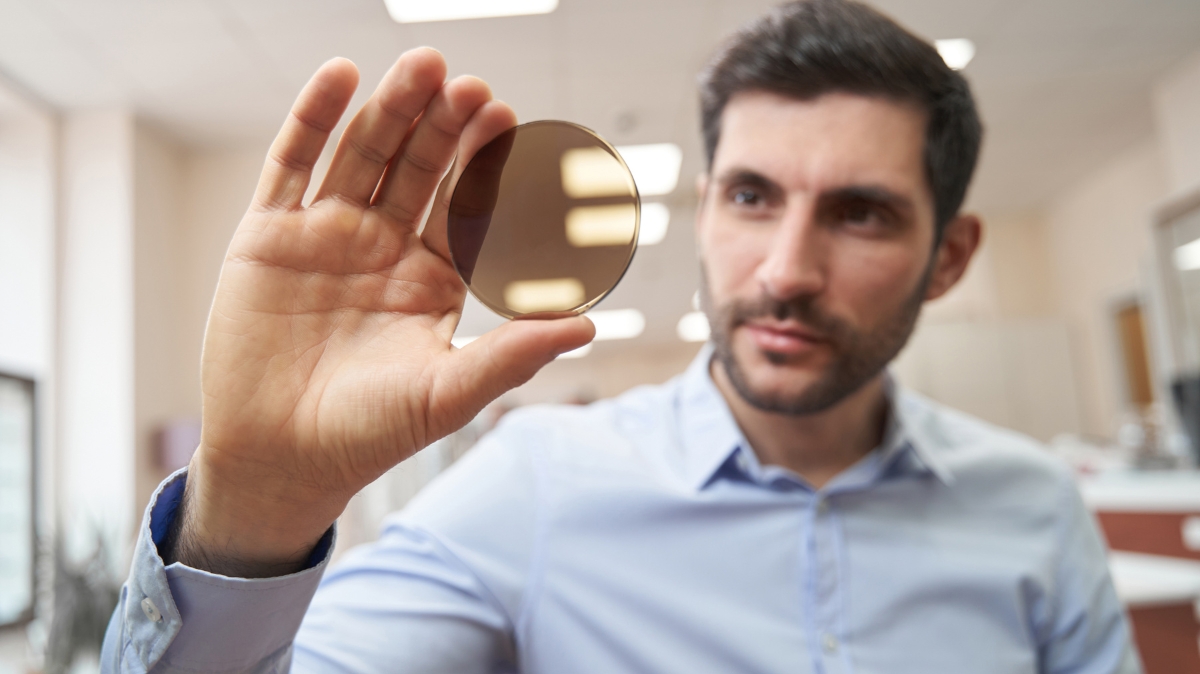
The Challenge with Traditional Optical Coatings

Traditional optical coating processes generate significant residual stress within deposited thin films. This stress manifests in two primary forms: tensile stress (pulling the film apart) and compressive stress (squeezing the film together). When stress levels exceed, serious problems emerge.

The core problems include:

  • Substrate deformation and warping that destroys optical precision, particularly severe with polymer materials like acrylic, polycarbonate, and cyclic olefins

  • Delamination failures occur when coatings separate from substrates during temperature cycling or mechanical stress

  • Progressive optical performance degradation as internal stress causes microscopic cracking and interface failures over time.

  • Thermal cycling vulnerabilities that accelerate failure modes in applications experiencing temperature extremes

  • Manufacturing yield challenges that drive up costs and create quality inconsistencies in high-volume production

Traditional glass coating techniques assume rigid, thermally stable substrates. Polymers expand, contract, and flex differently from glass. When high-stress coatings meet flexible substrates, failures multiply. 

Manufacturers like Apollo Optical Systems with injection molding capabilities often encounter these coating challenges when scaling from prototype to production volumes, where thousands or millions of parts must perform consistently.

What Are Low-Stress Optical Coatings?

What Are Low-Stress Optical Coatings?

Low-stress optical coatings represent a shift from traditional thin-film deposition by controlling the physics of film formation itself. Instead of accepting residual stress as unavoidable, these coatings are engineered to minimize it at every stage of deposition.

How Stress Control Works

Stress reduction is achieved through three core mechanisms:

  • Process optimization: Precise control of temperature, pressure, and deposition rate ensures a stable atomic arrangement during film growth.

  • Material selection: Carefully chosen materials and compositions naturally generate lower internal stress.

  • Microstructure engineering: Tailoring grain structure and density distributes stress evenly and prevents film failure.

Performance Advantages

    • Residual stress below 100 MPa (vs. 500+ MPa conventional)

    • Strong adhesion across polymers, metals, ceramics, and composites

    • Thermal stability from cryogenic to high-temperature environments

    • High resistance to humidity, chemicals, and mechanical wear

    • Component lifespan increases by 3–5×

Material Science Foundations

Common materials include metal oxides (e.g., TiO₂, SiO₂), fluorides like MgF₂, and specialized alloys. Successful coatings balance deposition rate with stress development. Too fast induces stress, too slow reduces throughput. 

Surface preparation is equally critical: surface energy, cleanliness, and micro-texture determine long-term adhesion and durability.

By reducing internal stress, optical designers can use thinner, lighter substrates and more complex geometries such as aspheres, diffractive optics, and microlens arrays, especially on polymers. Manufacturing consistency improves, and component lifespan increases.

When paired with precision fabrication methods like diamond turning or injection molding, low-stress coatings unlock optical designs that were previously impractical. 

Advanced Deposition Methods for Low-Stress Optical Coatings

Advanced Deposition Methods for Low-Stress Optical Coatings

Multiple deposition technologies now enable precise control of coating stress, each suited to different materials, geometries, and production scales. Selecting the right method is critical to achieving durable, high-performance optical coatings.

Ion-Assisted Deposition (IAD)

IAD enhances film growth by bombarding the coating with energetic ions during deposition. This added energy helps atoms settle into stable positions, reducing internal stress and improving adhesion.

Key benefits:

  • Strong adhesion, even on difficult polymer substrates

  • Dense, environmentally stable films

  • Fine control over optical and mechanical properties

  • Proven reliability in defense and automotive environments

Magnetron Sputtering

Magnetron sputtering uses plasma to eject material from a target, depositing it uniformly onto the substrate. Stress is managed by tuning power, pressure, and geometry.

Why it’s effective:

  • Supports metals, oxides, and complex multilayer stacks

  • Produces highly uniform coatings over large or complex surfaces

  • Scales efficiently from R&D to high-volume production

  • Ideal for reflective and interference-based optical systems

Plasma-Enhanced Chemical Vapor Deposition (PECVD)

PECVD relies on plasma-driven chemical reactions rather than physical deposition, enabling low-temperature processing.

Advantages include:

  • Excellent conformality on complex 3D geometries

  • Compatibility with temperature-sensitive polymers

  • Precise stress control through gas chemistry tuning

  • Strong performance on diffractive and micro-structured optics

Advanced Evaporation Techniques

Modern thermal and e-beam evaporation methods can also deliver low-stress coatings when carefully optimized.

Key strategies include:

  • Temperature control: Maintaining substrates within stress-minimizing ranges

  • Deposition rate tuning: Balancing film quality with throughput

  • Stress-compensated layer design: Alternating tensile and compressive layers to neutralize overall stress

  • In-situ monitoring: Real-time thickness and stress measurement for consistent results

These systems are often integrated with automated process control, ensuring repeatability across high-volume production.

Design-for-Manufacturing Integration

Successful low-stress coating programs start at the design stage:

  • Substrate material selection considers coating compatibility alongside optical requirements. Some polymers accept coatings more readily than others. Zeonex and Zeonor, for example, offer excellent coating adhesion compared to some polycarbonate formulations.

  • Coating stack architecture design plans the complete multi-layer structure for both optical performance and mechanical stress management. Computer modeling predicts stress states before expensive deposition trials.

  • Process parameter optimization uses the design of experiments methodology to find the sweet spot where coating quality, production speed, and cost align optimally.

  • Metrology-driven process control employs comprehensive testing throughout development and production to verify performance and catch deviations before they become yield-limiting problems.

  • Scaling from prototype to production requires planning from day one. Process parameters that work for five prototype parts may not work for 50,000 production parts without careful adaptation.

However, there are several failure risks you should be aware of.

Failure Modes and Risk Management

Low-stress coatings significantly reduce failure rates, but no technology eliminates risk entirely. Understanding these risks enables better design decisions.

Common Failure Mechanisms

Failure Mode

Cause

Impact

Edge Delamination

Compressive stress at discontinuities

Coating lifts at edges, corners, and geometric complexity areas

Thermal Stress-Induced Cracking

Tensile stress + CTE mismatch during cycling

Cracks propagate into the substrate, interface weakening

Buckling/Spallation

Compressive stress causes film expansion

Coating buckles and delaminates under harsh conditions

Adhesion Failure

Surface contamination + stress cycling

Complete coating separation from the substrate

Substrate-Specific Vulnerabilities

Polymers vs. Glass CTE Mismatch:

  • Polymer CTE: 80-150 ppm/°C

  • Glass CTE: 5-10 ppm/°C

  • Result: One order of magnitude difference creates substantial thermal stress

Processing Temperature Limits:

Environmental Stressors

  • Humidity: Moisture induces degradation through hydrolysis; diffusion coefficients increase under stress.

  • Thermal Cycling: Progressive damage accumulation; each cycle generates a micro-crack.

  • Mechanical Wear: Critical loads for delamination, depending on nanolaminate structure.

Design Trade-offs

  • Stress cannot Be Fully Eliminated: Total stress = external + thermal + intrinsic. Low-stress techniques minimize intrinsic stress only.

  • Performance vs. Durability: Reducing ion bombardment lowers compressive stress but may decrease film density, increasing moisture sensitivity.

Risk Mitigation Strategies

  • Rigorous surface preparation and contamination control

  • Stress-compensated designs (alternating tensile/compressive layers)

  • Environmental pre-qualification testing

  • In-situ monitoring during deposition

  • Conservative design margins (<50 MPa target when failure occurs at 500 MPa)

Along with that, there are some decision criteria you can follow while choosing a low-stress coating.

Decision Criteria for Choosing Low-Stress Coatings

Use this decision-making framework for early feasibility discussions and vendor selection when choosing low-stress optical coatings.

Operating Environment Requirements

Requirement

Considerations

Temperature Range

Operating extremes + cycling frequency

Environmental Exposure

Humidity, chemicals, UV, salt spray, abrasion

Service Life

Expected durability requirements

Key Decision Point: Temperature-sensitive polymers require deposition below 80°C, limiting options to PECVD, room-temperature sputtering, or controlled evaporation.

Surface Preparation Requirements:

Once a process is shortlisted, success depends on adhesion and cleanliness

  • Plasma treatment to increase surface energy

  • Adhesion-promoting interlayers (SiO, MgO, Y₂O₃)

  • Contamination elimination verified via ToF-SIMS

This signals that process control matters as much as coating chemistry.

Optical Performance Requirements

Topic

Key Considerations

Glass Type

• Refractive index determines coating design • Similar-index glasses can often share coatings • High thermal expansion glasses require careful heating/cooling • Poor chemical resistance increases cleaning and handling challenges

Wavelength Range

• Narrow ranges = better performance • Broad ranges reduce performance and increase coating time • Not all coating materials transmit equally across all wavelengths

Transmission vs Reflection

• 99% transmission ≠ 99% reflection • Single-side coated optics should often be specified in reflection • Extreme values require advanced measurement methods (e.g., Laser Ring Down)

Angle of Incidence (AOI)

• Higher AOI shifts performance to shorter wavelengths • Broad AOI ranges need broader bandwidth designs • Polarization effects (S & P separation) increase with AOI

Clear Aperture

• Near-full clear apertures limit standard fixturing • Typically, 1 mm per side is preferred • Tighter apertures require special handling

Laser Damage

• Certification tests coating at fixed power • Threshold testing increases power until damage occurs • Shorter wavelengths have lower damage thresholds

Environmental Durability

• Common standards: MIL-PRF-13830B, MIL-C-48497, ISO 9211-3 • Special environments must be communicated early • Additional testing can increase cost

Witness Samples

• Provided upon request • Stock samples cover wide wavelength ranges • Actual glass witness samples also available

Special Requirements

• Documentation, marking, and packaging must be stated in RFQs • Prevents delays, miscommunication, and rework

Manufacturing and Scale Considerations

Production Volume Impact:

  • Prototype (1-100): Manual loading, flexible processes

  • Low volume (100-1K): Semi-automated, repeatability critical

  • Medium volume (1K-50K): Automated handling, statistical process control

  • High volume (50K+): Continuous coating, inline metrology

Geometry Complexity:

  • Flat substrates: All processes viable

  • Aspheric/freeform: Specialized fixturing required

  • Diffractive/micro-structured: PECVD offers the best conformality

  • Multi-surface: May require masking or selective coating

Quality Requirements:

  • Commercial: Basic spectral, adhesion, and abrasion tests

  • Automotive: Environmental cycling per automotive standards

  • Medical: ISO 10993 biocompatibility, FDA documentation

  • Military/Defense: Full MIL-SPEC testing (MIL-C-48497, MIL-C-675C)

While laboratory results validate the technology, its true impact is realized in real-world optical applications.

Applications of Low-Stress Optical Coatings Transforming Modern Photonics

Applications of Low-Stress Optical Coatings Transforming Modern Photonics

Performance gains matter only when they deliver real-world value. Low-stress optical coatings are doing exactly that, enabling reliable, cost-effective optical systems across industries where conventional coatings fail.

Medical Devices & Life Sciences

Medical optics demand extreme reliability, biocompatibility, and resistance to sterilization. Low-stress coatings have redefined what’s possible in this space.

Endoscope optics, for example, undergo repeated steam sterilization at 134°C. Traditional coatings often fail after 50–100 cycles. Low-stress AR coatings now withstand more than that while preserving optical clarity, extending device life up to fivefold, and significantly lowering total cost of ownership.

Pulse oximeters and photoplethysmography sensors rely on precise spectral filtering in the red and IR bands. Low-stress coatings maintain optical accuracy across high-volume production while meeting biocompatibility requirements for skin contact. Their durability supports consistent performance throughout the device lifecycle, even in disposable medical products.

Surgical navigation systems demand flawless optical clarity under intense lighting and thermal loads. Multi-layer AR coatings on polymer optics must resist heat buildup during long procedures without distortion. Low-stress coatings maintain optical stability, enabling accurate image overlays during surgery.

Combined with ISO 13485-compliant manufacturing, these coatings accelerate regulatory approval while ensuring consistent quality.

Automotive & LiDAR Systems

Automotive optics operate in some of the harshest conditions outside defense applications, extreme temperatures, vibration, contamination, and long service life expectations.

Driver monitoring systems rely on infrared optics exposed to temperature swings from –40°C to over 85°C. Traditional coatings often crack or delaminate under these stresses. Low-stress coatings maintain adhesion and performance, enabling lighter polymer lenses.

LiDAR systems require precise spectral control at 905 nm or 1550 nm while rejecting ambient light. Low-stress coatings maintain wavelength stability despite thermal cycling and self-heating, preserving ranging accuracy. They also resist contamination from dust, road debris, and salt spray.

Polymer optics are increasingly replacing glass in automotive systems due to weight and cost advantages. Low-stress coatings allow these components to meet stringent automotive qualification standards, surviving vibration, thermal shock, and impact testing that would damage traditional coatings.

Defense & Tactical Systems

Military optics operate in environments that destroy conventional coatings. Low-stress technologies have become essential for mission-critical reliability.

Helmet-mounted displays and targeting systems must function from sub-zero arctic conditions to extreme desert heat, while enduring shock, vibration, and humidity. Low-stress coatings maintain adhesion and optical integrity across these extremes. 

Surveillance and reconnaissance optics face constant exposure to dust, sand, salt spray, and thermal shock. Multi-spectral coatings must perform reliably across UV to IR wavelengths. Low-stress coatings meet or exceed MIL-STD durability requirements, surviving prolonged environmental testing without degradation.

Firearms and targeting optics experience extreme G-forces during recoil. Traditional coatings fracture under these loads, while low-stress coatings maintain clarity and adhesion through thousands of firing cycles, improving reliability and reducing weight for field operators.

Emerging Applications

Aerospace avionics and heads-up displays operate across extreme altitude and temperature ranges. Low-stress coatings maintain optical stability during rapid thermal transitions, supporting flight safety and reliability.

Advanced LED lighting systems rely on coated optics for beam shaping and spectral control. These coatings must withstand continuous thermal loading in architectural and automotive environments.

Biometric systems for access control and identity verification depend on consistent optical performance across varied lighting and environmental conditions. Low-stress coatings ensure long-term accuracy and durability.

For next-gen optical products, these techniques deliver clear gains in performance, reliability, and cost. The real advantage comes from working with manufacturing partners who understand both coating science and the demands of high-volume production.

Partner with Apollo Optical Systems for Low-Stress Coating Excellence

Bringing low-stress coating expertise together with end-to-end optical manufacturing eliminates handoff delays, quality risks, and vendor complexity—accelerating your path from design to production.

Apollo Optical Systems delivers precision low-stress coatings as part of a complete, in-house optical manufacturing workflow. From design through scale-up, our Rochester, NY facility supports medical, automotive, defense, and advanced photonics applications.

Our capabilities include:

  • Advanced evaporative coatings optimized for low-stress polymer performance

  • Coating-as-a-service—from prototypes to high-volume production

  • Multi-layer AR coatings with tightly controlled stress profiles

  • Metallic and specialty coatings for reflectors and beam-shaping optics

  • Design-for-Manufacturing optimization to align materials, geometry, and performance

  • Rapid prototyping via Single Point Diamond Turning

  • High-volume injection molding for consistent, scalable production

  • In-house metrology and testing throughout development

  • Complete optical assembly for finished, ready-to-deploy systems

  • ISO 13485–certified and backed by over 30 years of optical engineering experience, Apollo brings deep knowledge rooted in the University of Rochester’s Institute of Optics. 

  • Our team understands how polymers like acrylic, polystyrene, Zeonex, Zeonor, and Ultem behave under coating stress, ensuring optimal material and process selection.

We help OEMs turn coating challenges into competitive advantages across medical, automotive, defense, and consumer applications.

Ready to explore low-stress coating solutions? Connect with our optical engineering team to accelerate development and ensure production-ready performance.

FAQs

What is the typical cost difference between low-stress and traditional optical coatings?

Low-stress coatings typically cost 10–30% more per part due to slower deposition and tighter process control. However, they often reduce total lifecycle cost by lowering scrap rates, minimizing field failures, and extending product life. Most programs break even at ~1,000 units, with faster ROI in medical and automotive applications.

Can existing optical designs be converted to low-stress coatings?

Yes. Most designs transition with minimal changes. In many cases, reduced coating stress actually relaxes substrate flatness and surface finish requirements. A coating stack review is recommended to optimize performance, and some designs can even adopt thinner substrates or alternative polymers once stress limitations are removed.

How do low-stress coatings perform in high-humidity environments?

Significantly better. Their dense, crack-free structure resists moisture penetration, preserving adhesion and optical performance. In 85°C/85% RH testing, low-stress coatings remain stable beyond 1,000 hours, while traditional coatings often degrade within 200–500 hours.

Which substrate materials benefit most from low-stress coatings?

Temperature-sensitive polymers see the biggest gains. Materials like acrylic, polystyrene, Zeonex, and Zeonor become viable for coated optics. Even higher-temperature plastics such as polycarbonate and Ultem benefit from thinner designs and improved durability enabled by reduced coating stress.