

Drive:- https://drive.google.com/drive/folders/1RL1bJLnApW4e8YBFxMfSiEl1clO_Boeg?usp=drive_link
One wrong manufacturing partner can quietly turn precision into liability, and most businesses realize it only after costs, delays, or recalls hit.
Precision components sit at the core of today's most regulated and performance-driven industries, from medical devices to aerospace and automotive. In fact, the global precision parts market was valued at ~$226 billion in 2024 and is expected to exceed $323 billion by 2031, driven by tighter tolerances, miniaturization, and compliance demands.
Yet manufacturers continue to face challenges around supplier scalability, quality consistency, and regulatory readiness, especially as supply chains grow more complex.
That’s why understanding the top precision components manufacturing companies matters.
This guide discusses component manufacturer selection, showing you how to evaluate precision manufacturers for long-term reliability, not short-term cost savings.
Key Takeaways
Precision manufacturing success depends on process ownership and tolerance control, not just machining capability or scale.
Different applications require different partners, optics, micro-scale, metals, and plastics; each demands specialized expertise.
Scale-up is the highest-risk phase, where mismatched prototyping, tooling, or coatings cause most failures.
Vertically integrated manufacturers reduce handoffs, redesigns, and compliance gaps, especially in regulated industries.
Polymer optical components are increasingly preferred for lightweight, durable, and high-volume sensing applications.
For optics-driven and regulated products, optics-first partners like Apollo Optical Systems consistently lower risk and time-to-market.
What Are Precision Components & Why They Matter

Precision components are engineered parts manufactured to extremely tight tolerances, where even micron-level deviations can compromise functionality, safety, or regulatory approval. Unlike standard components, precision parts are designed to fit and to perform consistently under defined optical, mechanical, thermal, or environmental conditions.
These components are produced using advanced methods like CNC machining, grinding, and laser cutting to achieve tight tolerances and consistent quality across thousands of identical pieces.
Typical precision components include:
Shafts, gears, bushings, and fasteners are used in engines and drive systems.
Tiny medical parts like surgical instrument tips, implants, and diagnostic device elements.
Aerospace parts such as turbine blades, landing gear elements, and control system housings.
These parts are usually made from materials like stainless steel, titanium, aluminum, or engineered plastics chosen for strength, heat resistance, or biocompatibility, depending on where they will be used.
Why Precision Components Matter to OEMs?
For OEMs, precision components are not isolated parts; they directly affect product reliability, regulatory risk, and total cost of ownership. Here’s how precision impacts real business outcomes:
Performance and safety: In aerospace and medical devices, a small dimensional error can lead to part failure, equipment malfunction, or safety risks, so micron-level accuracy is required.
Reliability and lifespan: Well-made precision parts reduce wear, vibration, and misalignment, thereby reducing unplanned downtime and extending machine life in sectors such as automotive, power, and manufacturing.
Consistency at scale: Precision manufacturing allows thousands of identical parts to be produced with the same dimensions, which is essential for assembly lines and global spare-parts supply.
Cost and efficiency: Accurate parts reduce rework, scrap, and fitting issues, making production faster and more cost-effective while supporting just‑in‑time manufacturing.
Not every manufacturer claiming “precision” can meet these demands consistently and at scale. Understanding what precision components truly involve helps businesses evaluate suppliers based on capability depth, not marketing claims.
Once you understand what makes a component truly “precision-grade,” the next challenge is knowing how to separate capable vendors from those simply using the label.
How OEMs Should Evaluate Precision Components Manufacturing Partners

Not all precision parts vendors are built to support real-world production demands. The strongest suppliers combine engineering depth, manufacturing control, and quality systems that hold up beyond prototypes.
Below are the non-negotiable criteria businesses should use when evaluating top precision components manufacturing companies.
1. Engineering & Design-for-Manufacturing (DFM) Capability
Precision issues often begin at the design stage. Vendors that only “build to print” expose you to downstream failures. Look for vendors that offer:
Optical and mechanical design support, not just manufacturing
DFM reviews to flag tolerance stack-ups, tool limitations, and cost drivers early
Tolerance analysis and design verification before tooling or production begins
2. Manufacturing Process Control (Not Just Equipment)
Owning machines is not the same as controlling processes. Evaluate vendors on:
Proven ability to maintain tight tolerances repeatedly, not just on first articles
Documented process parameters for molding, machining, or micro-features
Capability to transition from prototyping to high-volume production without redesign.
Confirm they have multi-axis CNC machines. Ask for machine lists and capacity for your part volumes.
3. Materials Expertise Aligned to Application
Precision is inseparable from material behavior. Strong vendors demonstrate:
Experience with application-specific materials (optical polymers, metals, or hybrids)
Understanding of thermal stability, chemical resistance, and optical clarity
Guidance on material trade-offs affecting cost, durability, and compliance
4. Quality Systems & Certification Depth
Precision without traceability is a liability, especially in regulated markets. Assess:
Relevant certifications (ISO 9001, ISO 13485 for medical, AS9100 for aerospace)
In-process inspection and metrology, not only final checks
Documented corrective action and continuous improvement processes.
Defect rates should be under 0.5%; request SPC charts and in-process inspection data.
5. Vertical Integration & Supply Chain Control
Fragmented suppliers increase risk and variability. Prefer vendors that provide:
In-house manufacturing, coating, and assembly
Reduced dependency on third-party subcontractors
Single-point accountability for quality and delivery.
6. Scalability & Long-Term Partnership Fit
A vendor that works for today's volume may fail tomorrow. Confirm:
Capacity to support thousands to millions of parts
Stable tooling and process ownership
Experience supporting long product lifecycles and design revisions
Success in precision manufacturing starts with selecting partners whose processes, materials, and controls reliably perform at scale.
Vendor Evaluation Criteria That Predict Long-Term Precision Success

Most precision manufacturing failures don’t stem from machining limitations. They occur when early supplier choices overlook process ownership, scale behavior, and compliance readiness.
The criteria below consistently distinguish long-term precision partners from short-term vendors.
1. End-to-End Process Ownership: Variation multiplies every time a component changes hands. Reliable suppliers maintain full control from prototype to production, reducing defects and yield loss.
2. Application-Specific Precision Capability: Precision tolerances differ by application. Optical, polymer, and micro-mechanical parts each have unique surface, alignment, and material requirements.
3. Scale-Up and Yield Stability: Failures often appear when moving from small prototypes to high-volume runs. Partners must sustain performance consistently at scale.
4. Regulatory and Documentation Control: Precision is meaningless without traceability in regulated industries. Suppliers must ensure compliant, repeatable processes.
5. Material-Process Risk Management: Long-term failures usually stem from material-process mismatches, not geometry. Proper material guidance ensures durability and functional reliability.
Choosing the right partner starts with one mindset shift: precision manufacturing is not one-size-fits-all. What matters most is how well a manufacturer’s capabilities align with your specific application, risk profile, and regulatory exposure.
Precision Manufacturing Capabilities by Application Type
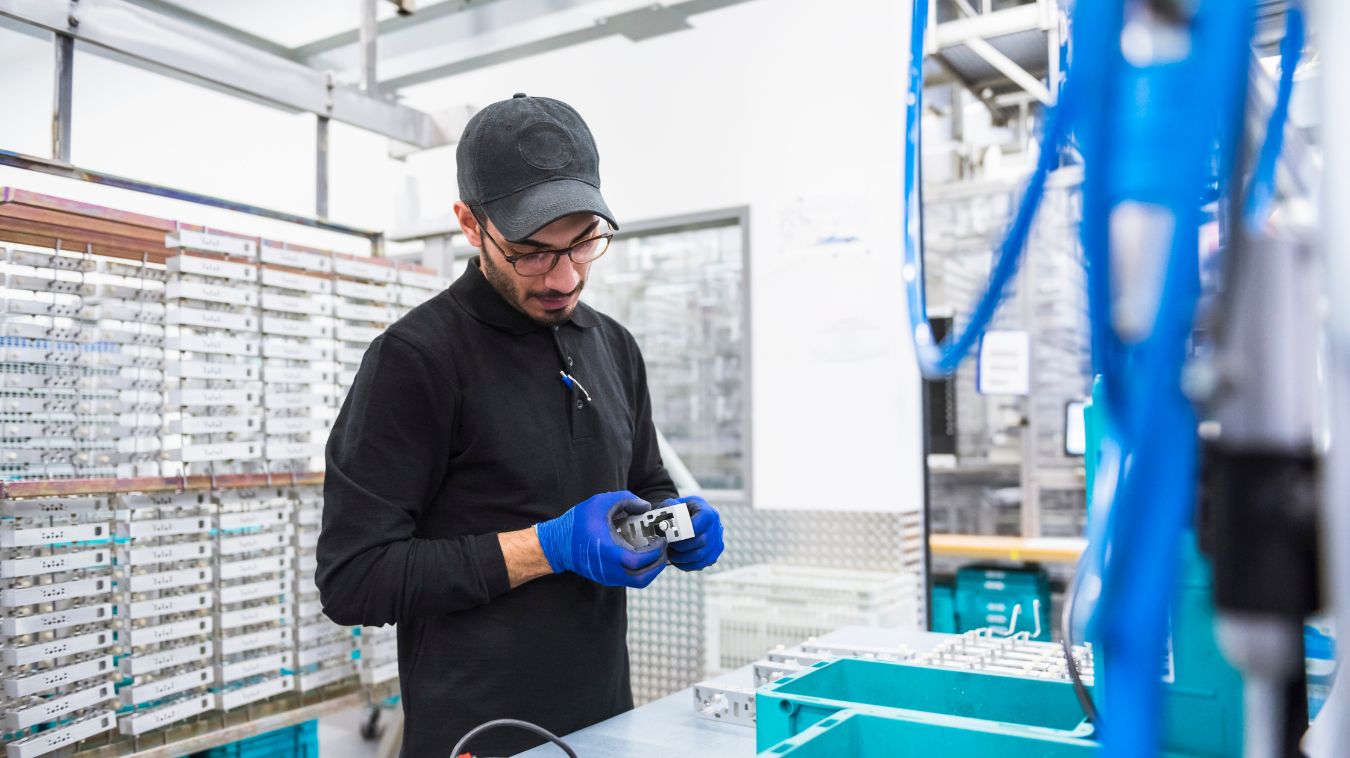
Different industries demand precision for very different reasons: safety, reliability, longevity, or regulatory approval. Evaluating a partner by application type helps you avoid capability mismatches that only surface after scale-up. Here’s a detailed overview of what each application type should look for in precision component manufacturing companies:
1. Optical & Imaging Components
Optical components fail more often from surface and alignment issues than from dimensional errors. Parts may meet drawings yet underperform if surface form, concentricity, or finish quality is inconsistent.
Precision here depends on tight control of surface accuracy, parallelism, and optical-grade finishes. Material behavior adds risk, glass, crystalline materials, and optical polymers respond differently to heat and stress during machining and coating.
During scale-up, common risks include:
Coating thickness variation and contamination
Alignment drift affecting optical performance
The best-fit partners use an optics-first manufacturing model, controlling polishing, coating, and metrology in-house.
Apollo Optical Systems follows this model by integrating optical fabrication, coating, and inspection to preserve performance from prototype through volume production.
2. Medical & Regulated Devices
Medical components fail less from machining errors and more from process and compliance breakdowns. A part that performs in prototyping can become unusable if validation or documentation is incomplete.
Precision manufacturing here depends on validated processes, full traceability, and strict change control. Cleanroom environments, controlled handling, and repeatable inspection are essential to maintain compliance across the product lifecycle. During production ramp-up, common risks include:
Undocumented process changes and validation gaps
Inconsistent quality as volumes increase
The best-fit partners are built to sustain compliance at scale, not just support early-stage builds.
3. Micro-Scale & Ultra-Precision Mechanical Components
At the micro scale, failures occur due to manufacturing limits rather than design flaws. Sub-millimeter features amplify tool deflection, vibration, and thermal effects. Precision depends on controlling tool wear, cutting forces, and temperature stability. Inspection becomes a constraint, as standard metrology often cannot measure critical micro-features accurately.
Key risks at scale include:
Rapid tool degradation affects tolerances
Assembly errors caused by stacked micro-variations
The best-fit partners specialize in micro-machining and micro-scale metrology, not adapted to conventional CNC workflows.
4. High-Volume Industrial & Automotive Components
In high-volume production, precision means repeatability over time, not extreme tolerances. Small process shifts can create widespread defects across long runs.
Manufacturing success depends on automation, SPC-driven quality control, and stable tooling performance. Global supply alignment becomes critical as production scales across regions.
Scale-related risks include:
Quality drift over extended production cycles
Inconsistent output across multiple facilities
The best-fit partners are optimized for stable, automated production at volume, not low-volume flexibility.
5. Engineered Polymers & Metal Components
Failures in engineered materials are often driven by material-process mismatch, not geometry. Thermal expansion, chemical exposure, and mechanical stress define long-term performance.
Precision depends on selecting the right manufacturing method, die casting, molding, or machining, based on material behavior and operating conditions.
Common scale risks include:
Warping, fatigue, or chemical degradation
Design constraints imposed too late by process choice
The best-fit partners engage early in material and process selection, ensuring performance holds under real-world conditions.
Let’s now have a look at where different manufacturers typically operate and how specific capabilities align with different application demands.
Fit-by-Scenario: Selecting the Right Precision Manufacturing Partner

Instead of ranking vendors generically, use the framework below to match your product scenario with the manufacturer best equipped to prevent failure, not just deliver parts.
1. Regulated Medical or Imaging Devices
Examples: Endoscopes, PPG sensors, diagnostic imaging components
Medical optical components rarely fail at the concept stage; they fail during scale-up and validation, when polymer behavior, optical tolerances, and documentation must remain stable under ISO 13485 scrutiny.
Best-fit vendors
Apollo Optical Systems: End-to-end optical control (design → SPDT → molding → coating → assembly) under ISO 13485, minimizing validation risk for imaging and sensing devices.
Phillips Precision Medicraft: Strong choice for medical components where precision machining outweighs optical complexity.
2. If You Need High-Volume Optical Components (ADAS / LiDAR)
Examples: Automotive sensing optics, light management components.
High-volume optical programs fail when designs that work in prototypes cannot hold surface quality, coating uniformity, or optical alignment at scale. In ADAS and LiDAR systems, even small yield losses translate directly into cost overruns and field-performance risk.
Best-fit vendors
Apollo Optical Systems: Optics-first polymer molding with production-equivalent SPDT validation and in-house coating control, reducing scale-up risk for automotive sensing optics.
Syntec Optics: Suitable for mid-to-high volume optical components where polymer and glass optics are combined.
3. Ultra-Precision Glass Optics
Example: Defense imaging, research-grade optical systems
Glass-based optical systems prioritize surface accuracy and material purity over volume scalability. These programs typically run at lower volumes, where precision consistency and metrology discipline matter more than throughput.
Best-fit vendors
Optimax Systems: Industry leader in ultra-precision glass polishing and high-spec optical metrology.
Rochester Precision Optics: Strong defense optics heritage with proven low-volume, high-accuracy glass fabrication.
4. Micro-Scale Mechanical Precision
Example: Sub-millimeter components and compact assemblies
At micro scales, tool wear and inspection limits, not design flaws, are the primary causes of failure.
Best-fit vendors
Micro Technic: Specialized in sub-millimeter machining with strong micro-assembly capabilities.
Amphenol Precision Components: Proven micro-machined metal components for high-reliability systems.
Before shortlisting partners, it’s critical to understand where most selection processes fail. Even experienced teams often overlook risks that only appear during scale-up or regulatory audits, turning an apparently capable supplier into a bottleneck.
Common Mistakes to Avoid When Selecting a Precision Manufacturing Partner

Choosing a precision manufacturer is not just about equipment lists or lowest quotes; mistakes here can lead to quality escapes, production delays, and compliance failures. Common pitfalls include:
1. Focusing on Specs Over Application Fit
Many companies select suppliers based on machine capability or advertised tolerances without considering how the process behaves under their specific materials, part geometry, or end-use conditions. This often results in components that technically meet the drawings but fail to perform functionally, assemble correctly, or comply with regulations.
2. Ignoring Scale-up Challenges
Prototyping may succeed, but suppliers that cannot maintain yield, process control, or surface quality under high-volume production create bottlenecks and costly rework. Issues like coating variation, thermal distortion, and alignment drift are frequently underestimated.
3. Overlooking Regulatory and Documentation Requirements
In medical, aerospace, and defense applications, a supplier’s inability to provide validated processes, traceable documentation, and cleanroom or controlled-environment capabilities can delay approvals or trigger noncompliance, even if their machining is precise.
4. Underestimating Material-process Interactions
Precision is not only dimensional. Metals, polymers, and optical materials behave differently under machining, molding, or coating. Selecting a partner unfamiliar with material-specific risks, warping, fatigue, and chemical resistance can compromise part longevity.
5. Neglecting Inspection and Metrology Capability
Some suppliers meet nominal dimensions but lack the measurement systems to verify micro-scale tolerances, surface form, or optical alignment. Without robust metrology, defects only surface post-assembly or in the field.
Having identified common selection pitfalls, the next step is to ensure your chosen partner can deliver. Asking the right questions before signing a contract reduces technical, regulatory, and scale-up risk and prevents costly surprises later.
Questions to Ask Before Signing a Contract With a Precision Manufacturing Partner

Selecting a precision manufacturer is a high-stakes decision. Beyond machines and quotes, you need insight into process maturity, quality systems, and scale readiness. The questions below are designed to confirm alignment of capabilities.
1. Capability & Process Fit
Can the supplier consistently achieve the tolerances, surface finish, and alignment required for your specific application?
How do they handle material-specific challenges (metals, polymers, optical materials) during machining, molding, or coating?
Do they have application-specific experience in your industry (medical, aerospace, automotive, sensors)?
2. Scale-Up Readiness
Can the supplier maintain quality when moving from prototyping to high-volume production?
How do they control yield, surface consistency, and alignment drift in large batches?
What is their track record for managing multi-site or global production without introducing variability?
3. Regulatory & Compliance Preparedness
Are processes validated for regulated industries (ISO 13485, FDA QSR, AS9100, NADCAP, etc.)?
Can they provide traceable documentation for materials, batches, and inspections?
Do they have cleanroom or controlled-environment capabilities if required?
4. Inspection & Quality Assurance
What measurement and metrology capabilities do they use (CMM, laser scanning, optical inspection)?
Can they verify micro-scale tolerances, surface form, and optical alignment?
How is quality monitored over time, through statistical process control (SPC), in-line inspection, and first article inspection (FAI)?
5. Material & Process Risk Management
Do they understand the thermal, chemical, and mechanical behavior of your materials under production conditions?
How do they mitigate warping, fatigue, coating variation, or surface degradation?
Are they involved in early design decisions to optimize manufacturability?
After reviewing the landscape, one pattern is clear: OEMs building optics-driven, regulated, or high-volume systems benefit most from partners who own optical performance end-to-end, not from those that outsource critical steps.
Choose Apollo Optical System as The Precision Components Manufacturing Company
Apollo Optical Systems is a US-based, optics-first precision manufacturer specializing in polymer optical components and assemblies, built to support OEMs from initial optical design through high-volume production. Unlike general precision suppliers, Apollo’s entire operating model is engineered around optical accuracy, material behavior, and scalable manufacturability.
Apollo Optical system is the best fit for the team that needs:
High-precision optical components with tight tolerance control
Regulated medical, defense, or automotive sensing programs
A single partner accountable for optical performance end-to-end.
If your product’s success depends on optical accuracy, polymer behavior, and reliable scale-up, Apollo Optical Systems offers the technical depth and manufacturing continuity to reduce risk and accelerate time-to-market.
Talk to Apollo Optical Systems to evaluate your optical design, manufacturability, and scale requirements.
Summing Up
Choosing a precision manufacturing partner is a strategic decision that impacts quality, compliance, and long-term performance. The most successful companies focus on application fit, material and process expertise, and regulatory alignment. Avoiding common pitfalls and asking the right questions before signing a contract reduces the risk of defects, rework, or compliance delays.
For applications involving optical components, micro-mechanical assemblies, or regulated medical devices, working with a partner that integrates in-house polishing, coating, and optical metrology ensures consistent performance from prototype to volume production.
Apollo Optical Systems exemplifies this approach, delivering optics and optical polymer components with surface-level precision, alignment stability, and process traceability that reduce technical and scale-up risks.
Connect with Apollo Optical Systems to assess your design, manufacturability, and production roadmap.
FAQs
1. How early should a precision manufacturer be involved in product design?
Ideally, during concept or early design freeze. Early DFM and tolerance analysis prevent optical distortion, tooling rework, and costly redesigns during scale-up.
2. Are polymer optical components suitable for long-term, mission-critical use?
Yes, when engineered correctly. Optical-grade polymers like Zeonex and Ultem offer excellent thermal stability, impact resistance, and optical clarity for demanding applications.
3. What causes most failures when scaling precision components to high volume?
Mismatch between prototype and production processes. Differences in tooling, materials, or coatings often lead to yield loss and performance drift at scale.
4. How can OEMs verify a supplier’s true precision capability?
Review metrology methods, validation data, and process repeatability—not just tolerance claims. Consistent inspection results matter more than quoted specs.
5. Is it better to work with one integrated supplier or multiple specialists?
For precision and regulated products, a single vertically integrated partner reduces tolerance stack-ups, handoff errors, and overall program risk.
How to Choose the Top Precision Components Manufacturing Companies in 2026
Drive:- https://drive.google.com/drive/folders/1RL1bJLnApW4e8YBFxMfSiEl1clO_Boeg?usp=drive_link
One wrong manufacturing partner can quietly turn precision into liability, and most businesses realize it only after costs, delays, or recalls hit.
Precision components sit at the core of today's most regulated and performance-driven industries, from medical devices to aerospace and automotive. In fact, the global precision parts market was valued at ~$226 billion in 2024 and is expected to exceed $323 billion by 2031, driven by tighter tolerances, miniaturization, and compliance demands.
Yet manufacturers continue to face challenges around supplier scalability, quality consistency, and regulatory readiness, especially as supply chains grow more complex.
That’s why understanding the top precision components manufacturing companies matters.
This guide discusses component manufacturer selection, showing you how to evaluate precision manufacturers for long-term reliability, not short-term cost savings.
Key Takeaways
Precision manufacturing success depends on process ownership and tolerance control, not just machining capability or scale.
Different applications require different partners, optics, micro-scale, metals, and plastics; each demands specialized expertise.
Scale-up is the highest-risk phase, where mismatched prototyping, tooling, or coatings cause most failures.
Vertically integrated manufacturers reduce handoffs, redesigns, and compliance gaps, especially in regulated industries.
Polymer optical components are increasingly preferred for lightweight, durable, and high-volume sensing applications.
For optics-driven and regulated products, optics-first partners like Apollo Optical Systems consistently lower risk and time-to-market.
What Are Precision Components & Why They Matter
Precision components are engineered parts manufactured to extremely tight tolerances, where even micron-level deviations can compromise functionality, safety, or regulatory approval. Unlike standard components, precision parts are designed to fit and to perform consistently under defined optical, mechanical, thermal, or environmental conditions.
These components are produced using advanced methods like CNC machining, grinding, and laser cutting to achieve tight tolerances and consistent quality across thousands of identical pieces.
Typical precision components include:
Shafts, gears, bushings, and fasteners are used in engines and drive systems.
Tiny medical parts like surgical instrument tips, implants, and diagnostic device elements.
Aerospace parts such as turbine blades, landing gear elements, and control system housings.
These parts are usually made from materials like stainless steel, titanium, aluminum, or engineered plastics chosen for strength, heat resistance, or biocompatibility, depending on where they will be used.
Why Precision Components Matter to OEMs?
For OEMs, precision components are not isolated parts; they directly affect product reliability, regulatory risk, and total cost of ownership. Here’s how precision impacts real business outcomes:
Performance and safety: In aerospace and medical devices, a small dimensional error can lead to part failure, equipment malfunction, or safety risks, so micron-level accuracy is required.
Reliability and lifespan: Well-made precision parts reduce wear, vibration, and misalignment, thereby reducing unplanned downtime and extending machine life in sectors such as automotive, power, and manufacturing.
Consistency at scale: Precision manufacturing allows thousands of identical parts to be produced with the same dimensions, which is essential for assembly lines and global spare-parts supply.
Cost and efficiency: Accurate parts reduce rework, scrap, and fitting issues, making production faster and more cost-effective while supporting just‑in‑time manufacturing.
Not every manufacturer claiming “precision” can meet these demands consistently and at scale. Understanding what precision components truly involve helps businesses evaluate suppliers based on capability depth, not marketing claims.
Once you understand what makes a component truly “precision-grade,” the next challenge is knowing how to separate capable vendors from those simply using the label.
How OEMs Should Evaluate Precision Components Manufacturing Partners
Not all precision parts vendors are built to support real-world production demands. The strongest suppliers combine engineering depth, manufacturing control, and quality systems that hold up beyond prototypes.
Below are the non-negotiable criteria businesses should use when evaluating top precision components manufacturing companies.
1. Engineering & Design-for-Manufacturing (DFM) Capability
Precision issues often begin at the design stage. Vendors that only “build to print” expose you to downstream failures. Look for vendors that offer:
Optical and mechanical design support, not just manufacturing
DFM reviews to flag tolerance stack-ups, tool limitations, and cost drivers early
Tolerance analysis and design verification before tooling or production begins
2. Manufacturing Process Control (Not Just Equipment)
Owning machines is not the same as controlling processes. Evaluate vendors on:
Proven ability to maintain tight tolerances repeatedly, not just on first articles
Documented process parameters for molding, machining, or micro-features
Capability to transition from prototyping to high-volume production without redesign.
Confirm they have multi-axis CNC machines. Ask for machine lists and capacity for your part volumes.
3. Materials Expertise Aligned to Application
Precision is inseparable from material behavior. Strong vendors demonstrate:
Experience with application-specific materials (optical polymers, metals, or hybrids)
Understanding of thermal stability, chemical resistance, and optical clarity
Guidance on material trade-offs affecting cost, durability, and compliance
4. Quality Systems & Certification Depth
Precision without traceability is a liability, especially in regulated markets. Assess:
Relevant certifications (ISO 9001, ISO 13485 for medical, AS9100 for aerospace)
In-process inspection and metrology, not only final checks
Documented corrective action and continuous improvement processes.
Defect rates should be under 0.5%; request SPC charts and in-process inspection data.
5. Vertical Integration & Supply Chain Control
Fragmented suppliers increase risk and variability. Prefer vendors that provide:
In-house manufacturing, coating, and assembly
Reduced dependency on third-party subcontractors
Single-point accountability for quality and delivery.
6. Scalability & Long-Term Partnership Fit
A vendor that works for today's volume may fail tomorrow. Confirm:
Capacity to support thousands to millions of parts
Stable tooling and process ownership
Experience supporting long product lifecycles and design revisions
Success in precision manufacturing starts with selecting partners whose processes, materials, and controls reliably perform at scale.
Vendor Evaluation Criteria That Predict Long-Term Precision Success
Most precision manufacturing failures don’t stem from machining limitations. They occur when early supplier choices overlook process ownership, scale behavior, and compliance readiness.
The criteria below consistently distinguish long-term precision partners from short-term vendors.
1. End-to-End Process Ownership: Variation multiplies every time a component changes hands. Reliable suppliers maintain full control from prototype to production, reducing defects and yield loss.
2. Application-Specific Precision Capability: Precision tolerances differ by application. Optical, polymer, and micro-mechanical parts each have unique surface, alignment, and material requirements.
3. Scale-Up and Yield Stability: Failures often appear when moving from small prototypes to high-volume runs. Partners must sustain performance consistently at scale.
4. Regulatory and Documentation Control: Precision is meaningless without traceability in regulated industries. Suppliers must ensure compliant, repeatable processes.
5. Material-Process Risk Management: Long-term failures usually stem from material-process mismatches, not geometry. Proper material guidance ensures durability and functional reliability.
Choosing the right partner starts with one mindset shift: precision manufacturing is not one-size-fits-all. What matters most is how well a manufacturer’s capabilities align with your specific application, risk profile, and regulatory exposure.
Precision Manufacturing Capabilities by Application Type
Different industries demand precision for very different reasons: safety, reliability, longevity, or regulatory approval. Evaluating a partner by application type helps you avoid capability mismatches that only surface after scale-up. Here’s a detailed overview of what each application type should look for in precision component manufacturing companies:
1. Optical & Imaging Components
Optical components fail more often from surface and alignment issues than from dimensional errors. Parts may meet drawings yet underperform if surface form, concentricity, or finish quality is inconsistent.
Precision here depends on tight control of surface accuracy, parallelism, and optical-grade finishes. Material behavior adds risk, glass, crystalline materials, and optical polymers respond differently to heat and stress during machining and coating.
During scale-up, common risks include:
Coating thickness variation and contamination
Alignment drift affecting optical performance
The best-fit partners use an optics-first manufacturing model, controlling polishing, coating, and metrology in-house.
Apollo Optical Systems follows this model by integrating optical fabrication, coating, and inspection to preserve performance from prototype through volume production.
2. Medical & Regulated Devices
Medical components fail less from machining errors and more from process and compliance breakdowns. A part that performs in prototyping can become unusable if validation or documentation is incomplete.
Precision manufacturing here depends on validated processes, full traceability, and strict change control. Cleanroom environments, controlled handling, and repeatable inspection are essential to maintain compliance across the product lifecycle. During production ramp-up, common risks include:
Undocumented process changes and validation gaps
Inconsistent quality as volumes increase
The best-fit partners are built to sustain compliance at scale, not just support early-stage builds.
3. Micro-Scale & Ultra-Precision Mechanical Components
At the micro scale, failures occur due to manufacturing limits rather than design flaws. Sub-millimeter features amplify tool deflection, vibration, and thermal effects. Precision depends on controlling tool wear, cutting forces, and temperature stability. Inspection becomes a constraint, as standard metrology often cannot measure critical micro-features accurately.
Key risks at scale include:
Rapid tool degradation affects tolerances
Assembly errors caused by stacked micro-variations
The best-fit partners specialize in micro-machining and micro-scale metrology, not adapted to conventional CNC workflows.
4. High-Volume Industrial & Automotive Components
In high-volume production, precision means repeatability over time, not extreme tolerances. Small process shifts can create widespread defects across long runs.
Manufacturing success depends on automation, SPC-driven quality control, and stable tooling performance. Global supply alignment becomes critical as production scales across regions.
Scale-related risks include:
Quality drift over extended production cycles
Inconsistent output across multiple facilities
The best-fit partners are optimized for stable, automated production at volume, not low-volume flexibility.
5. Engineered Polymers & Metal Components
Failures in engineered materials are often driven by material-process mismatch, not geometry. Thermal expansion, chemical exposure, and mechanical stress define long-term performance.
Precision depends on selecting the right manufacturing method, die casting, molding, or machining, based on material behavior and operating conditions.
Common scale risks include:
Warping, fatigue, or chemical degradation
Design constraints imposed too late by process choice
The best-fit partners engage early in material and process selection, ensuring performance holds under real-world conditions.
Let’s now have a look at where different manufacturers typically operate and how specific capabilities align with different application demands.
Fit-by-Scenario: Selecting the Right Precision Manufacturing Partner
Instead of ranking vendors generically, use the framework below to match your product scenario with the manufacturer best equipped to prevent failure, not just deliver parts.
1. Regulated Medical or Imaging Devices
Examples: Endoscopes, PPG sensors, diagnostic imaging components
Medical optical components rarely fail at the concept stage; they fail during scale-up and validation, when polymer behavior, optical tolerances, and documentation must remain stable under ISO 13485 scrutiny.
Best-fit vendors
Apollo Optical Systems: End-to-end optical control (design → SPDT → molding → coating → assembly) under ISO 13485, minimizing validation risk for imaging and sensing devices.
Phillips Precision Medicraft: Strong choice for medical components where precision machining outweighs optical complexity.
2. If You Need High-Volume Optical Components (ADAS / LiDAR)
Examples: Automotive sensing optics, light management components.
High-volume optical programs fail when designs that work in prototypes cannot hold surface quality, coating uniformity, or optical alignment at scale. In ADAS and LiDAR systems, even small yield losses translate directly into cost overruns and field-performance risk.
Best-fit vendors
Apollo Optical Systems: Optics-first polymer molding with production-equivalent SPDT validation and in-house coating control, reducing scale-up risk for automotive sensing optics.
Syntec Optics: Suitable for mid-to-high volume optical components where polymer and glass optics are combined.
3. Ultra-Precision Glass Optics
Example: Defense imaging, research-grade optical systems
Glass-based optical systems prioritize surface accuracy and material purity over volume scalability. These programs typically run at lower volumes, where precision consistency and metrology discipline matter more than throughput.
Best-fit vendors
Optimax Systems: Industry leader in ultra-precision glass polishing and high-spec optical metrology.
Rochester Precision Optics: Strong defense optics heritage with proven low-volume, high-accuracy glass fabrication.
4. Micro-Scale Mechanical Precision
Example: Sub-millimeter components and compact assemblies
At micro scales, tool wear and inspection limits, not design flaws, are the primary causes of failure.
Best-fit vendors
Micro Technic: Specialized in sub-millimeter machining with strong micro-assembly capabilities.
Amphenol Precision Components: Proven micro-machined metal components for high-reliability systems.
Before shortlisting partners, it’s critical to understand where most selection processes fail. Even experienced teams often overlook risks that only appear during scale-up or regulatory audits, turning an apparently capable supplier into a bottleneck.
Common Mistakes to Avoid When Selecting a Precision Manufacturing Partner
Choosing a precision manufacturer is not just about equipment lists or lowest quotes; mistakes here can lead to quality escapes, production delays, and compliance failures. Common pitfalls include:
1. Focusing on Specs Over Application Fit
Many companies select suppliers based on machine capability or advertised tolerances without considering how the process behaves under their specific materials, part geometry, or end-use conditions. This often results in components that technically meet the drawings but fail to perform functionally, assemble correctly, or comply with regulations.
2. Ignoring Scale-up Challenges
Prototyping may succeed, but suppliers that cannot maintain yield, process control, or surface quality under high-volume production create bottlenecks and costly rework. Issues like coating variation, thermal distortion, and alignment drift are frequently underestimated.
3. Overlooking Regulatory and Documentation Requirements
In medical, aerospace, and defense applications, a supplier’s inability to provide validated processes, traceable documentation, and cleanroom or controlled-environment capabilities can delay approvals or trigger noncompliance, even if their machining is precise.
4. Underestimating Material-process Interactions
Precision is not only dimensional. Metals, polymers, and optical materials behave differently under machining, molding, or coating. Selecting a partner unfamiliar with material-specific risks, warping, fatigue, and chemical resistance can compromise part longevity.
5. Neglecting Inspection and Metrology Capability
Some suppliers meet nominal dimensions but lack the measurement systems to verify micro-scale tolerances, surface form, or optical alignment. Without robust metrology, defects only surface post-assembly or in the field.
Having identified common selection pitfalls, the next step is to ensure your chosen partner can deliver. Asking the right questions before signing a contract reduces technical, regulatory, and scale-up risk and prevents costly surprises later.
Questions to Ask Before Signing a Contract With a Precision Manufacturing Partner
Selecting a precision manufacturer is a high-stakes decision. Beyond machines and quotes, you need insight into process maturity, quality systems, and scale readiness. The questions below are designed to confirm alignment of capabilities.
1. Capability & Process Fit
Can the supplier consistently achieve the tolerances, surface finish, and alignment required for your specific application?
How do they handle material-specific challenges (metals, polymers, optical materials) during machining, molding, or coating?
Do they have application-specific experience in your industry (medical, aerospace, automotive, sensors)?
2. Scale-Up Readiness
Can the supplier maintain quality when moving from prototyping to high-volume production?
How do they control yield, surface consistency, and alignment drift in large batches?
What is their track record for managing multi-site or global production without introducing variability?
3. Regulatory & Compliance Preparedness
Are processes validated for regulated industries (ISO 13485, FDA QSR, AS9100, NADCAP, etc.)?
Can they provide traceable documentation for materials, batches, and inspections?
Do they have cleanroom or controlled-environment capabilities if required?
4. Inspection & Quality Assurance
What measurement and metrology capabilities do they use (CMM, laser scanning, optical inspection)?
Can they verify micro-scale tolerances, surface form, and optical alignment?
How is quality monitored over time, through statistical process control (SPC), in-line inspection, and first article inspection (FAI)?
5. Material & Process Risk Management
Do they understand the thermal, chemical, and mechanical behavior of your materials under production conditions?
How do they mitigate warping, fatigue, coating variation, or surface degradation?
Are they involved in early design decisions to optimize manufacturability?
After reviewing the landscape, one pattern is clear: OEMs building optics-driven, regulated, or high-volume systems benefit most from partners who own optical performance end-to-end, not from those that outsource critical steps.
Choose Apollo Optical System as The Precision Components Manufacturing Company
Apollo Optical Systems is a US-based, optics-first precision manufacturer specializing in polymer optical components and assemblies, built to support OEMs from initial optical design through high-volume production. Unlike general precision suppliers, Apollo’s entire operating model is engineered around optical accuracy, material behavior, and scalable manufacturability.
Apollo Optical system is the best fit for the team that needs:
High-precision optical components with tight tolerance control
Regulated medical, defense, or automotive sensing programs
A single partner accountable for optical performance end-to-end.
If your product’s success depends on optical accuracy, polymer behavior, and reliable scale-up, Apollo Optical Systems offers the technical depth and manufacturing continuity to reduce risk and accelerate time-to-market.
Talk to Apollo Optical Systems to evaluate your optical design, manufacturability, and scale requirements.
Summing Up
Choosing a precision manufacturing partner is a strategic decision that impacts quality, compliance, and long-term performance. The most successful companies focus on application fit, material and process expertise, and regulatory alignment. Avoiding common pitfalls and asking the right questions before signing a contract reduces the risk of defects, rework, or compliance delays.
For applications involving optical components, micro-mechanical assemblies, or regulated medical devices, working with a partner that integrates in-house polishing, coating, and optical metrology ensures consistent performance from prototype to volume production.
Apollo Optical Systems exemplifies this approach, delivering optics and optical polymer components with surface-level precision, alignment stability, and process traceability that reduce technical and scale-up risks.
Connect with Apollo Optical Systems to assess your design, manufacturability, and production roadmap.
FAQs
1. How early should a precision manufacturer be involved in product design?
Ideally, during concept or early design freeze. Early DFM and tolerance analysis prevent optical distortion, tooling rework, and costly redesigns during scale-up.
2. Are polymer optical components suitable for long-term, mission-critical use?
Yes, when engineered correctly. Optical-grade polymers like Zeonex and Ultem offer excellent thermal stability, impact resistance, and optical clarity for demanding applications.
3. What causes most failures when scaling precision components to high volume?
Mismatch between prototype and production processes. Differences in tooling, materials, or coatings often lead to yield loss and performance drift at scale.
4. How can OEMs verify a supplier’s true precision capability?
Review metrology methods, validation data, and process repeatability—not just tolerance claims. Consistent inspection results matter more than quoted specs.
5. Is it better to work with one integrated supplier or multiple specialists?
For precision and regulated products, a single vertically integrated partner reduces tolerance stack-ups, handoff errors, and overall program risk.