

A recent Photonics Spectra article by Dale Buralli highlights why it’s time to rethink long-held assumptions about polymer aspheres.
Optical engineering has always balanced performance, size, budget, and manufacturability. For years, aspheres were treated as specialty elements — powerful, but often dismissed as costly, complex, or reserved for premium systems.
In a new article published in Photonics Spectra, Dale Buralli challenges that mindset and explains how today’s polymer optics have fundamentally rewritten the rulebook.
What the Photonics Spectra Article Covers
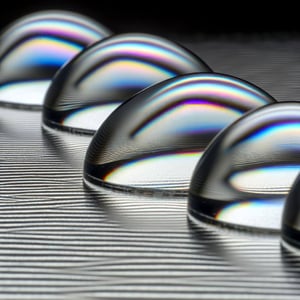
Dale’s piece explores how molded polymer optics have opened the door to widespread, practical use of aspheric surfaces — not as exotic add-ons, but as cost-effective design tools that improve performance and streamline assemblies.
Key takeaways from the article:
-
Aspheres are no longer “luxury” features. Modern molding techniques allow complex geometries to be produced with precision and repeatability.
-
Manufacturability and performance now work together. With polymers, designers can incorporate aspheres early, reducing the number of elements needed and improving system efficiency.
-
Cost and lead-time advantages are significant. Injection molding enables high accuracy at scale, often at a fraction of the cost of comparable glass components.
-
Better correction doesn’t mean budget creep. Polymer aspheres enable advanced optical performance in markets where traditional optics would be too slow or expensive to fabricate.
Dale’s central argument is that discounting aspheres is outdated thinking. In today’s landscape, they’re often the smartest path to meeting tight system requirements.
Why This Matters for Engineering Teams
Organizations developing imaging systems, medical devices, AR/VR components, drones, sensors, or compact optical assemblies face rising pressure for:
-
higher performance
-
smaller form factors
-
faster development cycles
-
scalable production
Polymer optics — particularly molded aspheres — directly address those challenges. They deliver real engineering leverage without sacrificing manufacturability or cost.
This aligns with Apollo’s long-standing approach: pairing advanced optical design with practical, scalable production methods.
Read Dale Buralli’s Full Article
The full article is available here on Photonics Spectra:
Polymer Optics Reveal That Discounting Aspheres Is a Mistake
https://www.photonics.com/Articles/Polymer-Optics-Reveal-That-Discounting-Aspheres/p5/a71565
It’s a concise, insightful overview for anyone evaluating materials, refining an optical system, or weighing performance trade-offs in next-generation designs.