
This application note examines the role of adaptive optics (AO) in structured illumination microscopy (SIM), with emphasis on optical correction mechanisms, system limitations, and hardware constraints, including considerations relevant to polymer optical components used in supporting optics.
It is intended for optical and instrumentation engineers working on advanced microscopy systems, particularly where image quality is limited by aberrations introduced by optics, samples, or system geometry.
This document avoids implying that adaptive optics universally resolves imaging limitations and instead focuses on where AO is effective, where it is constrained, and what must be validated.
What structured illumination microscopy is (engineering view)
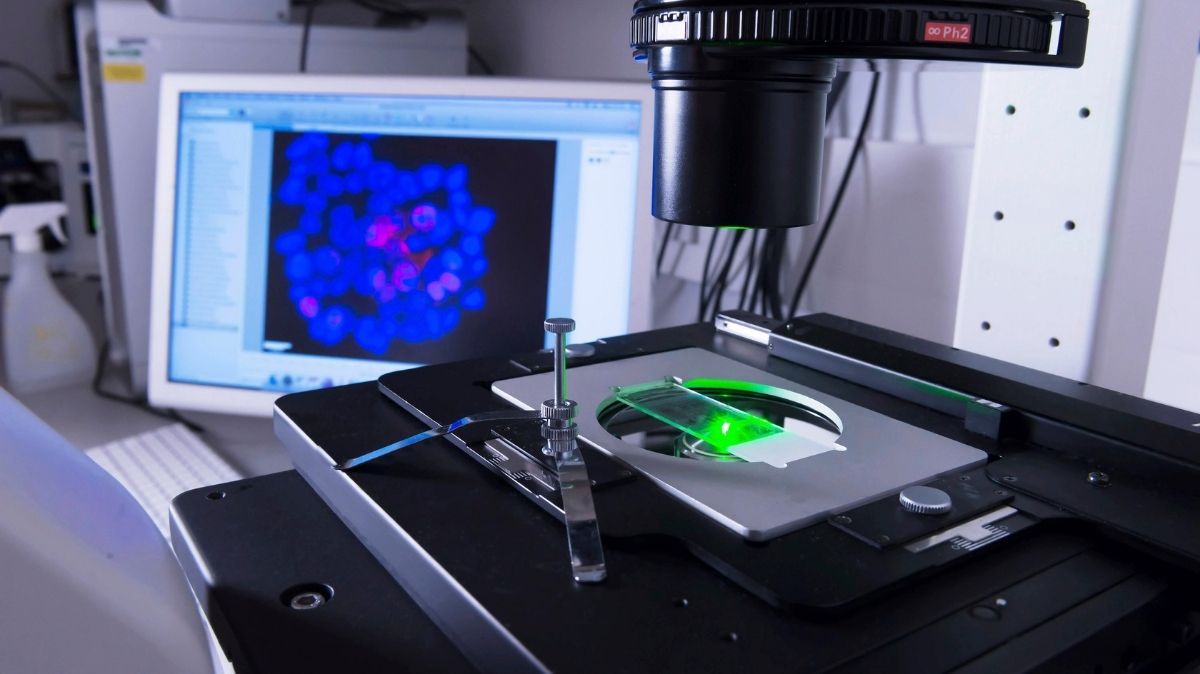
Structured illumination microscopy enhances spatial resolution by:
Projecting known illumination patterns onto a sample
Capturing multiple phase-shifted images
Computationally reconstructing high-resolution information
SIM performance depends on:
Precise illumination pattern formation
Optical system stability
Accurate phase and modulation transfer
Aberrations in the illumination or detection paths can degrade reconstruction quality.
What adaptive optics does in microscopy
Adaptive optics refers to dynamic wavefront correction using elements such as:
Deformable mirrors
Spatial light modulators
Adaptive refractive or reflective components
AO systems compensate for low- to mid-order aberrations introduced by:
Optical components
Index variations in samples
System misalignment
AO does not increase fundamental resolution limits on its own; it improves effective system performance by restoring intended wavefront quality.
Why AO is used in SIM systems
In SIM, aberrations can:
Distort illumination patterns
Reduce modulation contrast
Introduce phase errors
Degrade reconstruction fidelity
Adaptive optics is introduced to:
Preserve illumination pattern integrity
Improve modulation depth
Stabilize phase relationships across acquisitions
These benefits depend strongly on system architecture and correction strategy.
Limits of adaptive optics in SIM
Adaptive optics cannot:
Correct high-spatial-frequency aberrations beyond actuator resolution
Compensate for all sample-induced scattering
Eliminate noise, photobleaching, or reconstruction artifacts
Replace optical system stability and calibration
AO improves performance within defined correction bandwidths.
Overstating AO capability leads to unrealistic system expectations.
Optical components and material considerations
Role of polymer optics
Polymer optical components may be used in SIM systems for:
Beam shaping
Illumination delivery
Alignment or relay optics
Weight or integration constraints
However, polymers introduce considerations including:
Higher thermal expansion
Potential long-term dimensional drift
Sensitivity to coating stress
Environmental dependence
Adaptive optics cannot compensate for time-varying mechanical drift or unstable substrates.
Surface quality and wavefront impact
AO correction effectiveness depends on:
Initial surface quality of optical components
Stability of aberrations over time
Predictability of system behavior
Poor surface quality or unstable materials increase correction burden and reduce AO effectiveness.
System-level integration considerations
AO must be integrated with:
Illumination optics
Detection optics
Control algorithms
Reconstruction software
Key integration challenges include:
Placement of AO elements within conjugate planes
Calibration repeatability
Interaction between AO correction and SIM reconstruction
AO is a system-level design choice, not a drop-in fix.
Temporal and environmental stability
SIM systems often require:
Long acquisition sequences
Phase stability across multiple frames
Thermal and mechanical stability
Adaptive optics assumes:
Aberrations are measurable and correctable within the acquisition timeframe
If aberrations vary faster than AO correction can respond, performance gains diminish.
Manufacturing and reliability considerations
AO-related optical components must meet:
Surface figure and finish requirements
Coating durability
Alignment repeatability
For polymer-based optics, long-term behavior under:
Thermal exposure
Mechanical mounting stress
Illumination-induced heating
must be considered during design.
Reliability issues cannot be corrected algorithmically.
Validation and performance assessment
A defensible AO-SIM implementation should include:
Optical validation
Wavefront error before and after correction
Modulation contrast improvement
Imaging validation
Resolution and contrast metrics
Reconstruction consistency
Stability testing
Thermal drift assessment
Time-dependent performance monitoring
AO benefit should be demonstrated under realistic imaging conditions, not idealized test samples.
Adaptive optics vs alternative mitigation strategies
AO is most effective when combined with good optical design, not used to compensate for it.
Summary
Adaptive optics can significantly improve structured illumination microscopy performance by:
Restoring wavefront quality
Preserving illumination pattern fidelity
Improving reconstruction reliability
However, AO:
Does not remove fundamental system limits
Requires stable optical and mechanical foundations
Must be validated as part of the full imaging system
In systems using polymer optics, material behavior and stability remain first-order considerations.
Key takeaway for engineers
When applying adaptive optics to SIM systems:
Treat AO as a correction tool, not a cure-all
Minimize aberrations through optical design first
Ensure substrate and component stability
Validate performance under real operating conditions
Adaptive optics succeeds when engineering discipline precedes correction capability.
How Apollo Optical Systems Can Help Advance Your Deep Imaging Needs?
Specialized optical partners can accelerate the development and deployment of adaptive SIM systems. Apollo Optical Systems brings decades of precision optics expertise to the table, providing both design and manufacturing support for complex imaging components.
Here’s how we can help you:
Custom Optical Components: Apollo provides aspheric lenses, microlens arrays, and diffractive optics tailored to A-SIM setups, improving image quality at depth.
Prototype-to-Production Support: Rapid SPDT prototyping and high-volume injection molding ensure the timely development of components.
Precision Coatings and Materials Expertise: Advanced AR coatings and polymer optics reduce light scattering, enhancing penetration and contrast in deep imaging.
Assembly and Integration: Apollo supports complete optical assemblies, enabling seamless integration into complex microscopy systems.
By partnering with Apollo, research teams can reduce design-to-deployment timelines, minimize optical performance risk, and scale imaging solutions from prototype to routine lab use.
Conclusion
Adaptive Structured Illumination Microscopy represents a significant leap in deep imaging capabilities. By combining advanced illumination strategies with real-time computational reconstruction, A-SIM enables researchers to visualize fine structures in thick, scattering, or heterogeneous samples that were previously difficult or impossible to image.
Implementing adaptive SIM successfully requires attention to optical aberrations, computational resources, and sample preparation. Working with partners like Apollo Optical Systems, which offers custom lenses, coatings, and assemblies, can ensure your A-SIM system performs reliably and consistently.
Contact us today to discuss how precision optical solutions can advance your adaptive microscopy projects and imaging innovations.
FAQs
How does a deformable mirror (DM) correct aberrations?
A deformable mirror corrects aberrations by dynamically changing its surface shape using multiple actuators. These adjustments compensate for optical distortions in real time, restoring the wavefront and improving image sharpness, contrast, and resolution during imaging.
What is remote focusing in adaptive SIM systems?
Remote focusing allows rapid axial (z-axis) scanning without physically moving the objective or sample. By shifting the focal plane optically, adaptive SIM systems achieve faster 3D imaging with reduced mechanical vibration and improved stability.
Which samples are suitable for deep 3D-SIM imaging?
Deep 3D-SIM imaging is suitable for optically thick biological samples such as organoids, tissue sections, embryos, and multicellular spheroids. Samples with good fluorescence labeling and moderate scattering benefit most from adaptive aberration correction.
Can DeepSIM be used for live cell imaging and manipulation?
Yes, DeepSIM supports live cell imaging by combining fast acquisition, low phototoxicity, and adaptive optics correction. This enables prolonged observation of dynamic cellular processes and, when integrated with optical tools, precise manipulation in living samples.
What hardware is required for DeepSIM systems?
DeepSIM systems typically require a structured illumination microscope, high-speed camera, deformable mirror or adaptive optics module, remote focusing optics, precise illumination control, and dedicated reconstruction software for real-time 3D super-resolution imaging.