What are examples of optical devices?
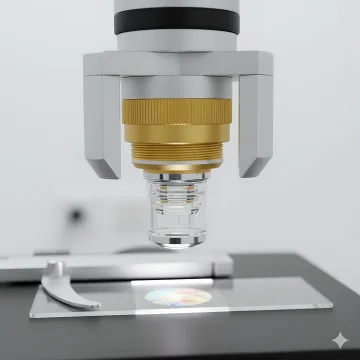
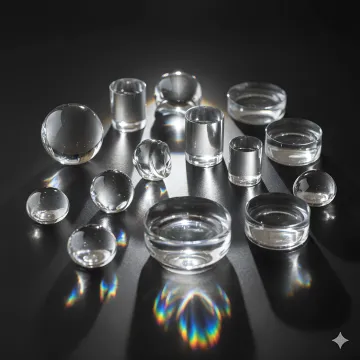
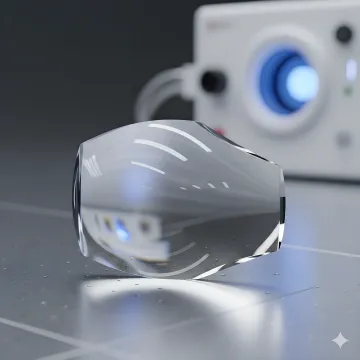
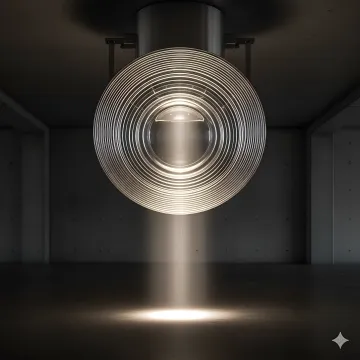
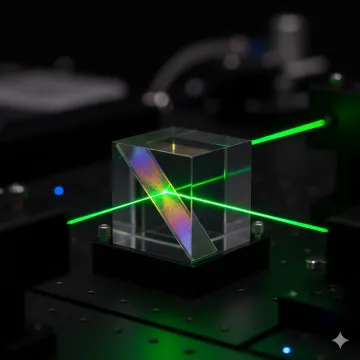
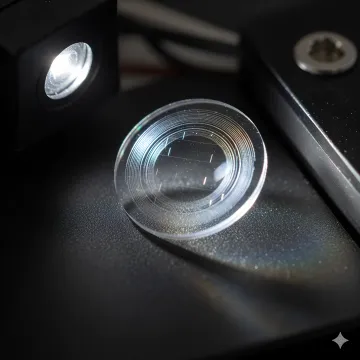
Examples of optical medical devices include endoscopes, diagnostic equipment, pulse oximeters, photoplethysmography sensors, robotic surgery systems, microscopy equipment, surgical imaging systems, and patient monitoring devices. These devices utilize precision optical components such as microscope objective lenses, refractive optical elements, freeform lenses, optical windows, beam splitters, and diffractive elements manufactured to medical device standards. Optical components used in medical devices must maintain precise image clarity, stable focal behavior, dimensional repeatability, consistent transmission, and long-term material integrity. Performance must remain stable under sterilization exposure, humidity, thermal cycling, mechanical handling, and repeated clinical use. Medical optical systems are intolerant of drift.
What are the 4 optical instruments?
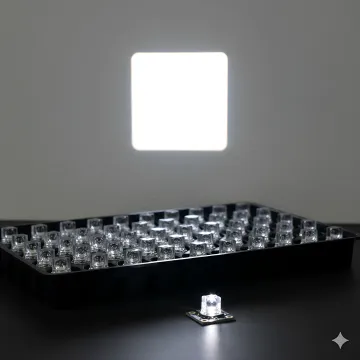
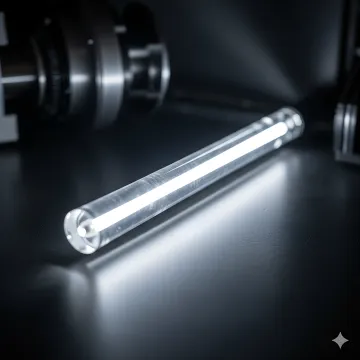
Four key categories of optical medical instruments include: diagnostic imaging equipment (microscopy and imaging systems for clinical laboratories), endoscopes (for minimally invasive procedures), surgical equipment (robotic surgery systems with optical tracking), and patient monitoring devices (pulse oximeters and photoplethysmography sensors). Each requires precision optical components manufactured to tight tolerances with biocompatible materials. Medical optical systems may incorporate micro-lenses, imaging lenses, illumination optics, light guides, beam shaping elements, optical windows, and protective covers. Each component influences image resolution, brightness uniformity, contrast, and system alignment. Tolerance stack-up directly impacts device performance.
What tolerances can be achieved for medical optical components?
Medical optical components can achieve concentricity of 0.002mm, surface roughness less than 50Å RMS, and radius of curvature tolerance of ±0.1%. For diffractive elements, 97-99% diffraction efficiency with 1.5nm surface finishes is achievable through precision single-point diamond turning and polymer injection molding. Polymer enables lightweight assemblies, integrated features, complex micro-geometry, impact resistance, and cost-effective production. However, polymer introduces behaviors that must be engineered around: thermal expansion, residual molding stress, creep over time, sensitivity to sterilization processes, and UV or chemical exposure effects. Material selection must reflect clinical and environmental conditions.
What materials are used for biocompatible optical medical devices?
Biocompatible optical medical devices utilize chemically stable, non-toxic polymer materials including PMMA/Acrylic, Polycarbonate, and specialty polymers that meet FDA-compliant standards. These materials are ISO 13485-2016 certified for healthcare applications and offer lightweight construction, chemical stability, and flexible design options for medical device integration. Medical devices may be exposed to autoclave cycles, chemical sterilants, elevated humidity, and repeated thermal transitions. Polymers can expand and contract, relax under stress, develop micro-cracks, and shift optical geometry. Optical stability must be validated after repeated sterilization cycles — not just initial testing.
How does ISO 13485-2016 certification benefit medical device projects?
ISO 13485-2016 certification ensures medical device quality management throughout manufacturing, providing consistent standards and regulatory compliance for critical healthcare applications. This certification includes comprehensive quality control processes, design verification, tolerance analysis, and quality assurance testing that accelerates development timelines and ensures seamless project execution for medical device manufacturers. Injection molding introduces molecular orientation, internal stress gradients, and potential birefringence. In imaging systems, stress-induced distortion can affect image sharpness, color consistency, and polarization behavior. Gate design, cooling control, and process discipline influence optical reliability.
What manufacturing capabilities are available for medical optical devices?
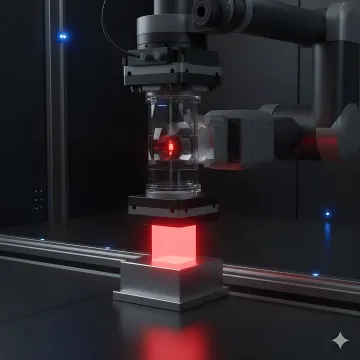
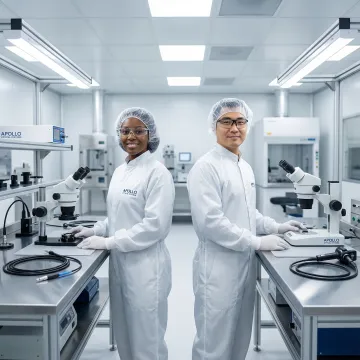
Manufacturing capabilities include single-point diamond turning for prototypes and precision polymer injection molding for high-volume production. Additional in-house capabilities encompass custom optical and mechanical design services, design verification, tolerance analysis, and comprehensive metrology testing to ensure consistent quality throughout the manufacturing process. Medical optical systems are often compact and tightly integrated. Polymer movement can alter focal distance, shift lens alignment, introduce image distortion, and reduce repeatability. Even small dimensional variation can impact clinical performance. Tolerance allocation must reflect real material behavior.
What advantages do polymer optical components offer for surgical equipment?
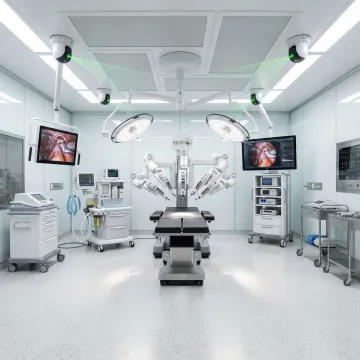
Polymer optical components for surgical equipment provide lightweight construction, total internal reflection capabilities, and customizable integration for robotic surgery systems and position tracking. They offer large aperture capability, reduced system complexity, cost-effective solutions compared to traditional glass optics, and can achieve tight manufacturing tolerances while maintaining exceptional optical performance and biocompatibility required for surgical applications. Medical optical components may include anti-reflective coatings, hard coats, IR coatings, and protective surface treatments. On polymer substrates, coating durability depends on adhesion control, thermal expansion compatibility, and environmental resistance. Coating failure becomes immediately visible in imaging systems.
What optical coatings are compatible with medical device requirements?
Available optical coatings for medical devices include anti-reflective, reflective, and specialized evaporative coatings. These coatings are designed for medical device optical performance and biocompatibility requirements, with custom coating design capabilities, in-house manufacturing, and compatibility across various substrate materials including polymers, metal substrates, and glass substrates. Polymer may not be appropriate when repeated high-temperature sterilization is required, extreme dimensional stability is critical, creep cannot be tolerated, or environmental exposure is severe. Glass or hybrid assemblies may provide greater long-term stability in certain applications. Material selection must align with regulatory and lifecycle expectations.
What production and validation discipline is required for medical optical components?
Medical optical components require dimensional repeatability, consistent optical performance, documented process control, and validated manufacturing procedures. Production ramp can introduce resin lot variability, parameter drift, and tooling wear. If process windows are narrow, yield and consistency may suffer. Robust production requires disciplined monitoring and validation.
What should experienced medical teams evaluate early in optical component development?
Rather than asking 'Can this be molded?', experienced teams ask: How stable is clarity after sterilization cycles? How is residual stress measured and controlled? What is the creep profile under operating conditions? How stable is optical performance over time? How is repeatability validated at scale? These questions define long-term reliability.