This application note describes optical coatings used in defense and security systems, with emphasis on functional performance, environmental robustness, manufacturing constraints, and validation requirements, including considerations relevant to polymer optical substrates.
It is intended for optical, mechanical, and systems engineers working on imaging, sensing, targeting, surveillance, and situational-awareness systems, where reliability under harsh conditions is critical.
This document avoids classified, sensitive, or system-specific claims and focuses on general engineering principles applicable to defense environments.
Role of optical coatings in defense systems
In defense applications, optical coatings are used to:
Improve transmission and signal-to-noise ratio
Control reflection and stray light
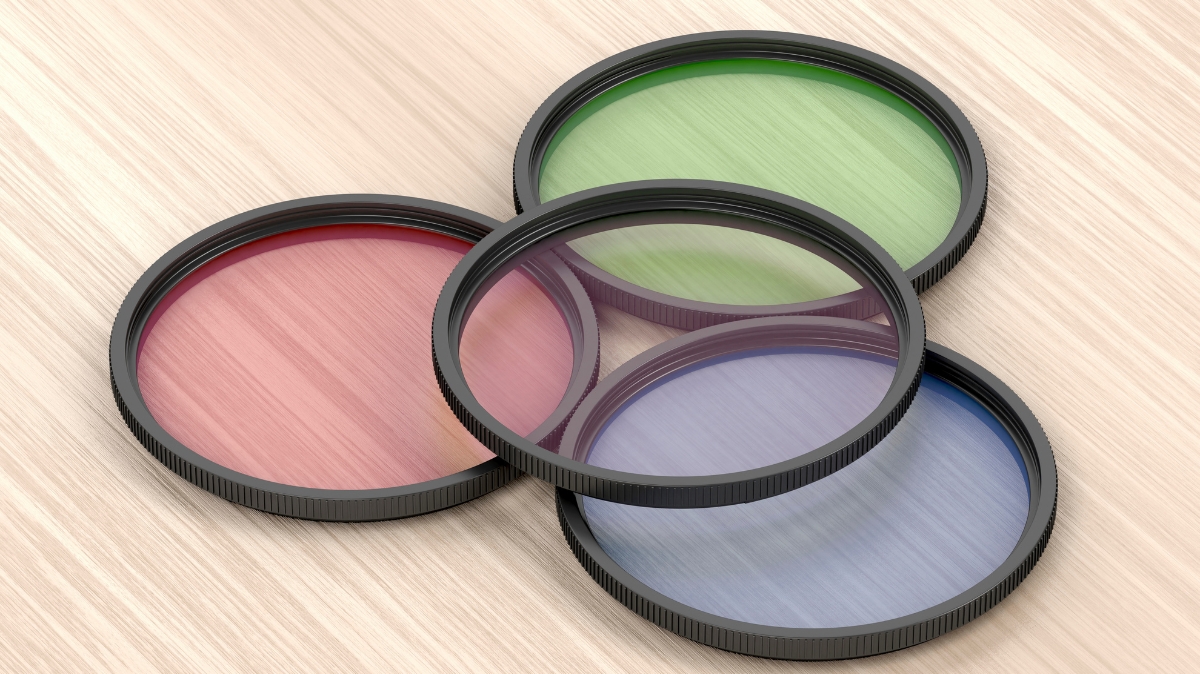
Enable spectral selectivity (e.g., visible, SWIR, MWIR, LWIR)
Protect optical surfaces from environmental exposure
Coatings are performance enablers, not standalone solutions. Their effectiveness depends on system architecture and operating conditions.
Common coating functions in defense optics

Anti-reflection (AR) coatings
Used to reduce surface reflections and improve throughput.
Performance depends on:
Wavelength band
Angle of incidence
Polarization
Environmental exposure
Broadband or wide-angle AR coatings involve trade-offs in complexity and durability.
Spectral and band-selective coatings
Used for:
Filtering specific wavelength bands
Blocking unwanted spectral regions
Separating channels in multispectral systems
These coatings are highly sensitive to:
Angle of incidence
Layer thickness accuracy
Substrate behavior
Spectral performance must be specified under defined operating conditions.
Reflective and beam-splitting coatings
Applied in systems requiring:
Controlled reflection/transmission ratios
Defined polarization behavior
Stable performance across temperature ranges
These coatings often require precise alignment and angular control within the system.
Environmental demands in defense applications
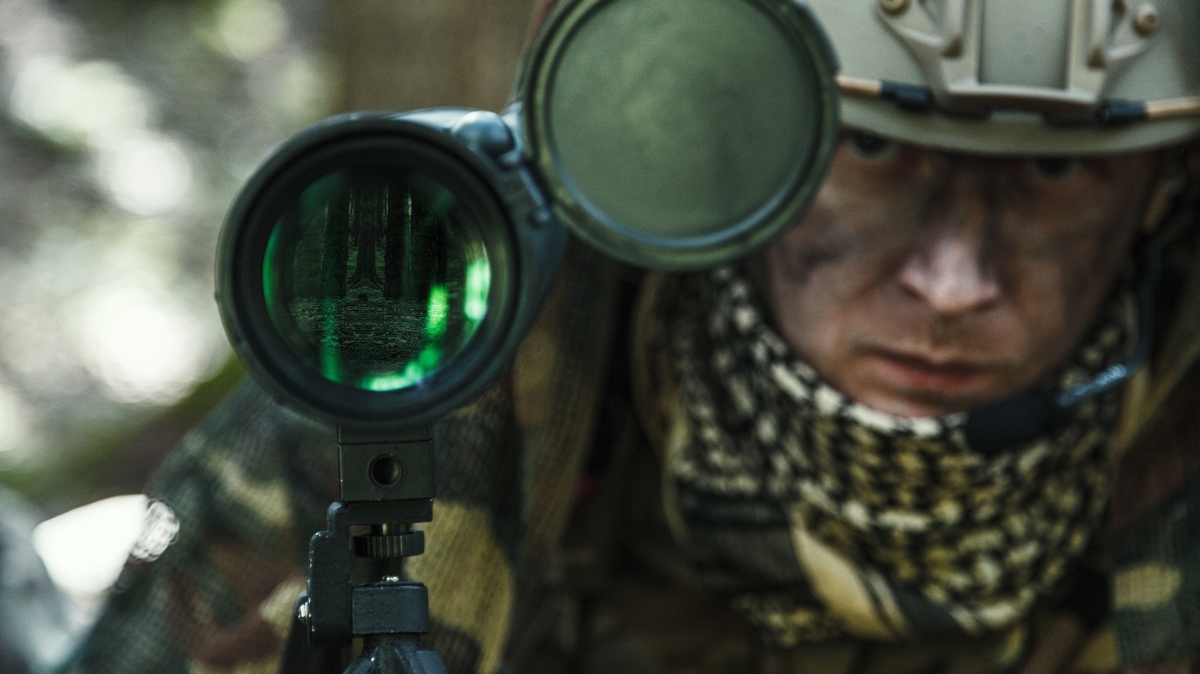
Defense optics may be exposed to:
Wide temperature ranges
Rapid thermal cycling
Mechanical shock and vibration
Dust, moisture, and chemical exposure
Optical coatings must maintain functional performance under these conditions, but no coating is immune to environmental stress.
Performance claims should be tied to validated test conditions, not generalized statements.
Polymer substrates in defense optics
Polymer optics may be used in defense systems due to:
Weight reduction
Impact resistance
Design integration flexibility
Manufacturing scalability
However, polymer substrates introduce additional coating considerations:
Higher coefficient of thermal expansion (CTE)
Lower allowable deposition temperatures
Viscoelastic behavior
Greater sensitivity to coating stress
Coating designs suitable for glass optics may not be transferable to polymers without modification.
Coating stress and optical stability
Residual stress in optical coatings can cause:
Surface deformation
Focus shift
Wavefront error
Adhesion failure under cycling
In defense applications, stress management is critical because:
Optical alignment margins may be limited
Systems may operate across broad temperature ranges
Long-term stability is often required
Low-stress designs involve material selection, stack architecture, and controlled deposition processes.
Manufacturing and process considerations

Deposition process control
Defense-grade coatings require:
Stable and repeatable deposition processes
Tight control of substrate temperature
Defined fixturing strategies
Documented process parameters
Process repeatability is as important as nominal performance.
Geometry and uniformity
Coating uniformity depends on:
Part geometry
Aperture size
Coating architecture
Fixturing and rotation strategy
Uniformity targets must be defined per part, not assumed.
Durability and lifetime considerations
Coating durability must be evaluated relative to:
Expected mission duration
Storage conditions
Maintenance and cleaning procedures
Environmental exposure profiles
Common durability concerns include:
Abrasion resistance
Adhesion under thermal cycling
Long-term spectral drift
Lifetime claims should be supported by application-relevant testing, not extrapolated from unrelated use cases.
Qualification and validation strategy
A defensible coating implementation for defense optics should include:
Optical performance verification
Spectral transmission/reflection
Angular and polarization response
Mechanical and environmental testing
Thermal cycling
Shock and vibration (as applicable)
Humidity or contamination exposure
Process consistency verification
Lot-to-lot repeatability
Traceable process documentation
Validation should reflect realistic operating conditions, not idealized laboratory setups.
Coatings as part of a defense optical system
Optical coatings interact with:
Optical substrates
Mechanical mounts
Alignment tolerances
Environmental sealing strategies
A coating that meets standalone specifications may still fail to meet system-level performance if integration effects are not considered.
Defense optics should be evaluated holistically, not component-by-component.
Summary
Optical coatings are critical to the performance of defense systems, but they are governed by:
Environmental stress
Substrate behavior
Manufacturing limits
Validation discipline
In polymer-based defense optics, coating success depends on stress management, process control, and realistic qualification.
There is no universal defense coating — only application-specific, validated solutions.
Key takeaway for engineers
When specifying optical coatings for defense applications:
Define operating conditions explicitly
Treat stress and durability as primary design parameters
Demand validation under representative environments
Avoid generic performance assumptions
Reliable defense optics are built through engineering realism, not marketing certainty.
Partner with Apollo Optical Systems to ensure mission-ready optics with precision coatings engineered for defense-grade reliability.
From prototype to high-volume production, we deliver consistent, durable, and fully tested optical solutions that meet your toughest operational requirements.
Optimize Your Defense Optical Coatings with Apollo Optical Systems
Apollo Optical Systems is a precision optics partner headquartered in Rochester, NY, specializing in designing and manufacturing polymer optical components and advanced optical coatings for demanding applications, including defense.
With decades of experience in thin‑film technology and polymer optics, Apollo combines deep optical engineering with integrated in‑house manufacturing, from concept through coating and testing, to deliver reliable, defense‑ready optical solutions.
Comprehensive Coating Expertise: Advanced thin‑film coatings including anti‑reflective, mirror, filter, and beamsplitter coatings engineered for UV, visible, and NIR ranges, all developed and applied with precision under controlled conditions.
Polymer‑Specific Processes: Specialized polymer coating experience that accounts for lower temperature tolerances of plastics versus glass, ensuring adhesion and performance on injection‑molded optics.
In‑House Engineering and Metrology: End‑to‑end capabilities from optical/mechanical design to measurement and validation, enabling consistent spectral performance and durability verification before delivery.
Flexible Production Scale: Solutions that support rapid prototyping through to high‑volume batches, helping defense programs accelerate development without sacrificing quality.
Apollo’s integrated approach reduces technical risk and supplier complexity, making it easier to meet strict defense performance, environmental, and lifecycle requirements with confidence.
Connect with Apollo’s optical coating experts to discuss your specific requirements and translate performance targets into reliable, mission‑ready solutions.
Final Thoughts
Optical coatings are the backbone of defense-grade optics, directly influencing detection range, imaging clarity, laser performance, and system survivability. From AR and high-reflective coatings to IR and protective layers, each is engineered to meet tactical defense requirements under extreme conditions. Achieving these capabilities reliably requires a partner with deep coating expertise, polymer optics know-how, and integrated manufacturing and metrology, ensuring systems perform flawlessly in the field.
Optimize your tactical defense optics with Apollo Optical Systems’ advanced coating services. Utilize our in-house thin-film expertise, polymer-compatible processes, and defense-grade quality control to deliver reliable, mission-ready optical components.
FAQs
What MIL-STD tests do defense optical coatings need to pass?
Coatings face environmental tests for salt fog, humidity, and temperature swings, plus optical checks for adhesion and abrasion resistance. These ensure survival in real combat conditions.
How do AR coatings improve night vision performance?
AR coatings cut down reflections to let more light through night-vision gear. This reduces glare and sharpens target detection in dim conditions.
Why do polymer optics need special coating processes?
Polymer optics have low heat tolerance, so they require gentle deposition methods with surface prep. This prevents warping while ensuring strong bonding.
What causes coating delamination in harsh environments?
Stress between layers and moisture sneak in to lift coatings off. Proper layer grading and primers keep everything stuck tight.
How are laser damage thresholds measured for coatings?
Tests fire repeated laser pulses at sample coatings until damage shows. Stronger stacks handle higher power without pitting or cracking.