What does 'optical device' actually mean in engineering practice?
The term optical device covers a wide range of systems that use light to sense, image, measure, illuminate, or control a process. In engineering terms, an optical device is not defined by a single component, but by how optical elements, materials, mechanics, electronics, and environment interact to achieve a function. That interaction — not the individual parts — is what determines whether a device works reliably outside the lab.
What are common types of optical devices?
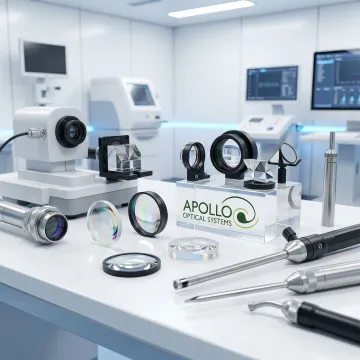
Optical devices appear across many industries and applications, including imaging and vision systems, sensing and detection equipment, illumination and projection systems, measurement and inspection tools, and optical subsystems integrated into larger machines. Each category places different demands on optical performance, stability, durability, and manufacturability. No single design approach fits all optical devices.
What are the key elements in an optical device system?
Every optical device relies on components such as lenses and lens assemblies, windows and protective covers, filters and coatings, and beam-shaping or relay optics. But optical performance is also influenced by mechanical mounting and alignment, thermal behavior, vibration and shock, and electronics and control systems. A well-designed optical device treats optics, mechanics, and environment as one system, not separate problems.
Why does material selection matter early in optical device design?
Material choice directly affects transmission and wavelength compatibility, thermal expansion and stability, durability and environmental resistance, and long-term performance drift. Optical devices may use glass, optical polymers, crystalline or specialty materials, or coated or hybrid substrates. Material decisions made early in the design phase often determine whether a device can scale, survive its environment, or meet lifetime expectations.
What manufacturing and repeatability considerations affect optical devices?
An optical device that works once is not the same as one that works consistently. Manufacturing considerations include process capability and repeatability, tolerance sensitivity, assembly variation, and tooling stability over time. Designs that ignore manufacturing reality often fail during scale-up, even if prototypes perform well.
What environmental and operational realities do optical devices face?
Most optical devices operate outside controlled lab conditions. They may be exposed to temperature variation, vibration or shock, humidity or contaminants, and continuous operation over long periods. Optical performance must be validated under representative operating conditions, not just initial inspection. Environmental effects are often the dominant source of drift or failure.
What role do coatings play in optical devices?
Many optical devices rely on coatings to manage reflection and transmission, control spectral behavior, and improve durability or cleanability. Coating performance depends on substrate material, coating stress and thickness, environmental exposure, and cleaning and handling practices. Durability claims only have meaning when tied to defined test conditions.
What scale and lifecycle considerations apply to optical devices?
Optical devices often evolve through early development, pilot builds, production scaling, and long-term field use. Each stage introduces different risks. Designs that succeed long-term account for process variation, material aging, and service and maintenance realities. Prototype success does not guarantee production stability.
How should engineers think about optical devices?
Rather than asking whether an optical device is 'high performance,' engineers should ask: What performance truly matters? How sensitive is the system to variation? What happens as temperature changes? How stable is performance over time? How will this be manufactured repeatedly? Clear answers to these questions matter more than headline specifications.
What is the practical takeaway for optical device design?
Optical devices are systems, not parts. Reliable devices result from realistic material selection, manufacturing-aware design, tolerance and sensitivity analysis, and validation under real conditions. Ignoring any of these usually shows up later — and at higher cost.
What are the 10 optical instruments?
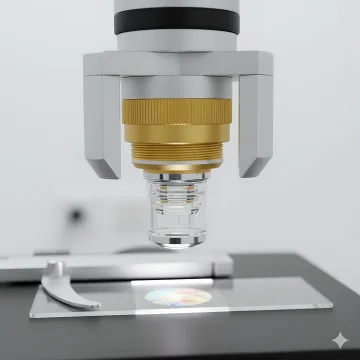
Common optical instruments include microscopes, telescopes, cameras, binoculars, spectrometers, periscopes, magnifying glasses, projectors, endoscopes, and optical sensors. Apollo manufactures precision components for many of these applications.
What is an example of an optical device?
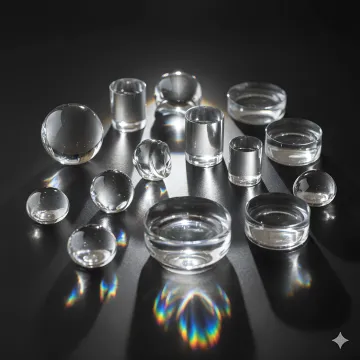
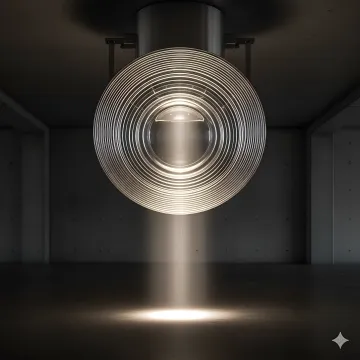
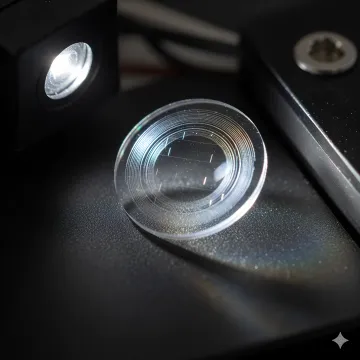
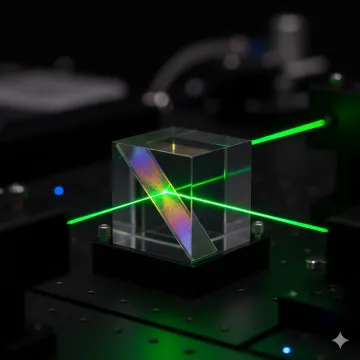
Examples include lenses, mirrors, beam splitters, prisms, optical windows, and diffractive elements. Apollo produces refractive elements, Fresnel lenses, freeform lenses, and beam shapers for industrial and medical applications.
What materials are used for precision optical components?
Apollo uses PMMA (acrylic), polycarbonate, polystyrene, cyclic olefin polymers (COP/COC), and metal substrates including nickel, brass, copper, and aluminum for various optical applications.
What manufacturing methods does Apollo use for optical components?
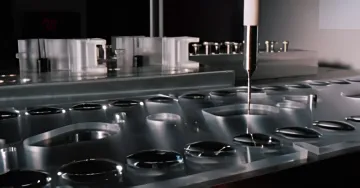
Apollo employs both polymer injection molding for high-volume production and single-point diamond turning (SPDT) for prototyping and precision metal optics, ensuring optimal solutions for each application.
What surface finishes can Apollo achieve on optical components?
Apollo achieves surface roughness of 60-80 Å RMS in polymers and 30-50 Å RMS in metals, with precision applications reaching <50 Å RMS, ensuring exceptional optical performance.
Are Apollo's optical components certified for medical device applications?
Yes, Apollo Optical Systems is ISO 13485-2016 certified for medical device quality management, ensuring components meet stringent requirements for medical devices including endoscopes and diagnostic equipment.
What size range of optical components can Apollo manufacture?
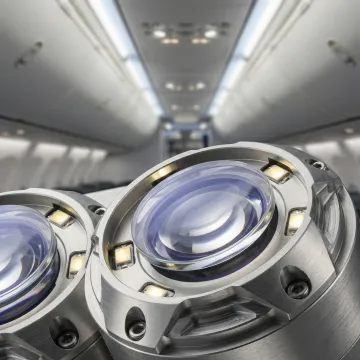
Apollo manufactures optical components ranging from 1mm to 300mm in diameter, supporting applications from miniature medical sensors to large aerospace lighting systems with precision tolerances.