What polymer is used for optical lenses?
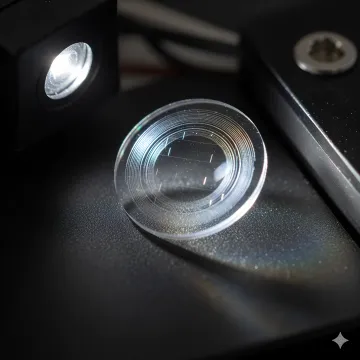
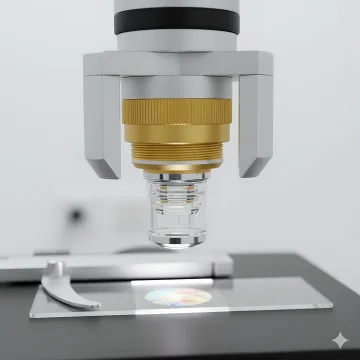
For automotive optical lenses, we use PMMA (polymethyl methacrylate), polycarbonate, polystyrene, and cyclic olefin polymers. These materials are specifically optimized for automotive durability and optical performance, offering excellent light transmission while being lightweight and impact-resistant. In automotive systems, optical components must maintain geometry across temperature extremes, remain stable through vibration and road shock, preserve clarity over years of UV exposure, and survive production ramp without performance drift. Automotive optics are validated in design. They are proven in production.
Are fiber optic cables used in cars?
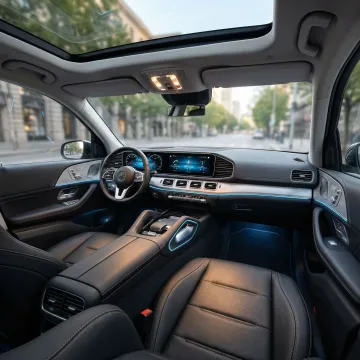
While traditional fiber optic cables can be used in automotive applications, our polymer optical solutions focus on precision light guides, LED lenses, and optical windows for automotive lighting, sensors, and ADAS systems. These engineered polymer components optimize light distribution and performance in head/tail lights, interior lighting, and sensor systems. Polymer enables weight reduction, complex geometry integration, impact resistance, cost efficiency at scale, and integration with housings and mounting features. These advantages make polymer common in interior lighting, driver monitoring systems (DMS), occupant monitoring systems (OMS), LiDAR covers, sensor windows, and backlit displays. However, polymer behavior must be engineered — not assumed.
What are the main advantages of polymer optics over glass in automotive systems?
Polymer optics are significantly lighter than glass, more impact-resistant, and cost-effective while maintaining excellent optical performance. This combination makes them ideal for automotive applications where weight reduction, safety, and manufacturing efficiency are critical requirements. Automotive components commonly experience -40°C cold soak, elevated interior temperatures, and rapid thermal transitions. Polymers expand more than glass, shrink during cooling, retain molding stress, and may creep under sustained load. If optical geometry is highly sensitive, uniformity and alignment can drift over temperature. Design must account for thermal movement early.
What precision tolerances can be achieved for automotive polymer optical components?
Using advanced single-point diamond turning technology, we achieve precision tolerances of ±0.005mm for center thickness and ±0.1% for radius of curvature. These tight tolerances ensure consistent optical performance across high-volume automotive production. Injection molding introduces flow orientation, uneven cooling, and internal stress gradients. In automotive optics, residual stress can lead to refractive distortion, polarization artifacts, stress whitening, and long-term cracking. Gate location and cooling balance are optical decisions — not just tooling ones.
What automotive applications are polymer optics used for?
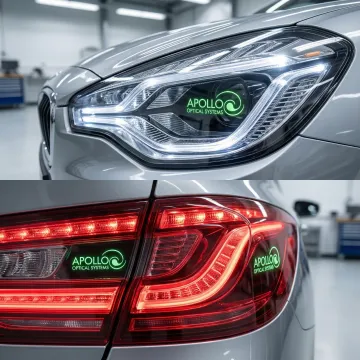
Polymer optics are used in automotive lighting systems (LED head/tail lights, interior lighting), ADAS and sensor systems (LIDAR windows, camera lenses), emergency vehicle lighting, and interior illumination systems including dashboard lighting and ambient light guides. Under sustained load or elevated temperature, polymers relax, deform slowly, and change geometry over time. In lighting or sensing systems, small geometry shifts can alter beam patterns, create hot spots, change sensor alignment, and introduce glare or non-uniformity. Lifecycle validation must reflect real vehicle duration.
Can polymer optical components be customized for specific automotive requirements?
Yes, we offer complete customization including optical and mechanical design, tolerance analysis, custom coatings (anti-reflective and reflective), and specialized beam patterns. Our engineering team provides support from prototyping through high-volume production validation. Exterior and interior components may face direct sunlight, elevated cabin temperatures, and UV radiation over years. Some polymers yellow, haze, or lose mechanical integrity. Material selection must match exposure profile. Short-term clarity is not a lifecycle guarantee.
Do polymer automotive optics meet industry quality standards?
Yes, our automotive optical components comply with relevant automotive standards and are manufactured under ISO 13485-2016 certification for quality management. We provide in-house metrology and quality assurance to ensure consistent performance. Automotive optics may include IR coatings, anti-reflective coatings, decorative masks, and partially reflective features. On polymer substrates, coating stability depends on thermal expansion compatibility, adhesion control, and environmental durability. Coating failure becomes immediately visible in illuminated or sensing systems.
What manufacturing capabilities support automotive-scale production?
We offer both advanced injection molding for high-volume production and single-point diamond turning for precision prototyping and specialized components. This combination enables rapid prototyping services and efficient scaling to meet automotive production volumes with consistent quality. Automotive programs often pass dimensional validation, initial optical testing, and early production builds. Performance drift may appear during sustained production, tooling wear, resin lot changes, and process parameter shifts. Optical injection molding must be managed with stable process windows and disciplined tool maintenance.
When might polymer not be ideal for automotive optics?
Polymer may not be appropriate when extreme thermal stability is required, dimensional tolerance leaves no room for expansion, creep cannot be tolerated, or environmental exposure is severe. Glass or hybrid solutions may offer greater stability in some automotive applications. Material selection should reflect system-level constraints.
What production-scale challenges affect automotive polymer optics?
Common ramp-phase challenges include brightness variation, light leakage, sensor misalignment, warpage drift, and cosmetic amplification under illumination. Automotive polymer optics must be designed with realistic tolerance allocation, shrink modeling, stress management, and robust process margins. Precision must survive volume.
What should experienced automotive teams evaluate early in polymer optics development?
Rather than asking 'Can this lens be molded in polymer?', experienced teams ask: How sensitive is performance to shrink variation? How is residual stress measured and controlled? What is the creep profile across temperature range? How stable is optical output after thermal cycling? How wide is the acceptable molding process window? These answers determine production reliability.