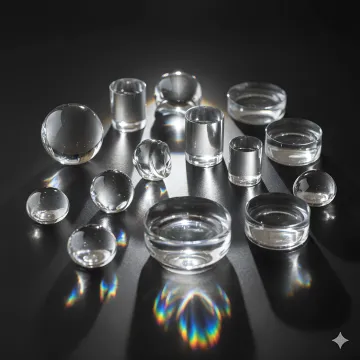
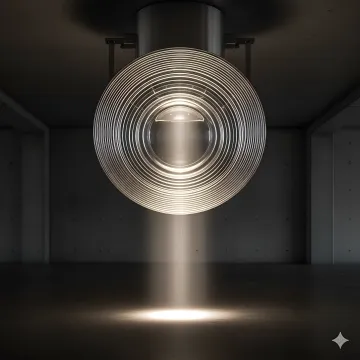
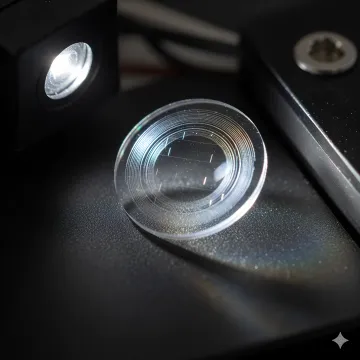
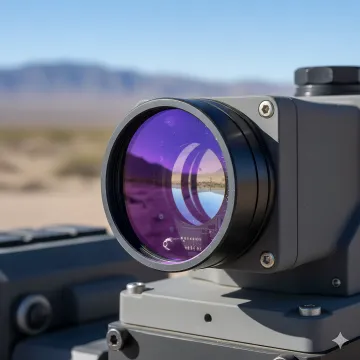
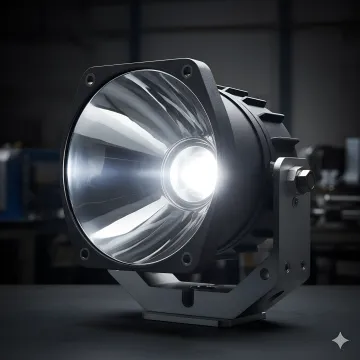
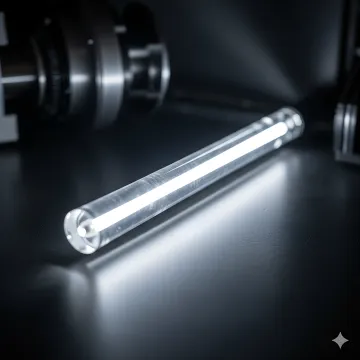
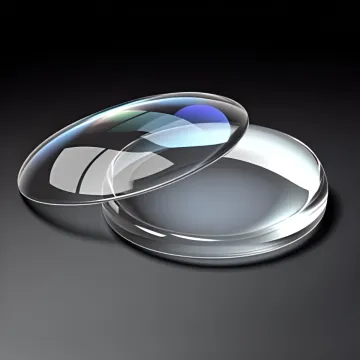
Polymer optics are precision optical components made from specialized plastic materials like PMMA/Acrylic, Polycarbonate, Polystyrene, and Cyclic Olefin Polymers. These components include aspheric lenses, diffractive elements, Fresnel lenses, and beam shapers that offer significant weight reduction, lower cost, design flexibility, and comparable optical performance to traditional glass optics while being ideal for high-volume manufacturing. Precision polymer optics are not defined by surface finish alone. They require controlled geometry, stable refractive behavior, consistent replication of micro-features, dimensional repeatability at production volume, and long-term environmental stability. Precision is not achieved in a prototype. It is proven across thousands — or millions — of parts.
What industries benefit most from precision polymer optics?
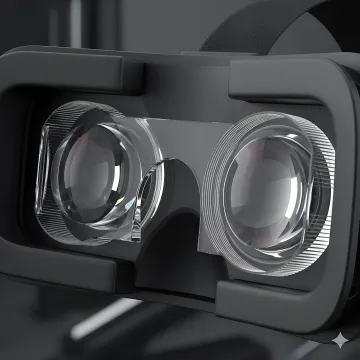
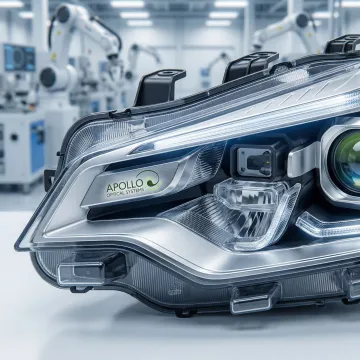
Medical devices, automotive systems, VR/AR technology, aerospace applications, and lighting systems are the primary industries that benefit from polymer optics. These include applications such as endoscopes, diagnostic equipment, ADAS sensors, LIDAR windows, virtual reality headsets, aircraft lighting, and emergency systems where lightweight, cost-effective optical solutions with exceptional precision are required. Polymer optics offer advantages: weight reduction, complex geometry integration, integrated mounting features, and cost efficiency at scale. But polymer behaves differently than glass. It expands more with temperature, retains residual molding stress, creeps under long-term load, and can be sensitive to UV exposure. Treating polymer like glass leads to failure. Engineering around polymer behavior leads to stability.
Can polymer optical components meet medical device quality standards?
Yes, Apollo Optical Systems is ISO 13485:2016 certified and manufactures medical-grade polymer optics using chemically stable, non-toxic materials specifically designed for medical applications. The manufacturing process achieves tight tolerances including concentricity of ±0.002mm, center thickness of ±0.005mm, and surface roughness under 50Å RMS for critical medical device applications. Injection molding introduces flow orientation, uneven cooling, and internal stress gradients. Residual stress can cause birefringence, localized refractive distortion, stress whitening, and long-term cracking. Gate placement, flow path design, and cooling balance are not mechanical decisions — they are optical ones.
What manufacturing methods are available for polymer optics production?
Apollo Optical Systems offers both single-point diamond turning for prototypes and precision injection molding for high-volume production runs with consistent quality. This end-to-end manufacturing capability provides complete in-house facilities including diamond turning, injection molding, coating, and metrology for total quality control and faster delivery times. Polymers shrink. If shrink is not modeled and controlled, optical surfaces can distort, tilt, lose alignment, alter focal behavior, and shift light distribution. Long optical elements such as light guides, covers, and sensor windows are particularly sensitive. Dimensional precision must account for material movement over temperature and time.
What optical coatings can be applied to polymer components?
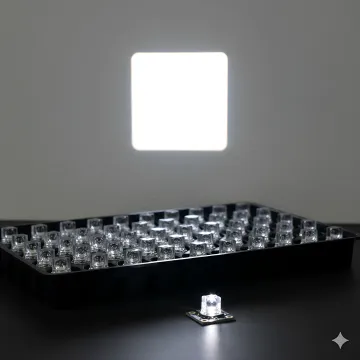
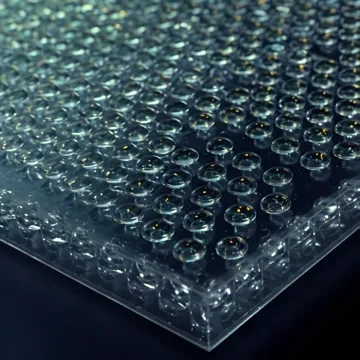
Apollo Optical Systems offers anti-reflective (AR) coatings, reflective coatings, and specialized thin film coatings including gold, silver, aluminum, and custom solutions. The company provides custom coating fabrication with in-house fixture design specifically compatible with polymer optics to meet various application requirements. Micro-features control diffusion, beam shaping, glare, and extraction efficiency. Surface replication depends on tool quality, venting, process window width, melt temperature stability, and mold temperature uniformity. Tool wear changes optical behavior. Process drift changes optical behavior. Precision polymer optics require tooling discipline and controlled production windows.
What are the dimensional capabilities for precision polymer optics?
Components range from 1mm to 300mm in diameter, accommodating both miniature precision optics and large aperture applications. The manufacturing process can achieve concentricity tolerances as tight as ±0.002mm, center thickness of ±0.005mm, and surface roughness under 50Å RMS, suitable for applications requiring exceptional dimensional accuracy. Under sustained stress or elevated temperature, polymers relax, deform, and change geometry slowly over time. In optical components, small geometry changes can shift focal length, alter uniformity, expose light leakage, and affect alignment with sensors. Design must consider long-term creep, not just day-one dimensions.
How do polymer materials perform in demanding optical applications?
Polymer materials used by Apollo Optical Systems, including PMMA/Acrylic, Polycarbonate, Polystyrene, Cyclic Olefin Polymers (COP/COC), and ULTEM, are specifically selected for optimal optical performance. These materials provide comparable optical performance to glass while offering significant advantages including lightweight construction, design flexibility, and compatibility with high-volume manufacturing processes while maintaining chemical stability and non-toxic properties for sensitive applications. Polymer optics must be evaluated for thermal cycling, humidity exposure, UV exposure, and vibration. Some materials yellow. Some haze. Some lose mechanical integrity over time. Material selection must match the environment. There is no universal polymer solution.
What is the typical turnaround time for custom polymer optics projects?
Apollo Optical Systems provides technical consultation and custom solutions within 24 hours of initial contact. The company's complete in-house manufacturing capabilities, including diamond turning for prototypes and injection molding for production, enable faster delivery times compared to outsourced manufacturing while maintaining total quality control throughout the process. Many polymer optics perform well in early validation builds. Production ramp introduces cycle time pressure, resin lot variation, tool wear, cooling imbalance, and process drift. If the optical design is too sensitive to small variation, yield drops and performance shifts. Precision polymer optics require stable process windows, repeatable molding parameters, disciplined tooling maintenance, and tolerance allocation based on optical sensitivity.
When might polymer not be the right choice for optical components?
Polymer may not be ideal when extreme temperature stability is required, minimal thermal expansion is critical, long-term creep must be near zero, or severe chemical exposure is present. Glass or hybrid solutions may be more appropriate in certain cases. Precision means selecting the right material — not forcing one.
What should experienced teams evaluate early in polymer optics development?
Rather than asking 'Can this be molded?', experienced teams ask: How sensitive is performance to shrink variation? How is residual stress measured or controlled? What is the creep profile at operating temperature? How wide is the acceptable process window? How is texture replication maintained over tool life? Those answers define whether polymer optics will hold in production.