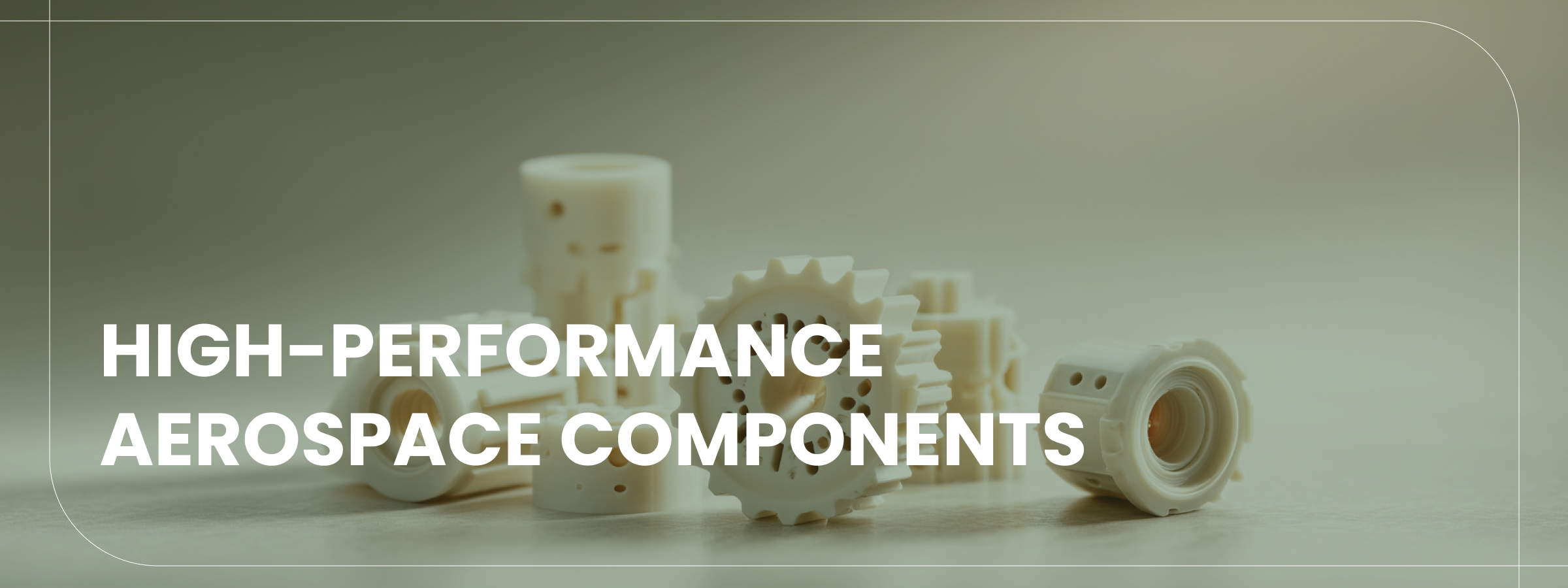
High-Performance Aerospace Components with Injection Molding

Aerospace engineering constantly demands components that are lightweight, dimensionally stable, and capable of precise performance under extreme conditions. Conventional machining of metals can meet strength requirements, but it often comes with weight penalties, longer lead times, and higher system-level costs.

Aerospace OEMs and system integrators are turning to advanced polymer injection molding to address these challenges. This shift reflects a broader trend,  with the global aerospace plastics market expected to reach USD 13.88 billion by 2030.

Injection molding has emerged as a key alternative, enabling manufacturers to produce optically complex geometries with repeatable surface quality, controlled wavefront performance, and scalable volumes. When executed correctly, molded optics can reduce system weight, improve yield, and support consistent production throughput.

This blog explores how injection molding serves the aerospace industry, the materials and techniques involved, design and quality considerations and compliance requirements.

At a Glance:

  • Injection molding allows aerospace manufacturers to produce lightweight, high-strength components with precise dimensions and complex geometries.

  • High-performance polymers, reinforced and composite materials, and engineering-grade plastics support durability, thermal stability, and weight reduction for critical aerospace parts.

  • Components across structural, optical, electrical, and interior systems benefit from tight tolerances, reduced part count, and scalable production.

  • Advanced techniques like micro-injection, multi-shot molding, gas-assisted molding, insert molding, and precision tooling enable high accuracy and integrated functionality.

  • Strict design, quality, and compliance standards, including AS9100, ISO 9001, NADCAP, and FAI protocols, maintain consistent performance, traceability, and certification readiness.

What is Injection Molding in Aerospace?

What is Injection Molding in Aerospace?

Injection molding is a precision manufacturing process used to replicate optical surfaces and complex geometries in polymer materials at scale. Molten optical-grade polymers are injected into ultra-precise molds engineered to reproduce lens surfaces, diffractive structures, or optical features with high fidelity.

Unlike general plastic molding, aerospace optical injection molding integrates optical design intent, material behavior, mold surface accuracy, and post-molding verification. The goal is not just dimensional consistency, but controlled wavefront error, surface roughness, and optical transmission performance.

Benefits of Using Injection Molding for Aerospace Components

Injection molding delivers system-level optical and operational advantages that matter to aerospace imaging and sensing programs.

  • Weight Reduction: Replacing glass optics or metal-housed assemblies with molded polymer lenses and windows reduces optical subsystem weight, supporting fuel efficiency, payload optimization, and sensor placement flexibility.

  • Precision and Tolerances: Precision tooling and controlled molding processes enable consistent surface replication, supporting stable optical performance across production runs and reducing alignment-related rework.

  • Lead Time Stability: Mold-based production reduces variability compared to batch machining, improving supply predictability for programs with long qualification cycles.

  • Cost Efficiency for High Volumes: While initial tooling costs are higher, per-part cost stabilizes over time, supporting long-term aerospace production planning.

  • Reduced Scrap and Waste: Material usage is controlled and repeatable, reducing scrap caused by grinding, polishing, or rework common in traditional optics manufacturing.

  • Design Flexibility: Mounting features, alignment datums, and light-blocking structures can be molded directly into optical parts, reducing downstream assembly steps.

By using injection molding with a targeted approach, aerospace programs can maintain high-quality standards while controlling costs and production timelines.

Also Read: Things to Consider When Choosing Plastic Injection Molders

Materials Used in Aerospace Injection Molding

Materials Used in Aerospace Injection Molding

Material selection for aerospace optics is driven by optical clarity, refractive stability, thermal behavior, and environmental resistance. Injection-molded optical components rely on polymers that maintain performance across demanding operating conditions.

Common materials used include:

  1. Optical-Grade Thermoplastics

These materials are selected for systems where optical transmission and surface accuracy are critical.

  • Acrylic (PMMA): Used for optical windows, domes, and covers where high light transmission and surface clarity are required.

  • Zeonex® and Zeonor®: Cyclo-olefin polymers known for low birefringence, low moisture absorption, and stable refractive properties, suitable for precision sensor optics.

  • Polycarbonate (Optical Grades): Used where impact resistance is required alongside optical performance, such as protective sensor windows.

  1. High-Performance Engineering Polymers

Used where optics must maintain form and alignment under thermal or mechanical stress.

  • Ultem® (PEI)
    Provides thermal stability and flame resistance for optical housings and integrated opto-mechanical components.

  • PPS and PEEK (Selective Applications)
    Used in environments requiring chemical resistance or high-temperature performance, often for structural optical elements rather than imaging surfaces.

Material selection directly affects optical distortion, tolerance stability, and long-term system reliability, making early material qualification essential in aerospace optics programs.

High-Performance Aerospace Injection Molding Components

High-Performance Aerospace Injection Molding Components

Injection molding plays a critical role in producing precision polymer optical components used in aerospace sensing, imaging, and navigation systems. Some common high-performance optical components include:

  1. Structural and Load-Bearing Components

In aerospace optical systems, structural injection-molded components are designed specifically to support lenses, domes, and sensor optics while preserving optical alignment under vibration and thermal cycling. Injection molding makes it possible to create optics-specific support geometries without excess material.

Key applications:

  • Optical mounts and carriers: Maintain lens and sensor alignment under vibration, shock loads, and repeated thermal cycling.

  • Sensor and optical housings: Protect injection-molded lenses, windows, and domes while minimizing stress-induced distortion compared to machined metal housings.

  • Integrated optical support structures: Reduce part count by integrating ribs, bosses, and locating features that control optical position and stack-up tolerance directly into the molded design.

  1. Optical and Sensor Components

Aerospace optical systems rely on surface form accuracy, optical material stability, and controlled wavefront quality across operating conditions. Injection molding delivers repeatable optical geometry and surface replication when paired with precision tooling and optical-grade polymers.

Key applications:

  • Injection-molded lenses (refractive and diffractive): Support imaging, navigation, and tracking systems where surface accuracy directly impacts resolution and signal quality.

  • Optical windows and domes: Preserve optical transmission and wavefront integrity while resisting impact, UV exposure, pressure variation, and environmental contamination.

  • Sensor optics for cameras and LiDAR: Enable reliable signal capture with tight dimensional control and consistent surface finish across production volumes.

  1. Electrical and Thermal Management Components

hermal and electrical stability directly affect optical performance in aerospace sensor systems. Injection-molded polymers allow engineers to control thermal expansion around lenses and sensor optics, helping maintain focus and alignment across temperature extremes.

Key applications:

  • Optical sensor housings with electrical isolation: Maintain dielectric performance without introducing optical distortion near sensitive sensing elements.

  • Thermally managed optical enclosures: Protect heat-sensitive lenses and detectors while supporting predictable thermal behavior.

  • Integrated routing features: Support repeatable assembly without stressing optical components during installation.

  1. Interior and Cabin System Components

In aerospace optical applications, interior-facing molded components are typically limited to optical display interfaces and protective optical elements rather than general cabin parts. Injection molding supports consistent optical alignment and surface quality where displays or indicators are involved.

Key applications:

  • Display windows and optical bezels: Maintain tight tolerances for optical clarity, glare control, and alignment with underlying displays.

  • Protective optical covers: Deliver consistent surface quality and durability for long production cycles.

  1. Defense and Ruggedized Aerospace Components

Defense and tactical aerospace systems operate in harsh and unpredictable environments. Injection molding provides optical dimensional stability and coating compatibility without unnecessary material usage.

Key applications:

  • Rugged sensor housings: Withstand shock, vibration, moisture, and particulate exposure while preserving optical axis stability.

  • Optical protection components: Shield injection-molded lenses, windows, and domes from debris, abrasion, and environmental damage.

  • Enclosures for deployed optical equipment: Support long service life with consistent quality across repeat production runs for mission-critical sensing and imaging systems.

These components benefit directly from tight optical tolerances, controlled wavefront quality, repeatable coating performance, and scalable production, which are key KPIs for aerospace engineers and operations teams.

Also Read: How Do I Find a Polymer Injection Molding Manufacturer in the US?

Advanced Injection Molding Techniques Used in Aerospace

Advanced Injection Molding Techniques Used in Aerospace

Modern aerospace optical systems demand precision beyond conventional molding. Advanced techniques support optical surface replication, wavefront control, and tooling accuracy, which are critical for aerospace lenses and sensor optics.

Below are the key techniques commonly used in aerospace applications

  1. Micro-Injection Molding

Micro-injection molding is used to produce extremely small and highly detailed components where optical tolerances and surface fidelity are critical.

In aerospace optics, even minor dimensional variation can affect wavefront quality, focal performance, or sensor calibration. This process maintains consistency across high-volume production of small optical components.

Ideal For: Optical sensors, microlens arrays, miniature connectors, compact avionics components

  1. Multi-Shot (Multi-Material) Injection Molding

Multi-shot molding allows multiple materials to be molded into a single optical component or assembly. Each material can serve a specific function, such as optical support, stray-light control, or vibration damping. This reduces secondary assembly and lowers the risk of optical misalignment or coating damage.

Ideal for: Optical housings with integrated alignment and sealing features

  1. Gas-Assisted Injection Molding

Gas-assisted molding reduces internal stress in thicker components, which is critical for maintaining optical geometry and wavefront consistency in larger lenses or domes.

Ideal for: Optical housings and domes where dimensional stability matters

  1. Insert Molding

Insert molding integrates metal alignment features into polymer optical components, improving optical positioning accuracy and long-term stability under vibration.

Ideal For: Optical assemblies requiring precise alignment interfaces

  1. Precision Tooling with Single Point Diamond Turning (SPDT)

SPDT is essential for aerospace optical injection molding. It is used to machine optical-grade mold inserts capable of replicating precise surface form, low roughness, and controlled wavefront characteristics.Using SPDT tooling improves first-pass optical yield, reduces rework, and supports a smoother transition from prototype to production.

Ideal For: Injection-molded lenses, windows, domes, sensor optics, and light-guiding components

These techniques allow manufacturers to maintain optical tolerances, wavefront quality, coating compatibility, and production repeatability, while scaling from prototype to certified aerospace production.

Design & Quality Considerations for Aerospace Molding

Design & Quality Considerations for Aerospace Molding

Effective aerospace injection molding requires careful attention to optical design for manufacturability, surface quality, and tolerance control. Decisions made during design directly influence optical performance, first-pass yield, cost per unit, and lead time stability.

Key considerations include:

  • Design for Manufacturing (DFM): Aerospace optical components should be evaluated for moldability early, ensuring that optical surface geometry, wall thickness transitions, and draft placement allow repeatable molding cycles without introducing optical distortion or surface defects.

  • Tolerance Planning: Define tolerances based on optical and functional requirements, including surface form accuracy, centration, and thickness variation, which helps avoid over-tight specifications while still supporting wavefront quality and optical alignment.

  • Mold Tooling Quality: Invest in precision optical tooling, including SPDT-machined mold inserts, to deliver optical-grade surface finishes, form accuracy, and dimensional repeatability across high-volume runs.

  • Process Control & Validation: Establish in-process monitoring and first article inspection protocols early to validate molding conditions that directly affect optical surface replication, birefringence, and internal stress, before full production begins.

  • Dimensional Verification: Use metrology tools such as optical profilometers, interferometry, CMM, and vision systems to verify that parts consistently meet optical tolerances, surface specifications, and system interface requirements.

  • Documentation & Traceability: Maintain complete records of optical-grade raw materials, molding parameters, coating processes, inspection results, and lot traceability, supporting aerospace quality systems and certification audits.

  • Lifecycle Leaning: Consider future tool maintenance, optical surface re-polishing, coating requalification, or mold insert replacement during the design phase to reduce unplanned downtime and maintain long-term optical performance stability.

Incorporating these considerations helps maintain predictable optical quality, reduce scrap related to surface defects, and improve first-pass optical yield.

Compliance, Certifications, and Quality Standards in Aerospace Injection Molding

Compliance, Certifications, and Quality Standards in Aerospace Injection Molding

Aerospace components must comply with strict regulatory and certification requirements to meet safety, reliability, and traceability expectations.

AS9100: Aerospace Quality Management Standard

AS9100 is the primary quality management system (QMS) standard for aviation, space, and defense manufacturers. It builds on ISO 9001 but adds aerospace-specific requirements like risk management, product safety, traceability, and configuration control. 

Certification shows a company can control and document processes consistently across design, production, and delivery, which major OEMs often require from suppliers.

Why it Matters:

  • Standardised processes reduce variation and defects.

  • Improves documentation for audits and traceability.

  • Provides confidence in consistent, quality output.

ISO 9001: Foundation of Quality Management

ISO 9001:2015 establishes core QMS principles, such as documented procedures, risk-based thinking, and continuous improvement, that are expected across many industries. 

In aerospace supply chains, ISO 9001 often forms the baseline for quality systems and feeds into aerospace-specific standards like AS9100.

Why it Matters:

  • Provides a universal structure for process control and consistency.

  • Encourages evidence-based decisions and customer-focused outcomes.

  • Supports documentation practices such as First Article Inspection (FAI).

AS9120: Distributor and Supply Chain Standard

AS9120 is part of the AS9100 series but tailored for distributors and supply chain partners that handle aerospace components. 

It emphasizes full traceability, record availability, and control of product custody from procurement to delivery, crucial when components move through multiple tiers.

Why it Matters:

  • Helps buyers verify the provenance of parts and materials.

  • Supports inventory control and counterfeit risk mitigation.

  • Improves confidence in external supplier quality.

NADCAP: Accreditation for Special Processes

NADCAP (National Aerospace and Defense Contractors Accreditation Program) focuses on critical production processes, such as coatings, heat treatment, welding, and non-destructive testing. 

Rather than covering an entire QMS, NADCAP accredits specific processes to ensure they meet stringent aerospace requirements.

Why it Matters:

  • Validates specialized processes that directly affect part integrity.

  • Reduces audit redundancy for both suppliers and primes.

  • Often required for process certification in aerospace supply chains.

First Article Inspection (FAI) Standards

Standards like AS9102 define how manufacturers must perform and document first article inspections, where the first production parts are measured and verified against design specifications. 

This process confirms that the production setup is capable of consistently creating parts within tolerance before full-scale manufacturing begins.

Why it Matters:

  • Helps catch issues before batch production.

  • Provides documented evidence of conformity for customers.

  • Supports dimensional and functional traceability.

Other Aerospace Quality References

The AS9100 family and related aerospace standards reference several best-practice guidelines for quality activities such as key characteristic control, statistical process control, failure mode analysis (FMEA), and nonconformance documentation. 

These guidelines help define how quality and inspection criteria are set and managed throughout component production.

Why it Matters:

  • Provides structured guidance for record keeping and process control.

  • Supports internal audits and supplier performance assessments.

  • Enhances the predictability and repeatability of critical features.

Meeting these standards involves comprehensive process controls, inspection protocols, first article inspection (FAI) documentation, and ongoing performance checks.

Future Trends in Aerospace Injection Molding

Future Trends in Aerospace Injection Molding

The aerospace sector continues to innovate, and injection molding techniques are adapting to meet emerging demands:

  • Thermoplastic composites: Used selectively in optical housings and support structures to reduce weight while maintaining optical alignment stability under mechanical and thermal stress.

  • Digital process control: Real-time monitoring and predictive analytics help maintain optical surface consistency, wavefront stability, and coating adhesion, reducing scrap caused by subtle process variation.

  • Sustainability focus: Optical-grade polymers and coating processes that reduce material waste, energy usage, or rework cycles are gaining attention as OEMs evaluate total lifecycle cost and supply risk.

  • Integrated simulation: Digital twins and optical mold-flow and stress simulation tools improve early design decisions, reducing tool iterations and accelerating optical validation and qualification.

Staying ahead of these trends helps manufacturers maintain optical performance at scale, reduce validation cycles, and support reliable aerospace system deployment.

How Apollo Optical Systems Supports High-Performance Aerospace Injection Molding?

Apollo Optical Systems provides end-to-end solutions for aerospace injection molding, utilizing decades of expertise in precision polymer optics and components.

Here’s how we can assist you:

  • Material depth. Apollo works with advanced polymers and metals, selecting resins that meet aerospace specifications and environmental loads.

  • Design for manufacturability. Early DFM reviews and tolerance analysis help move designs from concept to production quickly while addressing manufacturability risks.

  • Tooling and process expertise. With capabilities including SPDT and injection molding for both low and high volumes, Apollo supports projects from prototype to large‑run production.

  • Coatings and assemblies: AR coatings, metallic films, and integrated sub-assemblies improve optical performance without adding extra assembly steps.

  • ISO-certified quality control: Metrology, testing, and documentation meet AS9100 and ISO standards, reducing inspection rejections and production downtime.

By combining precision manufacturing, material science, and regulatory know-how, Apollo Optical Systems helps aerospace innovators turn concepts into certified, high-performance production components.

Conclusion

Injection molding is a strategic tool for aerospace manufacturers, enabling the production of lightweight, high-precision polymer optical components that must meet stringent operational requirements. It directly supports optical tolerances, wavefront quality, coating durability, and repeatable surface replication, making it essential for modern aerospace sensing and imaging systems.

Selecting an experienced, optics-focused aerospace manufacturing partner ensures that every component meets optical performance, dimensional stability, coating compatibility, and certification requirements. Companies like Apollo Optical Systems provide the technical expertise, vertical integration, and quality assurance needed to move aerospace components from concept to certified production smoothly.

Connect with us today to explore how Apollo Optical Systems can support your next high-performance aerospace project.

FAQs

1. What role does design for manufacturability (DFM) play in aerospace injection molding?

DFM ensures injection-molded optical components are optimized for surface form accuracy, optical tolerances, and repeatable wavefront performance. It helps reduce tooling iterations, control material shrinkage, and minimize scrap while preserving optical performance requirements. Early DFM integration supports stable yields and consistent optical quality at production scale.

2. How is quality control ensured in aerospace injection molding processes?

Quality control focuses on optical and dimensional inspection, including surface form measurement, optical metrology, and coating verification. Process monitoring supports repeatability, while adherence to aerospace quality systems ensures traceability, material stability, and consistent optical performance across production runs.

3. What environmental factors must be considered in aerospace injection molding?

Temperature stability, contamination control, and humidity management are critical to prevent optical distortion, surface defects, or coating adhesion issues. Controlled environments support consistent polymer behavior, surface replication, and dimensional accuracy, which directly affect optical transmission and wavefront quality.

4. What challenges are associated with injection molding for high-performance aerospace parts?

Challenges include maintaining tight optical tolerances, achieving optical-grade surface finishes, and controlling internal stress that can impact wavefront performance. Meeting aerospace certification requirements while preserving optical quality requires precise control across tooling, molding, coating, and inspection processes.

5. What are the main process parameters for successful aerospace injection molding?

Key parameters include melt temperature, injection pressure, cooling rate, and mold surface quality, all of which influence optical form accuracy and surface replication. Careful control of these factors helps maintain dimensional stability, wavefront consistency, and coating readiness required for aerospace optical components.