What are acrylic polymer coatings and what substrates are compatible?
Acrylic polymer coatings describe functional surface coatings applied to acrylic (PMMA) substrates to modify optical, mechanical, or environmental performance. Acrylic is widely used because it offers high optical transmission, good surface quality, and ease of molding and fabrication. However, coating acrylic is not inherently simple. PMMA introduces specific adhesion, stress, and environmental sensitivities that must be addressed deliberately. Our coatings work with both plastic and glass substrates including PMMA, polycarbonate, and metal surfaces.
What durability standards do the coatings meet and why are acrylic components coated?
Coatings meet ISO specifications for adhesion, abrasion, temperature, humidity, and salt solubility requirements. Acrylic components are commonly coated to reduce surface reflections, improve scratch or abrasion resistance, define spectral transmission or blocking, and enhance chemical or environmental durability. These coatings are typically applied in optical, illumination, display, and sensing systems where acrylic's native surface properties are insufficient for long-term use.
Can coatings be customized and what acrylic substrate behaviors affect coatings?
Yes, we provide custom designed and fabricated coatings with in-house fixture design capabilities. PMMA behaves differently from glass or metals in ways that directly impact coating success: relatively high thermal expansion, lower elastic modulus, sensitivity to solvents and cleaning agents, and tendency toward stress crazing under load or temperature change. Coatings that ignore these behaviors often fail through cracking, delamination, or optical distortion.
What coating materials are available and what adhesion challenges exist on acrylic?
We offer gold, silver, aluminum, magnesium fluoride, silicon dioxide, and titanium dioxide coating materials. Adhesion is one of the most critical issues in acrylic polymer coatings. Successful adhesion depends on controlled surface preparation, compatibility between coating chemistry and PMMA, avoidance of aggressive adhesion layers that induce stress, and clean repeatable handling prior to deposition. A coating that adheres well initially may still fail later if stress and environmental exposure are not accounted for.
What applications are these coatings suitable for and what stress considerations exist?
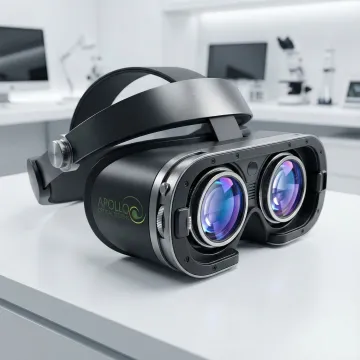
Ideal for medical devices, VR/AR displays, automotive systems, lighting, and telecommunications applications. Acrylic substrates amplify coating stress effects. Factors that influence durability include coating thickness and uniformity, intrinsic stress in the coating stack, thermal expansion mismatch, and residual stress from molding or fabrication. Excessive coating stress can result in micro-cracking, crazing of the acrylic substrate, and long-term optical degradation. Stress management is often more important than achieving peak optical performance.
How do I request a quote and what optical performance considerations matter?
Contact our technical team with your specifications for a detailed proposal and pricing information. When acrylic polymer coatings are used in optical systems, performance may be affected by surface roughness replication, coating-induced scatter, and stress-related birefringence in the PMMA. Optical coatings designed for glass frequently behave differently on acrylic. Performance must be validated on coated acrylic parts, not inferred from glass data.
What technical support is available and what lifecycle and repeatability considerations exist?
We provide custom optical design services and comprehensive technical support throughout the project lifecycle. Acrylic-coated components may be exposed to temperature cycling, humidity, UV radiation, and mechanical handling. Over time, these exposures can accelerate adhesion degradation, coating cracking, and optical or cosmetic change. Lifecycle validation is essential. Initial inspection alone is not predictive of long-term performance. Acrylic polymer coatings must be repeatable to be viable in production. Reliable programs require consistent surface preparation processes, controlled coating deposition parameters, monitoring for process drift, and verification across production lots. A coating that works on prototypes but cannot be reproduced consistently introduces significant program risk.
Where do acrylic polymer coatings make sense?
Acrylic polymer coatings are well suited for visible-light optical components, illumination and display optics, applications with controlled environments, and systems where weight and clarity matter. They are less suitable when environments involve extreme temperature cycling, aggressive solvents or cleaning agents are present, and long-term mechanical stress is unavoidable. Understanding these boundaries early prevents downstream failures.
How should engineers approach acrylic coating decisions?
Rather than asking 'Can acrylic be coated?', engineers should ask: What stresses will the coating experience? How sensitive is the substrate to temperature and chemicals? What failure modes are acceptable — and which are not? How will adhesion and durability be validated over time? Can the process be repeated reliably at production scale? Clear answers to these questions determine whether an acrylic coating approach is viable.
What is the practical takeaway for acrylic polymer coatings?
Acrylic polymer coatings are not trivial — but they are very effective when engineered correctly. Successful outcomes come from respecting PMMA material behavior, managing coating stress deliberately, validating performance under real conditions, and designing for repeatability, not just appearance. That discipline turns acrylic coatings from a liability into a reliable system element.