Why are machine vision lenses not considered generic optics?
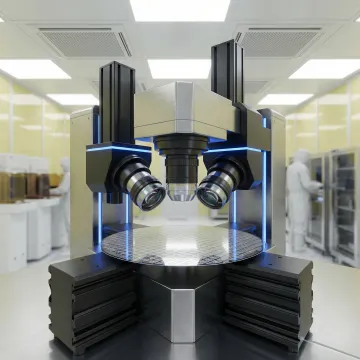
In machine vision, the lens is not just an imaging component — it directly affects measurement accuracy, repeatability, defect detection reliability, and system uptime. A lens that looks fine on paper can still cause false rejects, missed defects, or unstable calibration once deployed. Machine vision lenses must be evaluated as part of the full imaging system, not as isolated components.
What are machine vision lenses expected to do?
Machine vision lenses are typically designed to support dimensional measurement, defect detection, pattern recognition, barcode or code reading, and high-speed inspection. This means they must deliver consistent magnification, low distortion (or known, stable distortion), adequate resolution across the full field, and repeatable performance over time and environment. Nominal image quality alone is not enough.
What optical performance factors actually matter in machine vision?
For machine vision applications, the most critical optical factors are usually: distortion behavior (absolute distortion is less important than predictable distortion that can be calibrated and remains stable), field uniformity (resolution that drops off at the edges can undermine inspection accuracy), depth of field vs. resolution trade-offs (more depth of field usually means less resolution), and working distance stability (small changes in mounting or temperature can matter more than theoretical resolution). Good lens selection starts with understanding which of these truly drives system performance.
How should machine vision lenses be matched to sensors and pixels?
Machine vision lenses must be matched to sensor size, pixel pitch, illumination strategy, and inspection task. Over-specifying lens resolution beyond sensor capability adds cost without benefit. Under-specifying it limits inspection accuracy. Lens choice should follow system requirements, not marketing labels like 'high resolution.'
What manufacturing and tolerance realities affect machine vision lens performance?
In real systems, lenses are mounted, not floated; cameras heat up; housings flex; and environments are not lab-clean. Lens performance must tolerate small decenter and tilt, thermal expansion, vibration, and long operating hours. Manufacturing quality and mechanical integration matter as much as optical design.
What role do polymer lenses play in machine vision systems?
Polymer optical elements are sometimes used in machine vision lenses to reduce weight, simplify integration, and lower cost at volume. However, polymers introduce higher thermal expansion, potential long-term dimensional drift, and sensitivity to molding and assembly stress. When polymer elements are used, lens performance must be validated under actual operating conditions, not just initial inspection.
What coating and surface durability considerations apply to machine vision lenses?
Machine vision lenses often operate in environments with dust, oils, cleaning cycles, and mechanical handling. Coatings may be required to reduce reflections, manage stray light, improve cleanability, and enhance durability. Coating durability must be evaluated relative to real cleaning methods, not idealized lab tests.
How does illumination interact with machine vision lens performance?
Machine vision performance depends as much on illumination as on the lens. Lens characteristics affect glare, flare, contrast, and sensitivity to lighting angle. A lens that performs well under one lighting setup may fail under another. Lens evaluation should include illumination conditions representative of the final system.
What validation beyond initial setup is needed for machine vision lenses?
A common failure mode is: 'It worked during setup, but drifted in production.' Validation should include temperature variation, long-duration operation, mechanical re-mounting, and recalibration stability. Lens performance that changes over time creates maintenance and reliability problems.
How should engineers evaluate machine vision lens suppliers?
Rather than asking who makes 'the best' machine vision lenses, engineers should ask: How stable is magnification over temperature? How predictable is distortion? What tolerances matter most in this design? How does performance change with mounting stress? What validation data exists beyond nominal specs? Clear answers here are far more valuable than resolution charts.
Where do machine vision lenses succeed — and where do limits exist?
Machine vision lenses are well suited for controlled industrial inspection, automated measurement, and repeatable imaging tasks. They are not immune to environmental effects, mechanical variation, or poor system integration. Expectations must be aligned with real operating conditions.
What is the practical takeaway for machine vision lens selection?
Machine vision lenses are measurement tools, not generic camera accessories. Successful systems come from matching the lens to the sensor and task, understanding tolerance sensitivity, validating performance under real conditions, and accepting trade-offs explicitly. That's how inspection systems stay accurate outside the lab.
What are machine vision lenses used for?
Machine vision lenses are used in industrial imaging systems for automated inspection, quality control, defect detection, measurement, barcode reading, and robotic guidance applications.
What types of machine vision lenses does Apollo Optical Systems manufacture?
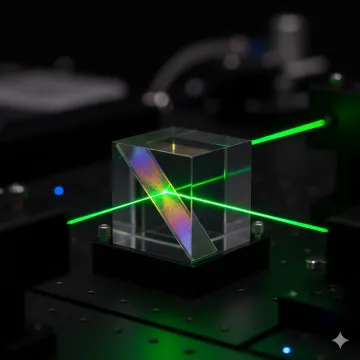
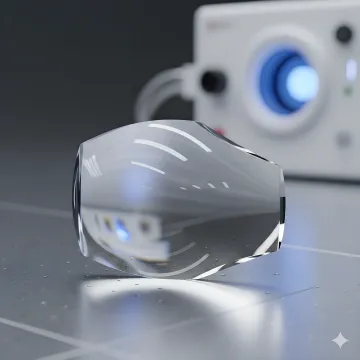
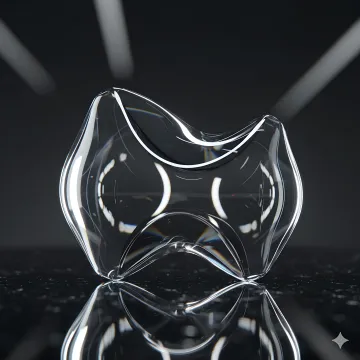
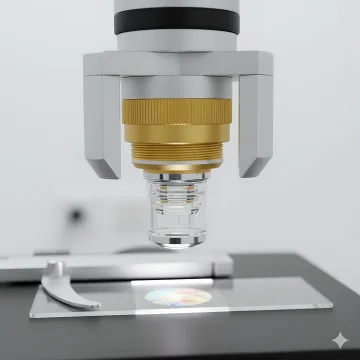
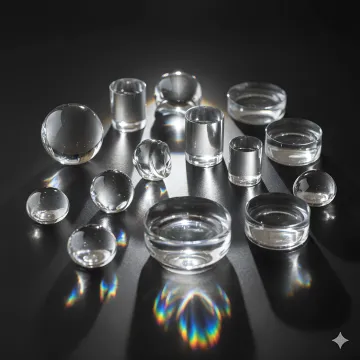
We manufacture aspheric lenses, diffractive optical elements, beam splitters, freeform lenses, Fresnel lenses, microscope objectives, optical windows, and beam shapers for machine vision applications.
What are the advantages of polymer optics for machine vision?
Polymer optics offer significant weight reduction, lower cost, design flexibility for complex surfaces, and excellent optical performance. They're ideal for high-volume manufacturing applications.
What manufacturing tolerances can Apollo Optical Systems achieve?
Our precision manufacturing achieves concentricity to 0.002mm, surface roughness <50Å RMS, and radius of curvature tolerance to ±0.1% using single-point diamond turning.
Can you customize machine vision lenses for specific applications?
Yes, we provide complete optical and mechanical design services. Our engineers work with you to develop custom lens solutions optimized for your specific imaging requirements.
What materials are used for machine vision lenses?
We work with PMMA, polycarbonate, polystyrene, cyclic olefin polymers (COP/COC), and various metals including aluminum, nickel, brass, and copper for specialized applications.
How long does it take to manufacture custom machine vision lenses?
Lead times vary based on complexity and volume. Prototype lenses can be produced in weeks via diamond turning, while high-volume injection molding requires tooling development.