This application note examines the use of diffractive optical elements (DOE) in infrared (IR) optical systems, with emphasis on material selection, manufacturability, and system-level trade-offs.
It is intended for optical and system engineers evaluating DOE for beam shaping, wavefront control, spectral manipulation, or optical efficiency optimization in IR applications.
This document does not assume DOE are universally superior to refractive optics and avoids claims that exceed demonstrated manufacturing or material limits.
What a DOE is (engineering definition)
A diffractive optical element modifies an optical wavefront using micro- or nano-scale surface relief structures, rather than bulk refraction.
The optical function arises from:
Phase modulation via controlled surface depth
Interference effects governed by feature geometry and wavelength
Unlike refractive optics:
DOE performance is highly wavelength-dependent
Efficiency and stray light behavior are tightly coupled to fabrication accuracy
Why DOE are considered for infrared systems
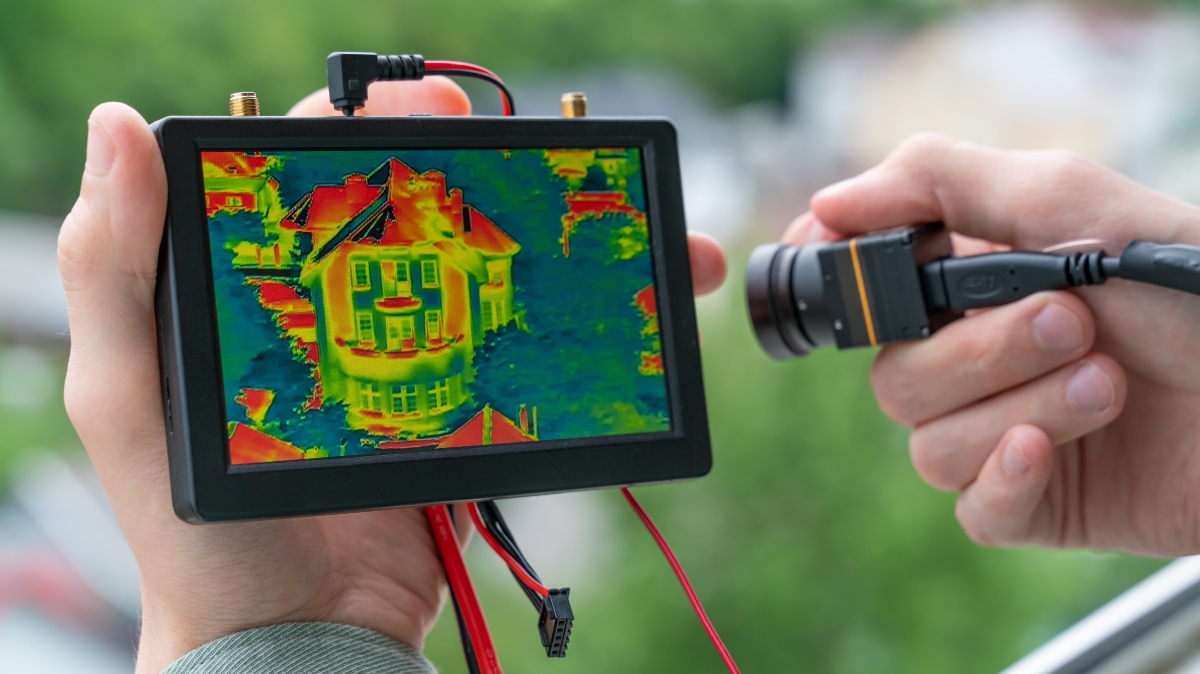
In IR systems, DOE are often explored for:
Beam shaping (top-hat, line, custom profiles)
Wavefront correction
Reduction of optical element count
Compact system packaging
DOE can offer functional integration, but they introduce design and manufacturing sensitivities that must be understood early — beginning with material selection.
Material considerations for DOE in IR
Why polymers are not suitable IR DOE substrates
Polymers absorb strongly across the mid-wave infrared (MWIR) and long-wave infrared (LWIR) bands. This makes them unsuitable as substrates for DOE in most IR applications. Using a polymer substrate in these spectral regions would result in high absorption losses that cannot be compensated by optical design.
Even in the short-wave infrared (SWIR) band, polymer transmission is limited and material-dependent. Engineers should not assume polymer optics expertise from visible or near-IR applications transfers to MWIR or LWIR DOE design.
Established IR DOE substrate materials
IR diffractive optics are fabricated on materials with genuine IR transmission windows. Commonly used substrates include:
Germanium (Ge): High refractive index, broad MWIR and LWIR transmission, widely used in thermal imaging and sensing systems.
Silicon (Si): Good MWIR transmission, lower cost than germanium, commonly used in MWIR beam shaping and structured light applications.
Zinc selenide (ZnSe): Broad transmission from visible through LWIR, used in CO2 laser and thermal imaging optics.
Zinc sulfide (ZnS): Useful in MWIR and LWIR, often preferred for rugged or multispectral applications.
Chalcogenide glasses: Broad IR transmission, amenable to molding, used where complex surface forms are required.
Material selection must be driven by the specific wavelength band, operating environment, and mechanical requirements of the system — not by familiarity with visible-spectrum optics practices.
Material trade-offs
Each IR substrate material introduces its own constraints:
Germanium is brittle and expensive; its refractive index changes significantly with temperature, which must be accounted for in athermal designs.
Silicon is harder to diamond-turn than softer IR materials and has limited LWIR transmission.
ZnSe and ZnS are softer and more susceptible to surface damage; coating and handling protocols matter.
Chalcogenide glasses vary significantly by formulation; transmission, hardness, and thermal behavior must be verified for each material.
Infrared wavelength considerations
Wavelength scaling effects
As wavelength increases (e.g., SWIR, MWIR, LWIR):
DOE feature sizes scale accordingly
Minimum achievable feature depth increases
Fabrication tolerances relax slightly, but efficiency sensitivity remains
However:
DOE efficiency is still strongly affected by surface profile fidelity
Phase quantization errors and rounding become significant contributors to loss
DOE designs must be optimized for a specific wavelength band, not treated as broadband by default
Manufacturing considerations for IR DOE
Fabrication approaches
IR DOE are typically fabricated using diamond turning or diamond-turned molds used to replicate into suitable IR materials. The fabrication approach depends on substrate hardness, required feature geometry, and production volume:
Single-point diamond turning (SPDT): The standard approach for IR DOE on germanium, silicon, ZnSe, and ZnS. Produces high-quality surface profiles directly on the substrate.
Molding of chalcogenide glass: Enables complex surface forms at volume, but requires careful process control and material-specific tooling.
Etching and lithography: Used for fine feature geometries where diamond turning resolution is insufficient, but adds process complexity.
Replication fidelity
DOE performance depends directly on:
Feature depth accuracy
Edge definition
Surface roughness
Consistency across production runs
For SPDT on hard IR materials, tool wear and cutting parameter control are the primary process variables affecting surface quality.
Tooling limits
IR DOE tooling must account for:
Substrate hardness and brittleness
Feature draft limitations
Tool wear rates on hard crystalline materials
Achievable minimum feature size for the chosen process
Not all DOE geometries are suitable for direct SPDT without design compromise.
Optical efficiency and stray light
DOE efficiency in IR systems is affected by:
Phase quantization
Surface roughness
Material absorption at the operating wavelength
Coating interactions (if present)
While high diffraction efficiency is achievable for single design wavelengths, efficiency decreases when:
Operating bandwidth increases
Incident angle varies
Polarization state changes
Stray diffraction orders must be considered at the system level, particularly in sensing and imaging applications.
Environmental and thermal behavior

IR DOE substrates each have specific thermal behaviors that must be accounted for in system design:
Germanium has a high thermo-optic coefficient (dn/dT); focal shift with temperature is significant and must be addressed in athermal designs.
Silicon is more thermally stable than germanium but still requires consideration in wide-temperature-range applications.
ZnSe and ZnS have lower thermo-optic coefficients but are softer and more sensitive to mechanical and environmental stress.
As a result:
DOE performance must be validated under the full operating temperature range
Room-temperature optical results may not represent in-field behavior
Thermal stability claims must be supported by test data for the specific material and geometry
DOE vs. refractive optics: trade-offs

DOE are not replacements for refractive optics in all IR systems.
Typical trade-offs include:
Wavelength sensitivity: DOE (High), Refractive Optics (Low)
Broadband performance: DOE (Limited), Refractive Optics (Strong)
Optical efficiency: DOE (Design-dependent), Refractive Optics (Generally high)
Manufacturability: DOE (Geometry and material dependent), Refractive Optics (Mature)
Environmental sensitivity: DOE (Material-dependent; germanium thermally sensitive), Refractive Optics (Lower for equivalent materials)
Successful designs often use hybrid architectures, combining DOE with refractive elements on the same or complementary substrates.
Qualification and validation strategy
A defensible DOE implementation requires:
Optical characterization
Diffraction efficiency
Wavefront error
Stray light analysis
Environmental testing
Thermal cycling
Humidity exposure (material-dependent)
Mechanical stress evaluation
Process stability verification
Part-to-part consistency
Lot-to-lot repeatability
Tool wear monitoring
Performance claims must be tied to validated results, not theoretical design alone.
Summary
Diffractive optical elements can provide meaningful functional benefits in infrared systems when:
Wavelength range is well defined
Substrate material is appropriate for the IR band in use
Manufacturing constraints are incorporated early
Environmental sensitivity is explicitly managed
Polymer substrates are not suitable for MWIR or LWIR DOE applications due to strong IR absorption. IR DOE require substrates with genuine IR transmission, such as germanium, silicon, zinc selenide, zinc sulfide, or chalcogenide glasses, selected based on the specific wavelength band and operating environment.
DOE should be evaluated as system-level components, not isolated optical features.
Key takeaway for engineers
DOE in IR systems are powerful tools — but not shortcuts.
Successful implementations come from:
Clear wavelength targeting
Correct substrate selection for the IR band
Realistic manufacturing assumptions
Early qualification planning
Where Apollo Optical Systems Supports Your Infrared DOE Program
Selecting a diffractive optical element for infrared use requires close alignment between design intent, substrate selection, manufacturability, and system integration.
Apollo Optical Systems supports infrared DOE programs through precision optical design and manufacturing capabilities. Apollo's core expertise is in polymer optics for visible and near-IR applications. For IR DOE programs involving germanium, silicon, ZnSe, or other crystalline substrates, Apollo's optical design and engineering services can support concept evaluation, system integration planning, and design-for-manufacture review in collaboration with substrate-specific fabrication partners.
Apollo's relevant services include:
Optical design and engineering support: Collaborative evaluation of DOE concepts based on your system geometry and performance goals.
Design-for-manufacturing review: Early input to reduce variation, integration risk, and scale-related redesigns.
Rapid prototyping: Iterative validation before committing to production tooling.
Coating, assembly, and inspection support: Integrated services that help maintain stable performance in finished systems.
By consolidating these capabilities, Apollo helps you reduce supplier handoffs and improve confidence as infrared systems move from development into production.
Talk to an Apollo Expert to discuss your infrared DOE requirements.
FAQs
1. Are diffractive optical elements suitable for all infrared systems?
No. DOEs work best when system constraints are well understood and controlled. Some applications benefit more from refractive or hybrid approaches.
2. Can polymers be used as substrates for infrared DOE?
Generally no. Polymers absorb strongly in the MWIR and LWIR bands, making them unsuitable as IR DOE substrates. IR diffractive optics require materials with genuine IR transmission such as germanium, silicon, zinc selenide, zinc sulfide, or chalcogenide glasses.
3. Do DOEs replace traditional infrared optics?
Not always. DOEs often complement refractive or reflective elements rather than replace them entirely.
4. Are DOEs too sensitive for production environments?
They can be, if alignment, mounting, and operating conditions are not addressed early in the design.
5. Can diffractive optical elements be manufactured at scale?
Yes, when the design, substrate material, and manufacturing approach are aligned from the start.
6. Are DOEs only used for beam shaping?
No. They are also used for beam splitting, structured light generation, wavefront correction, and pattern control in infrared systems.