What are the key advantages of Zeonor COP materials over traditional optical polymers?
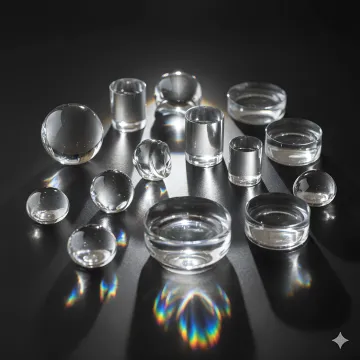
ZEONOR is a family of cyclic olefin polymer (COP) materials developed for applications requiring optical clarity, dimensional stability, and low moisture uptake. Like other COP materials, ZEONOR is amorphous, optically transparent, low in intrinsic birefringence, and well suited for precision replication. It is not a generic optical plastic, and it is not interchangeable with glass. It is a polymer optical material with specific strengths and limits. Zeonor COP offers superior optical clarity, excellent chemical resistance, low birefringence, and exceptional dimensional stability for precision applications.
Can Zeonor COP components be manufactured using injection molding?
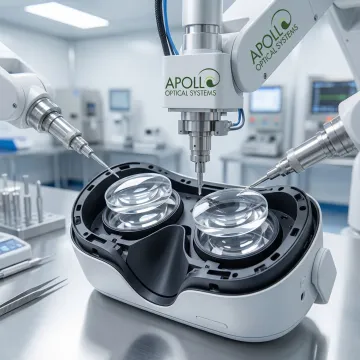
Yes, Zeonor COP is ideal for injection molding with tight tolerances and can also be processed using single-point diamond turning. From an optical standpoint, ZEONOR offers high transmission in visible and near-infrared wavelengths, low inherent birefringence relative to many amorphous plastics, and stable refractive index behavior under controlled conditions. However, optical performance still depends strongly on molding-induced stress, part geometry, thermal environment, and mounting and assembly conditions. Material datasheets describe potential — process control determines reality.
What temperature range can Zeonor COP optical components withstand?
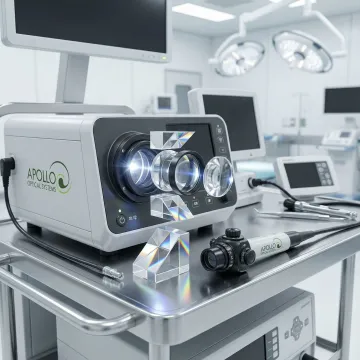
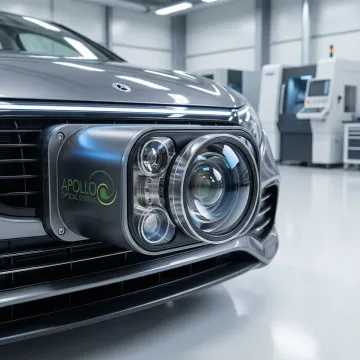
Like all polymers, ZEONOR exhibits higher thermal expansion than glass, lower stiffness, and sensitivity to temperature and processing history. While ZEONOR performs well relative to many optical plastics, thermal effects must still be accounted for, particularly in applications with temperature cycling or sustained heat. Ignoring thermal behavior is a common source of performance drift in polymer optics. Zeonor COP maintains optical performance across a wide temperature range, making it suitable for automotive and medical applications.
Are Zeonor COP products compatible with medical device applications?
Yes, Zeonor COP materials are chemically stable, non-toxic, and compatible with ISO 13485 medical device manufacturing standards. ZEONOR is typically selected when systems require high optical transmission in the visible and near-IR, low moisture absorption compared to many polymers, good dimensional stability for molded optics, and compatibility with high-volume precision molding. It is commonly used where glass would add unnecessary weight or cost, and where conventional polymers introduce unacceptable optical or environmental variability.
What surface finishes can be achieved with Zeonor COP optics?
Surface finishes of 60-80 Å RMS in polymer injection molding and <75 Å RMS in diamond turning are achievable. ZEONOR is well suited for precision injection molding, replication of fine optical features, and integrated optical and mechanical geometries. Achieving consistent optical performance requires controlled material handling, stable molding parameters, tooling designed for uniform flow and cooling, and careful management of residual stress. Precision with ZEONOR comes from process discipline, not from the material alone.
Can anti-reflective coatings be applied to Zeonor COP components?
Yes, various optical coatings including anti-reflective, reflective, and specialized thin-film coatings can be applied to Zeonor COP surfaces. ZEONOR components may require coatings to reduce surface reflections, define spectral response, or improve surface durability. Coating performance depends on surface preparation, stress compatibility, and environmental exposure. Coatings proven on glass or other polymers must be validated specifically on ZEONOR substrates.
What is the typical lead time for custom Zeonor COP optical components?
Lead times vary based on complexity and volume; contact our engineering team for specific project timelines and manufacturing schedules. ZEONOR offers advantages such as low moisture absorption, but polymer optics must still be evaluated for temperature cycling, long-term dimensional stability, and exposure to real operating environments. Performance should be validated over the expected service life, not just at initial inspection.
How does stress affect birefringence in ZEONOR optical components?
Although ZEONOR has low intrinsic birefringence, process-induced stress can introduce optical artifacts. Common contributors include uneven cooling, aggressive gating strategies, thick-to-thin geometry transitions, and mechanical stress from mounting. Design and tooling must minimize stress generation, and optical performance should be validated on molded parts — not inferred from material properties.
What tolerances are realistic with ZEONOR optical components?
ZEONOR optics can meet tight tolerances when geometry supports stable replication, tolerances are functionally justified, and process capability is understood and validated. Over-specifying tolerances increases cost and yield risk without improving system performance. Effective designs allocate tight tolerances only where optical function demands them.
Where does ZEONOR work well — and where does it not?
ZEONOR is well suited for precision molded optical components, microlens arrays and replicated optics, optical systems where weight and integration matter, and applications requiring dimensional consistency at volume. It is less suitable where very high operating temperatures dominate, extreme thermal stability is required without compensation, or environments exceed polymer limits. Understanding these boundaries early prevents redesign later.
How should engineers approach ZEONOR optics design?
Rather than asking 'Is ZEONOR a good optical plastic?', engineers should ask: How does its thermal behavior affect my system? How sensitive is performance to molding stress? What process controls are required for consistency? How will performance be validated over time? Clear answers to these questions lead to reliable designs.
What is the practical takeaway for using ZEONOR in optical systems?
ZEONOR is not a shortcut to glass-like optics in plastic. It is a high-performance cyclic olefin polymer that delivers excellent results when material behavior is respected, manufacturing processes are controlled, tolerances are intentional, and validation reflects real operating conditions. That is how ZEONOR succeeds in real optical systems.