
Choosing the wrong LED type isn't just a cost issue. It affects code compliance, evacuation safety, and how often maintenance crews get called back. This guide covers the top LED options, the two main system architectures, lumen requirements, and how to pick the right fixture for your building.
TL;DR
- LED emergency lighting replaces incandescent and fluorescent sources with directional, low-heat, long-life output
- Pick from five main options: exit sign combos, high-output heads, self-testing fixtures, portable units, and precision-optic-enhanced fixtures
- Most installs use self-contained unit equipment or a centrally powered system
- NFPA 101 requires 1 fc average and 0.1 fc minimum along egress paths
- Prioritize compliance and battery runtime over raw lumen output when you select a fixture
Overview of LED Options in Emergency Lighting Systems
LED emergency lighting refers to battery-backed or centrally powered fixtures that use light-emitting diodes instead of incandescent lamps or fluorescent tubes to illuminate egress paths during a power outage.
LEDs have taken over this category for a simple reason: efficiency. According to ENERGY STAR, LED products produce light up to 90% more efficiently than incandescent lamps, since incandescent bulbs release most of their energy as heat rather than light.
The Department of Energy notes that ENERGY STAR-qualified LED lamps must last at least 10,000 hours, which cuts replacement labor compared to older sources. That efficiency and longevity mean lower charging loads for batteries and fewer maintenance visits.
Not every LED fixture is built the same way. Options differ by:
- Lumen output for path and exit illumination
- Battery compatibility and runtime under load
- Code compliance for your egress layout
The right pick depends on your specific egress requirements.
Top LED Options for Emergency Lighting Systems
Use these criteria when comparing the fixture types below:
- Lumen output and beam distribution
- Color temperature
- Battery compatibility and runtime
- Durability for the environment
- Fit for the specific application
LED Exit Sign Combo Units
These dual-function units combine an illuminated exit sign with one or two emergency light heads, mounted above doorways along commercial egress paths. They're designed for low-profile spaces and draw minimal wattage while meeting NFPA 101 and UL 924 compliance standards.
| Typical Lumen Output | Battery Backup Duration | Best Use Case |
|---|---|---|
| 85–90 lm per head | 90 minutes minimum | Small commercial spaces, above-door mounting, lower ceiling heights |

Manufacturer spacing charts show real variation depending on mounting height and path width. Always check the specific product's photometric data rather than assuming one lumen figure fits every corridor.
High-Output LED Emergency Light Heads (Wall/Ceiling Mount)
These fixtures feature adjustable heads with wider beam angles, built for hallways, stairwells, and large open areas that need broader coverage than a compact combo unit can provide.
| Typical Lumen Output | Battery Backup Duration | Best Use Case |
|---|---|---|
| 2,000–2,200+ lm | 90 minutes | Warehouses, industrial floors, wide corridors, large assembly areas |
A fixture rated at 2,200 lumens can still leave dark spots if the beam pattern doesn't match the room geometry. Verify photometric layout before you lock in mounting height.
Self-Testing/Smart LED Emergency Fixtures
These units run built-in diagnostics that check LED status, driver circuits, battery capacity, and charger function without manual intervention. That cuts the labor needed for routine compliance inspections.
| Typical Lumen Output | Battery Backup Duration | Best Use Case |
|---|---|---|
| 0–2,000 lm (adjustable heads) | 90 minutes, full output maintained | Wet locations, hazardous environments, facilities with heavy inspection burdens |
These fixtures typically run monthly one-minute self-tests and semi-annual 30–60 minute discharge tests automatically, then log results for AHJ review. That capability is often overkill for a simple dry corridor, but it can save real inspection hours in a food processing plant or multi-tenant facility.

Portable/Battery-Powered LED Emergency Lights
Flashlights, lanterns, and headlamps serve as personal or supplemental backup lighting rather than installed egress fixtures. They typically offer:
- Rechargeable battery options with multiple brightness modes
- Strobe settings for signaling or visibility
- Runtimes ranging from 30 to nearly 300 hours depending on mode
- Lumen output between roughly 55 and 275 lm depending on the setting
Many portable units are not UL 924-listed for egress compliance. Treat them as supplemental response equipment, not a substitute for installed emergency lighting.
Precision Optic-Enhanced LED Fixtures (Apollo Optical Systems)
Fixture manufacturers building the products above still need optics that shape and distribute LED output efficiently.
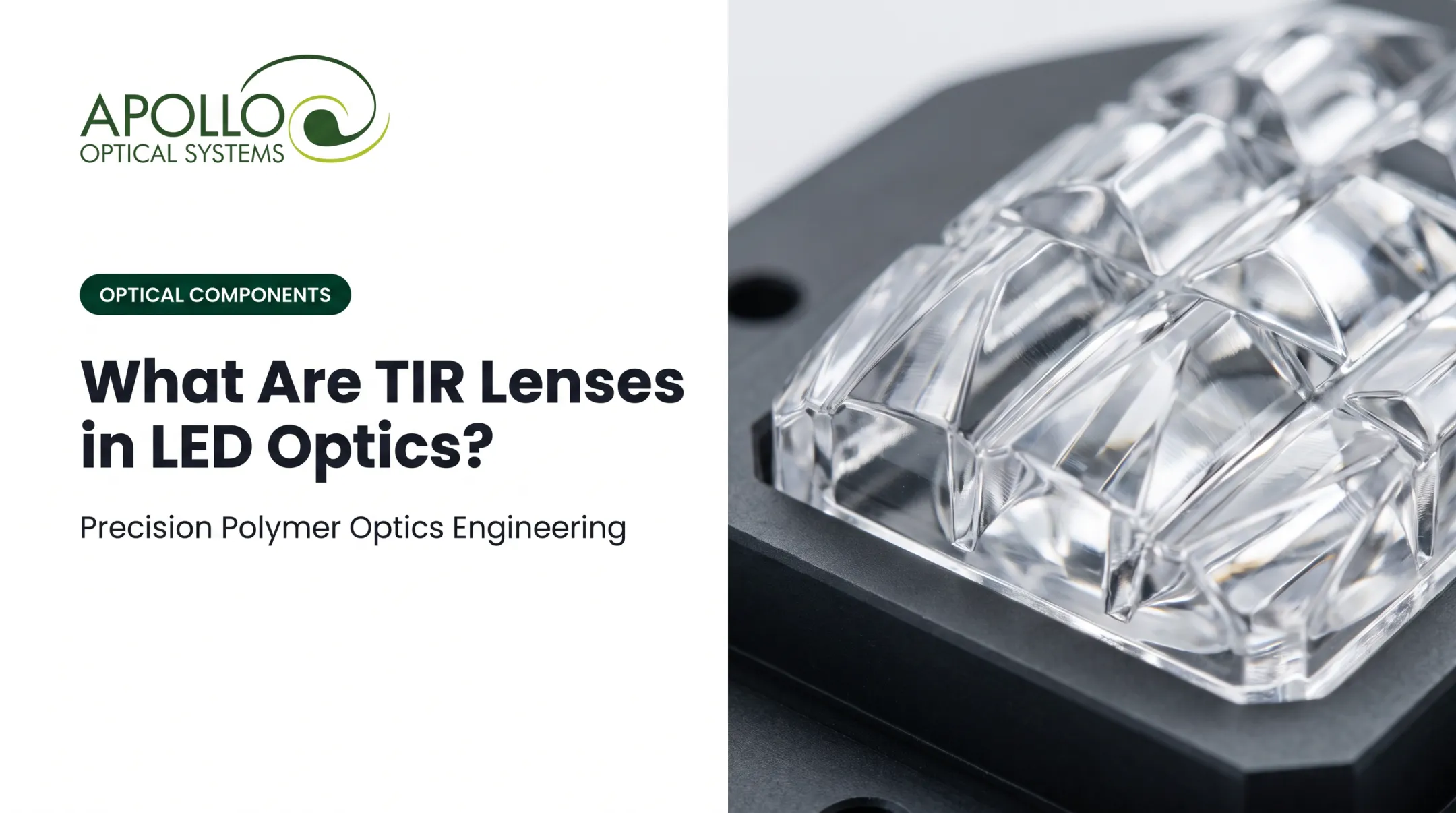
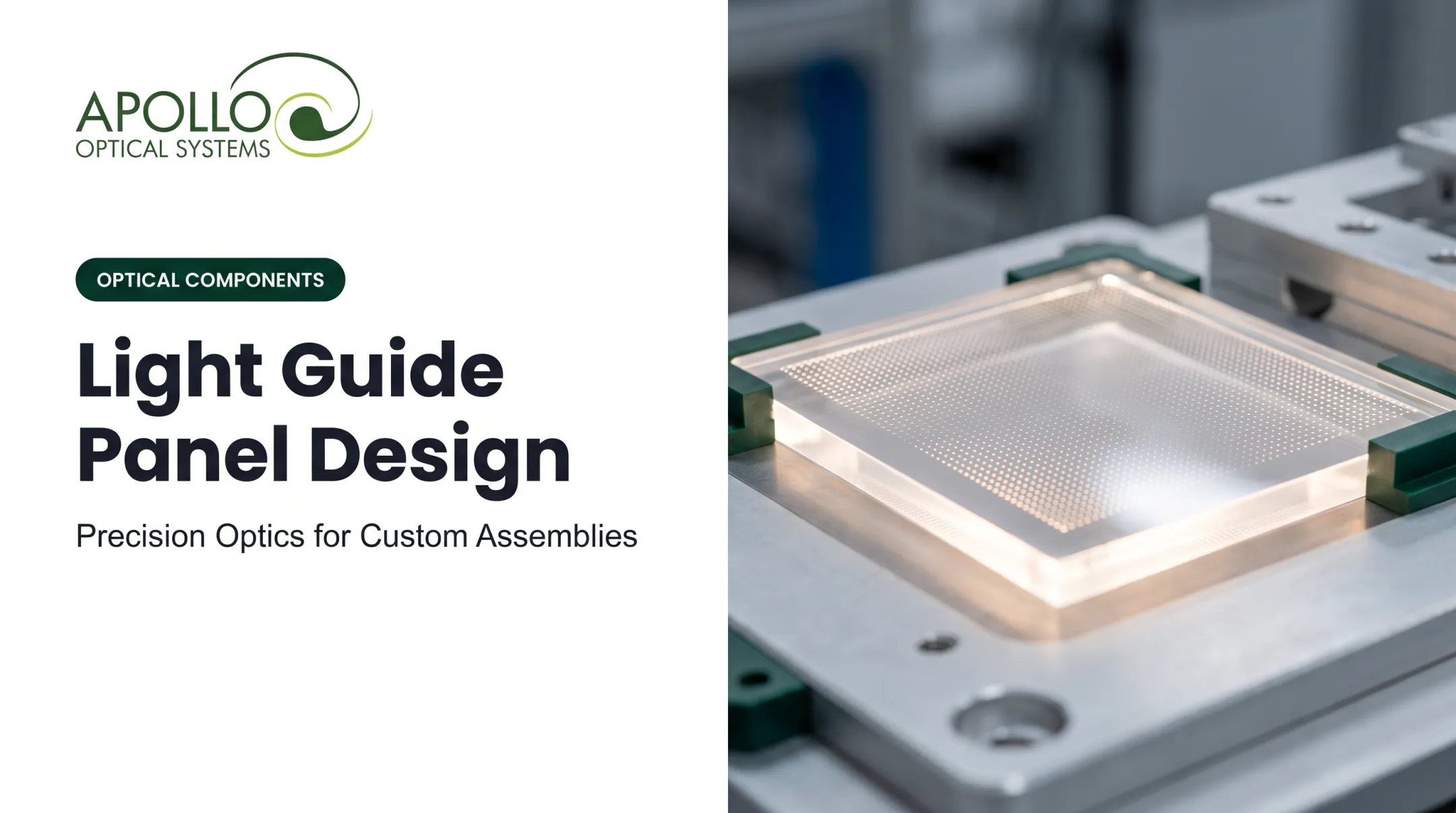
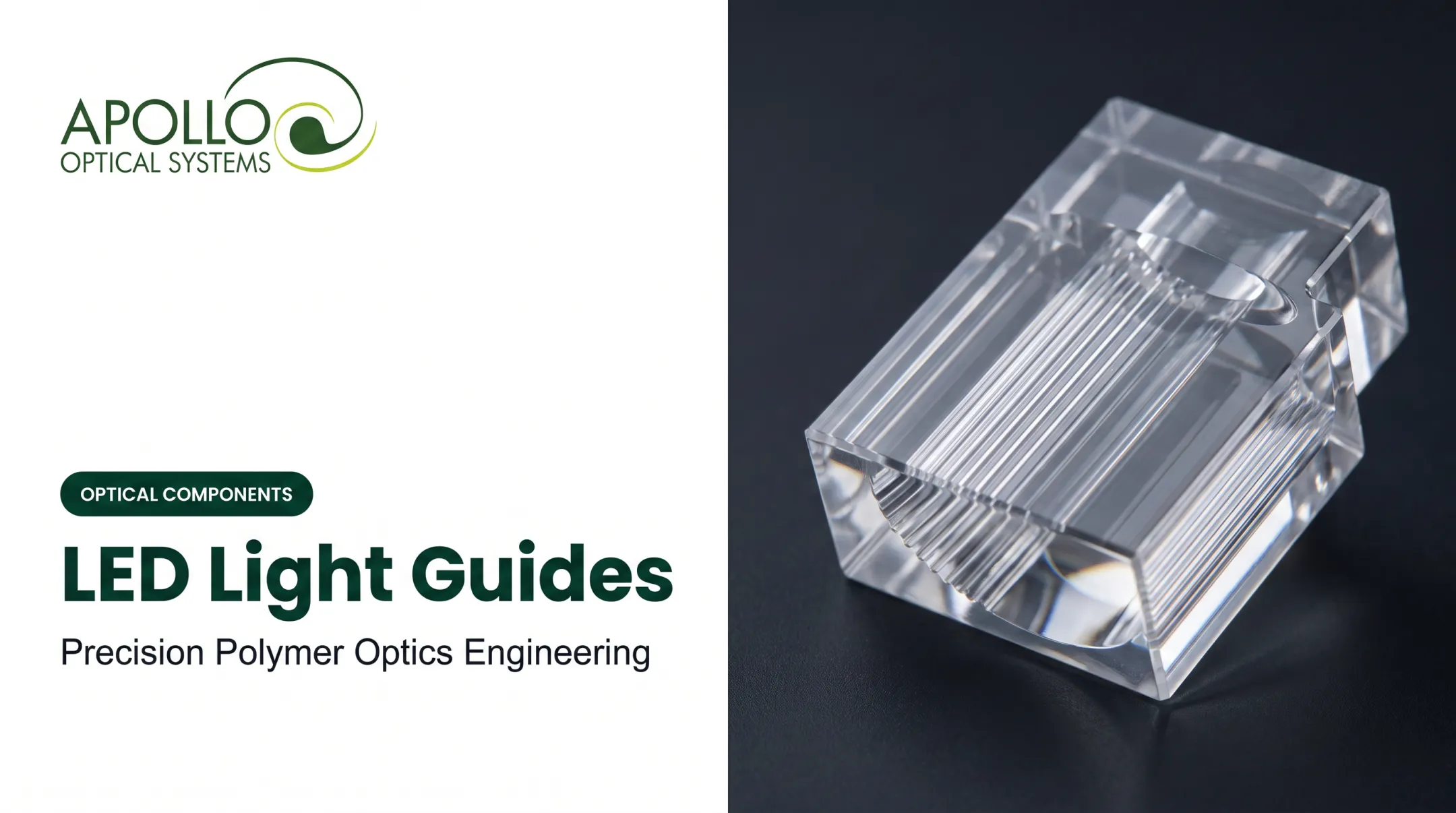
Apollo Optical Systems, based in Rochester, NY, and operating since 2002, designs and manufactures precision polymer optics—including LED lenses, reflectors, diffusers, and light guides—for lighting OEMs.
| Optic Type | Application Benefit | Ideal Manufacturer Use Case |
|---|---|---|
| Polymer micro-optics | Beam shaping and light manipulation for compact fixtures | Space-constrained emergency fixture designs |
| Diamond-turned optics | Custom surfaces (aspheric, Fresnel, diffractive) for prototyping and mold inserts | Rapid prototyping before committing to production tooling |
| Injection-molded optics | Repeatable, scalable optical components | High-volume production runs for fixture manufacturers |
Apollo's single-point diamond turning and polymer injection molding processes achieve surface finishes of 60–80 Å RMS with form accuracy below half a wave peak-to-valley, across components from 1mm to 300mm in diameter.
For fixture makers, that precision helps control beam pattern and reduce hotspots—directly affecting whether a fixture meets uniformity requirements in the field.

Two Types of Emergency Lighting Systems
Emergency lighting generally falls into two architectures, and the difference matters when specifying LED compatibility.
Self-contained (unit equipment): Each fixture has its own battery, charged from building power during normal operation. When power fails, the local battery kicks in immediately.
Centrally powered (central battery) systems: A central battery installation, Eaton explains, supplies power to "slave" luminaires that carry no onboard battery at all.
LED compatibility differs slightly between the two:
- Self-contained units need integrated LED drivers matched to the onboard battery voltage
- Central systems require luminaires wired for the central supply, without independent driver/battery pairs
Self-contained setups tend to suit small commercial spaces or retrofits, where installing individual units is simpler than running new central wiring. Central battery systems make more sense in large facilities with many zones that need coordinated power and monitoring.
There's no strict square-footage cutoff in life safety codes; it's a design decision based on scale and complexity.

How Many Lumens Should an Emergency Light Have?
There's no single lumen number that applies to every room. NFPA 101 specifies illuminance, not a lumen quota:
- Minimum average of 1 fc (10.8 lux) along the egress path at floor level
- At least 0.1 fc (1.1 lux) at any point along that path
- 0.6 fc average / 0.06 fc minimum allowed by the end of the 1.5-hour emergency period
How many lumens a fixture actually needs to hit those targets depends on:
- Room size and ceiling height
- Fixture spacing and mounting height
- Beam angle and optical distribution
- Obstructions along the path
A fixture that looks impressive on a spec sheet can still fail an inspection if it's mounted too high or spaced too far apart. Before finalizing any installation, consult a lighting layout professional or code specialist who can model the actual space. Confirm compliance with the adopted NFPA 101 edition and your local AHJ.

How to Choose the Best LED Option for Your Emergency Lighting System
The most common mistake buyers make is shopping by price alone. Others focus purely on lumen output and ignore battery runtime, or skip UL 924 verification entirely.
Weigh these factors instead:
- Certifications first: Confirm UL 924 listing and NFPA 101 compliance for the specific product and application, not just a generic UL mark
- Lumen output vs. area size: Match fixture output to your actual room geometry, not a generic spec sheet number
- Battery backup duration: Verify 90-minute minimum performance under real load, not just advertised runtime
- Maintenance and self-testing features: Decide whether automated diagnostics justify the added cost for your facility type
- Optical performance: Beam quality and distribution uniformity determine whether your installed fixture meets code in the field, not just on paper
A fixture with excellent optics but no UL 924 listing is a liability. A UL-listed fixture with poor beam distribution might still fail an inspection due to dark spots. You need both.
Conclusion
There's no single "best" LED option for every building. The right choice depends on your facility type, egress layout, and specific compliance requirements, not brand reputation alone.
Before finalizing a purchase, check three factors:
- Evaluate lumen performance against your actual floor plan
- Confirm battery backup meets the 90-minute NFPA standard
- Weigh long-term reliability against upfront cost
For manufacturers building LED emergency fixtures, beam performance and time-to-market often come down to the optics inside the housing. A precision optics partner like Apollo Optical Systems combines diamond-turned prototyping with scalable injection molding under one roof. That setup helps fixture makers refine light distribution while keeping development timelines tight.
Frequently Asked Questions
What are the best LED options for emergency lighting systems?
The top categories are exit sign combos for small spaces, high-output heads for large areas, smart self-testing fixtures for inspection-heavy facilities, and portable LEDs for supplemental backup. The best choice depends on your building's layout and compliance needs.
What are the two types of emergency lighting systems?
Self-contained (unit equipment) systems have batteries built into each fixture. Centrally powered systems use one central battery to supply multiple fixtures that have no onboard battery of their own.
How many lumens should an emergency light have?
Emergency lighting is specified by illumination level, not a fixed lumen rating. NFPA 101 requires a minimum average of 1 fc (10.8 lux) and at least 0.1 fc at any point along the egress path, so required lumens depend on room size, ceiling height, and fixture spacing.
Are LED emergency lights better than fluorescent or incandescent options?
Yes. LEDs use up to 90% less energy than incandescent lamps, outlast fluorescent tubes, and run much cooler—cutting energy cost, relamping labor, and heat load in the fixture.
How often should emergency LED lighting be tested?
NFPA 101 requires a monthly functional test of at least 30 seconds and an annual 90-minute duration test. Self-testing units can automate much of this process.
How long do LED emergency light batteries last?
Most LED emergency light batteries last 5 to 10 years, depending on chemistry and product design. The fixture must still deliver at least 90 minutes of backup light during an outage.