
This is the exact problem LED light guides solve. These transparent optical components take light from a single point source and spread it evenly across a surface or to a specific target—no hotspots, no dark zones.
They show up everywhere: illuminated automotive badges, surgical device displays, tactical flashlights, keypads on industrial control panels. Anywhere a manufacturer needs consistent, controlled light from a compact LED, a light guide is likely doing the work behind the scenes.
This article covers how light guides work, the main types available, where they're used, and how to choose and design one that performs reliably at scale.
Key Takeaways
- LED light guides use total internal reflection (TIR) to spread edge light evenly without visible hotspots.
- Three main types: light guide plates (LGPs), light pipes, and molded/curved guides for 3D shapes.
- Material choice (PMMA, polycarbonate, COC, COP) and extraction patterns drive brightness uniformity.
- Injection-molding tolerances separate consistent production light guides from inconsistent ones.
What Is an LED Light Guide?
An LED light guide is a transparent optical component, usually molded from polymer, that channels light from an LED source to a target area. Instead of scattering light randomly, it steers light along a controlled path and delivers uniform brightness exactly where it's needed.
Two terms get used interchangeably, but they aren't quite the same thing:
- Light guide plates (LGPs): Flat panels, typically used for LCD backlighting or signage
- Light guides (light pipes): Can be curved, tapered, or shaped into complex 3D geometries for point-to-point light transport
Materials and Optical Properties
Most light guides are molded from optical-grade polymers—most often acrylic (PMMA) or polycarbonate, with COC and COP used when heat resistance or specific optical properties matter:
| Material | Refractive Index | Light Transmission | Max Operating Temp |
|---|---|---|---|
| PMMA (acrylic) | 1.49 | 92.1% | 90°C |
| Polycarbonate | 1.59 | 89.9% | 120°C |
| COC (cyclic olefin copolymer) | 1.53 | 90.7% | 160°C |
| COP (cyclic olefin polymer) | 1.53 | 91.0% | 115°C |
Across flat plates and complex 3D shapes, the design objective stays the same: carry light from source to destination with minimal loss and even brightness across the lit surface.
How Do LED Light Guides Work?
The physics behind light guides comes down to one principle: total internal reflection (TIR). Light entering the guide bounces internally instead of escaping, following Snell's Law until it hits a surface at an angle steep enough to reflect rather than refract.

That threshold is called the critical angle. For PMMA meeting air, the calculated critical angle sits around 42 degrees, based on the material's refractive index. Below that angle, light escapes. Above it, light reflects and keeps traveling through the guide.
In short, TIR works in three steps:
- Light enters the guide from the LED edge or face
- Rays hit the polymer–air boundary above the critical angle and reflect inward
- Light propagates along the guide until an extraction feature releases it
Extraction Features Control Where Light Escapes
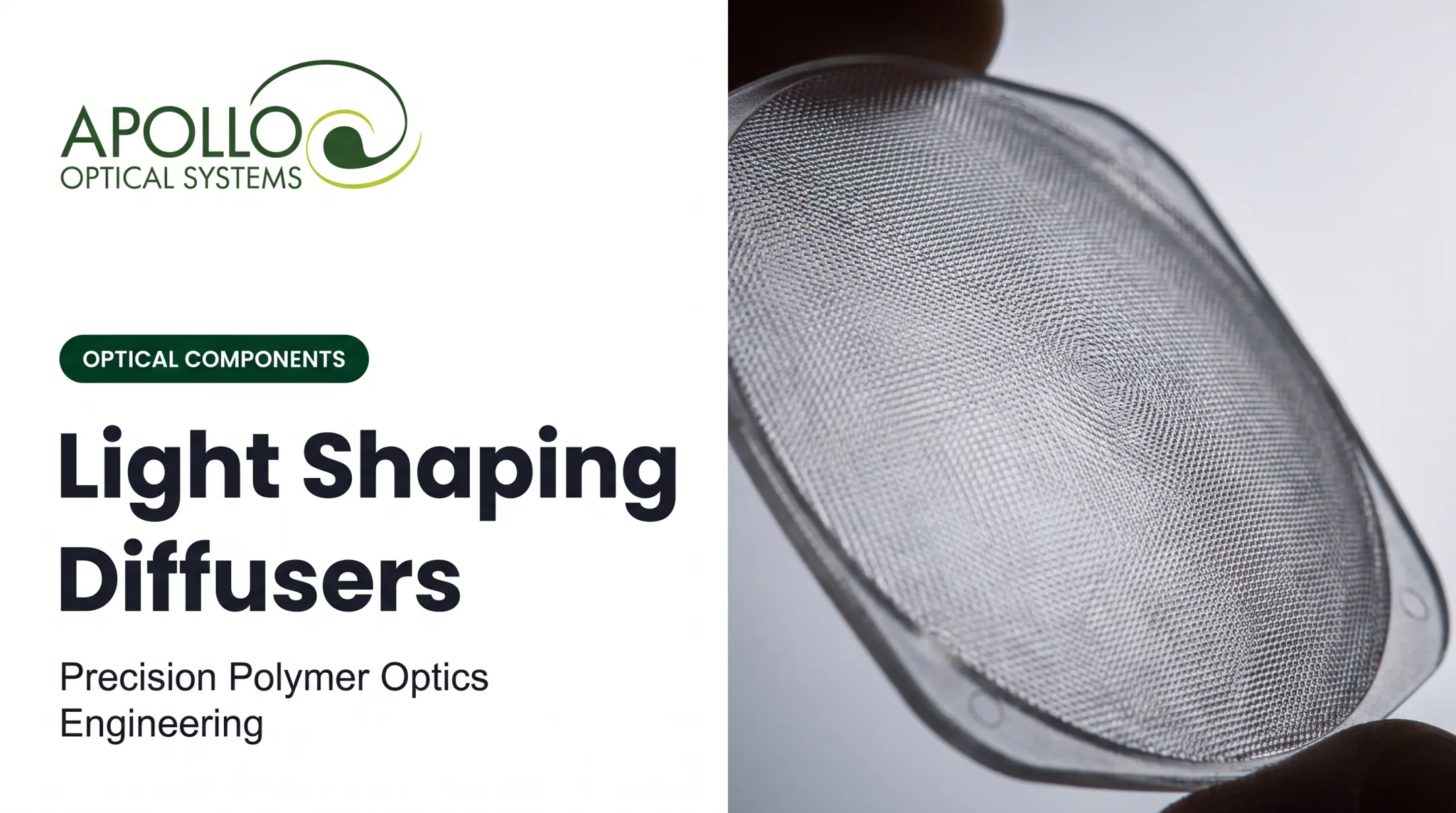
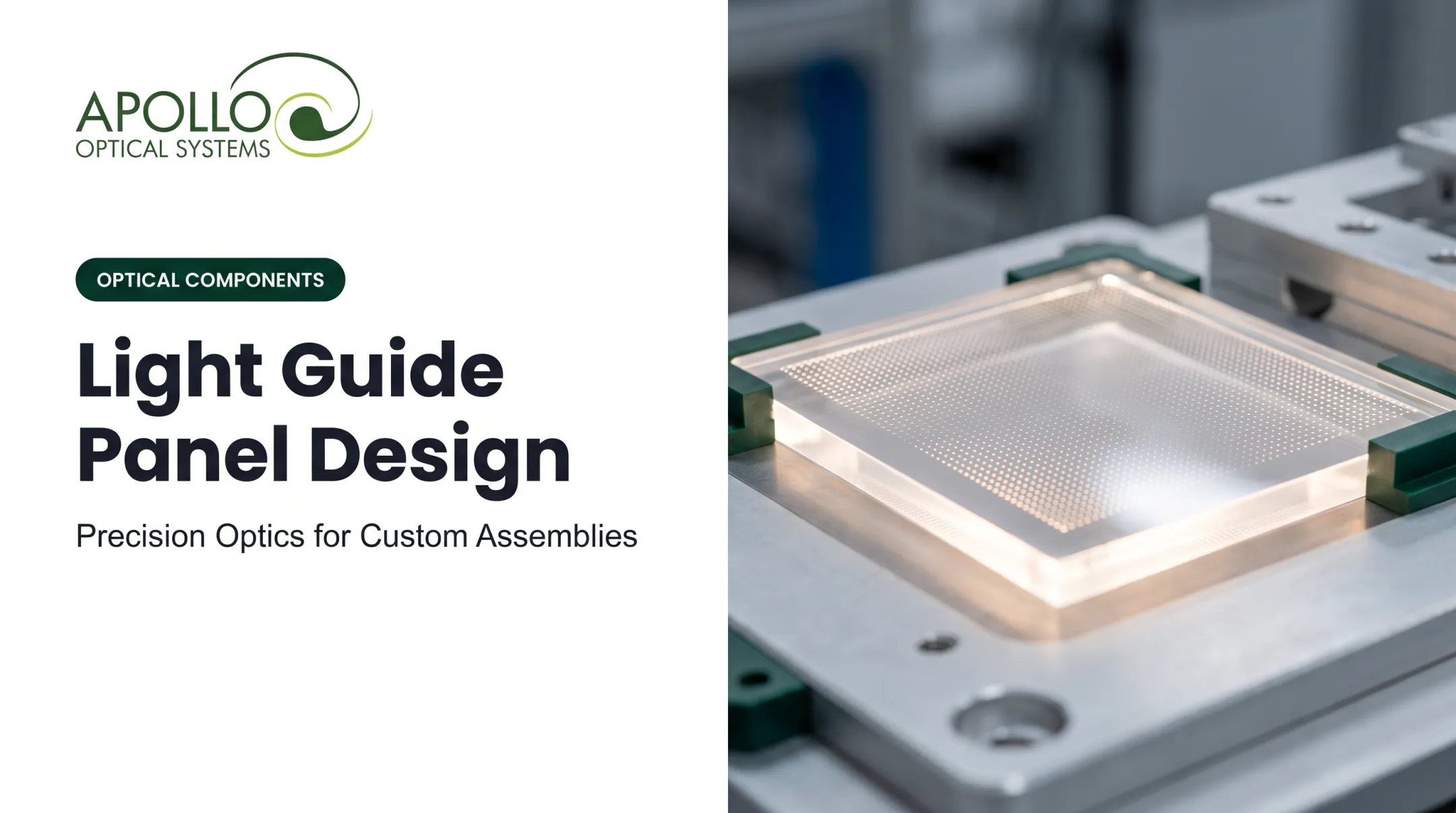
Left alone, TIR would keep bouncing light indefinitely. Extraction features break that cycle: microstructures, dot patterns, or prisms molded or printed onto the guide surface that deliberately release light at controlled points.
Light naturally weakens the farther it travels from the source. Designers compensate by varying extraction-feature density and size across the guide—releasing more light where the beam has weakened and less near the source.
A 2006 SPIE study on LGP design confirmed that diffusion-dot density directly controls luminance symmetry.
Reflective backing layers and diffusers refine the output further:
- Reflectors redirect stray light back into the guide instead of losing it
- Diffusers spread output evenly, though heavier diffusion trades away some efficiency
These variables interact too tightly for hand-tuned patterns. Optical simulation software running ray-tracing models is standard practice for locking in the extraction pattern before any tooling is cut.

Types of LED Light Guides
Not every application calls for the same shape. The three main categories are:
- Light Guide Plates (LGPs): Flat panels for LCD backlighting, signage, and display illumination. Best when you need edge-lit uniformity across a two-dimensional surface.
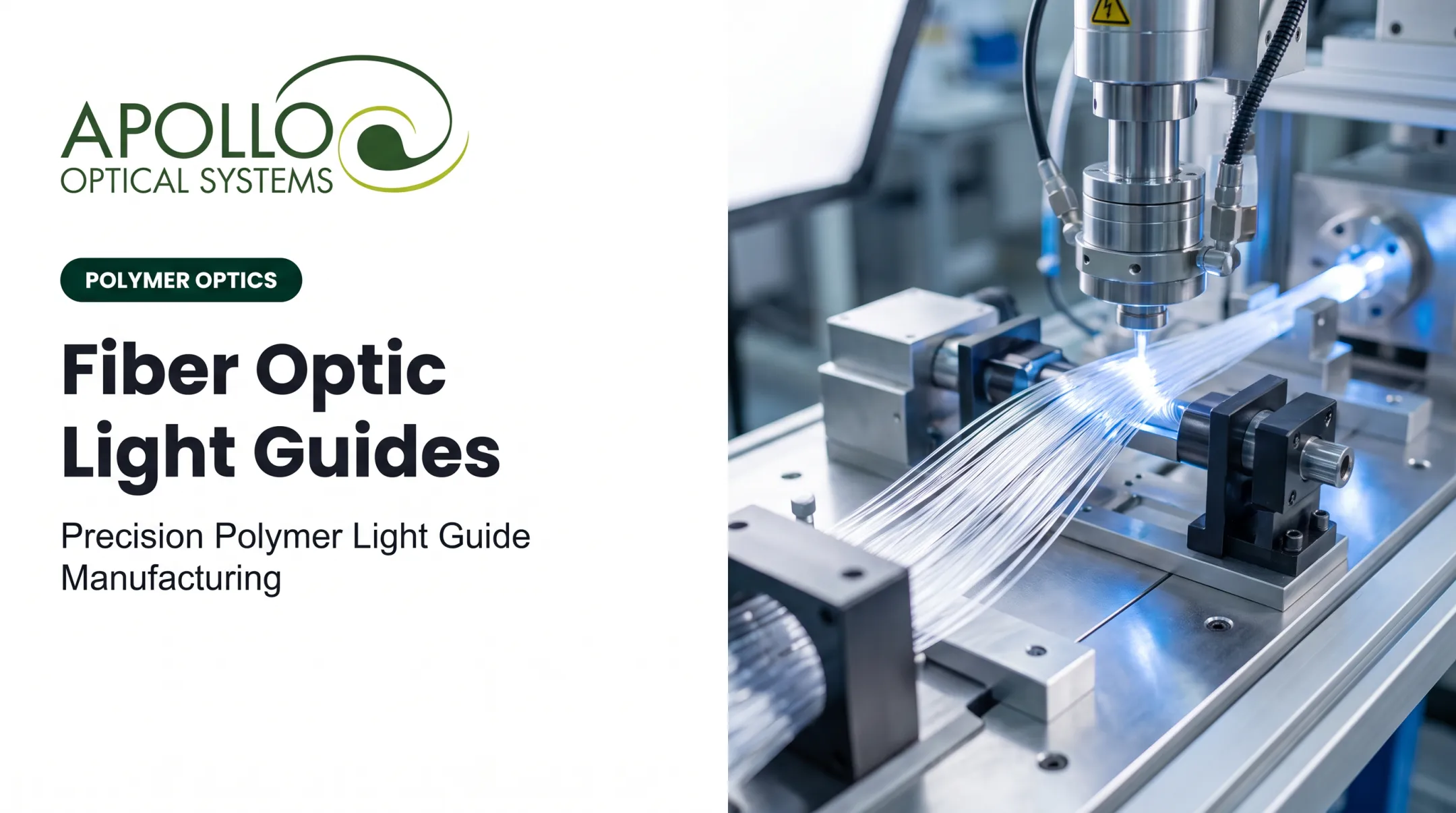
- Light Pipes: Cylindrical or rod-shaped guides that move light point-to-point. Common in PCB indicator lights, where one LED signals status through a housing panel.
- Molded/Curved Light Guides: Custom 3D shapes that route light around bends or into unusual geometries. Automotive dashboards, tactical equipment, and interior accent lighting rely on this category.

Applications and Creative Uses of LED Light Guides
Light guides solve a specific problem across very different industries: getting even, reliable light from a small source into a defined shape or surface.
Automotive. Illuminated logos, dashboard instrumentation, interior accent lighting, and tail lamps all depend on light guides. The automotive lighting market alone is forecast to reach roughly $42.5 billion by 2027, according to Yole Group's 2022 analysis.
Medical & Life Sciences. Diagnostic and surgical equipment need backlit displays and indicator panels that perform without fail. A flickering or unevenly lit indicator on surgical equipment creates real liability risk.
Consumer Electronics & Industrial Systems. Keypads, control panel indicators, and edge-lit signage all use light guides to make small LEDs look intentional and professional rather than harsh or uneven.
Beyond these core categories, light guides also appear in aerospace reading lights, emergency floor lighting, and tactical flashlights. In each case, the priority is reliable illumination in a tight space.
How to Choose and Design the Right LED Light Guide
Before picking a material or shape, lock in the application's requirements:
- Brightness uniformity: How even must light be across the surface?
- Size constraints: Available footprint and maximum thickness
- Viewing angle: Head-on only, or readable from multiple angles?
- Environment: Temperature swings, humidity, vibration, or sterilization needs
Material Selection Matters More Than It Seems
Match the polymer to optical and thermal demands:
- PMMA: High clarity and a polished look; practical ceiling near 90°C
- Polycarbonate: Heat tolerance to about 120°C and stronger impact resistance; more birefringence
- COC / COP: Strong clarity with higher heat tolerance for automotive and industrial temperature swings
The Design Process
Take the guide from concept to production in four stages:
- Optical simulation: Ray-trace light paths and place extraction patterns
- Prototyping: Machine or mold a sample and measure real output
- Extraction pattern optimization: Adjust dot density and placement from those measurements
- Validation testing: Confirm brightness uniformity against the original spec
Bends and tapers need extra care. A bent or tapered section changes the local angle of incidence; if that shift is ignored, light leaks where you do not want it. That geometry mistake is one of the most common reasons a design looks fine in prototype and fails in production.
Manufacturing Precision Is Where Designs Succeed or Fail
Geometry control only holds if the molded part matches the model. Injection-molding tolerances and coating consistency decide whether every unit off the line performs the same way.
Apollo Optical Systems treats that path as one workflow: design and simulation, single-point diamond turning for prototypes, then polymer injection molding in PMMA, polycarbonate, polystyrene, COC, and COP. In-house coating and metrology verify each part against spec before it ships.

For defense, medical, and industrial programs that need identical output across thousands of units, that simulation-to-mold loop is what keeps brightness and uniformity stable when volume ramps.
Frequently Asked Questions
How do I choose the right LED light for a specific application?
Start with brightness needs, color temperature, and size constraints, then factor in the environment. A medical device panel has very different durability requirements than an automotive dashboard exposed to temperature swings.
How do you design an LED light guide?
The process runs through optical simulation, prototype development, and extraction-pattern optimization, followed by testing against real-world performance targets. Each stage refines the design before committing to production tooling.
What are the main types of LED light guides?
Most designs are edge-lit plates, where LEDs sit along one or more edges, or back-lit panels with sources behind the optic. Edge-lit guides suit thin displays and signage; back-lit layouts favor higher output and tighter uniformity control.
How do LED light guides work?
Light guides use total internal reflection to move light through the material until it hits an extraction feature, like a microdot or prism, that releases it in a controlled way. This produces even brightness instead of a single bright point.
What is an LED light guide (light guide plate)?
A light guide plate is a flat, transparent panel that spreads light from an edge-mounted LED source evenly across its surface. It's the standard approach for LCD backlighting and edge-lit signage.
What are some creative ways to use LED lights?
Light guides enable illuminated automotive badges, architectural accents, and hotspot-free decorative signage. They also support backlit medical panels that need even visibility under clinical lighting.