
Standard injection molding simply can't get there. Once part features shrink to microns, flow behavior, cooling, and tooling all behave differently. Many engineers underestimate this gap until a "simple" small part fails in production.
This article covers what micro injection molding actually is, how the process works, which materials perform best, and how to pick a manufacturing partner that won't waste your tooling budget.
Key Takeaways
- Micro molded parts often weigh under a gram, with mold tolerances as tight as ±2-5 microns
- Success requires specialized machines, tooling, and moisture-controlled materials
- Medical devices, micro-optics, electronics, and defense parts depend on this level of precision
- Partner expertise in tooling, materials, and metrology determines whether a project succeeds or stalls
What Is Micro Injection Molding?
Micro injection molding is a precision manufacturing process for plastic parts defined by three overlapping criteria, not one single measurement:
- Part mass under roughly one gram (a practical screening rule, not a strict cutoff)
- Micro features embedded within a larger part, such as a 5-micron radius on a connector
- Tight tolerances, often cited in the ±2-5 micron range for mold capability
To put that in perspective: a human hair averages 70-100 microns thick. A ±5 micron tolerance is a fraction of that width.
Micro molding is a distinct engineering discipline, not simply small-part production. A part can be physically tiny and still fail to qualify if it does not demand this level of feature control.
Conversely, a larger part with embedded micro-features—such as a connector with a 0.002-inch hole—falls squarely in micro molding territory.
Micro Injection Molding vs. Traditional Injection Molding
The differences go far beyond scale:
| Attribute | Traditional Molding | Micro Molding |
|---|---|---|
| Shot size | Grams to kilograms | Fractions of a gram (often under 1g) |
| Clamping force | Tons to hundreds of tons | Often just 5-15 tons |
| Tolerance | ±0.1 mm typical | Down to ±2-5 microns |

Materials also behave differently at this scale. Flow, shrinkage, and cooling rates shift when you're working with milligram-level shots, so rheological data from full-scale molding doesn't reliably translate down.
The Micro Injection Molding Process: Step-by-Step
Producing a micron-tolerance part requires a tightly controlled sequence:
- Mold and tool design - CNC machining, micro-EDM, and diamond turning create cavities with micron-level precision. Some optical inserts require single-point diamond turning for the surface finish alone.
- Material preparation - Resins need precise drying and moisture control. PEEK, for example, requires drying at 150-160°C for 2-3 hours with residual moisture kept below 0.02%, per Victrex's processing guidance.
- Injection - Purpose-built micro molding presses handle shot weights as low as 0.05 grams, using precise screw or plunger-based injection units.
- Cooling and demolding - Vacuum assist or micro ejector pins prevent fragile parts from deforming during release.
- Inspection and metrology - Standard calipers can't measure micron features. This step requires microCT, SEM, or high-resolution optical profilometry.
- Secondary processes - Assembly, coating, or packaging finish the part for its final application.

Skip or rush any step here, and the part fails downstream, usually in ways that are expensive to trace back.
Materials and Design Considerations
Material choice for micro molding is a systems decision: resin behavior, tooling, and end use have to work together. Common high-performance options include:
- PEEK - chemical resistance and thermal stability for medical devices like catheters
- LCP (liquid crystal polymer) - low viscosity and thin-wall flow, ideal for connectors and antennas
- PPSU - hydrolytic stability and toughness for repeated sterilization cycles
- Biocompatible polymers - required wherever a part contacts tissue or bodily fluids
Design rules shift at micro scale too. Uniform wall thickness matters more here than in standard molding because even small variations cause warpage or sink marks that ruin an already tiny part.
Gate design is equally delicate. Engineers need complete cavity fill without leaving a vestige large enough to distort a feature that might only measure a few hundred microns across.
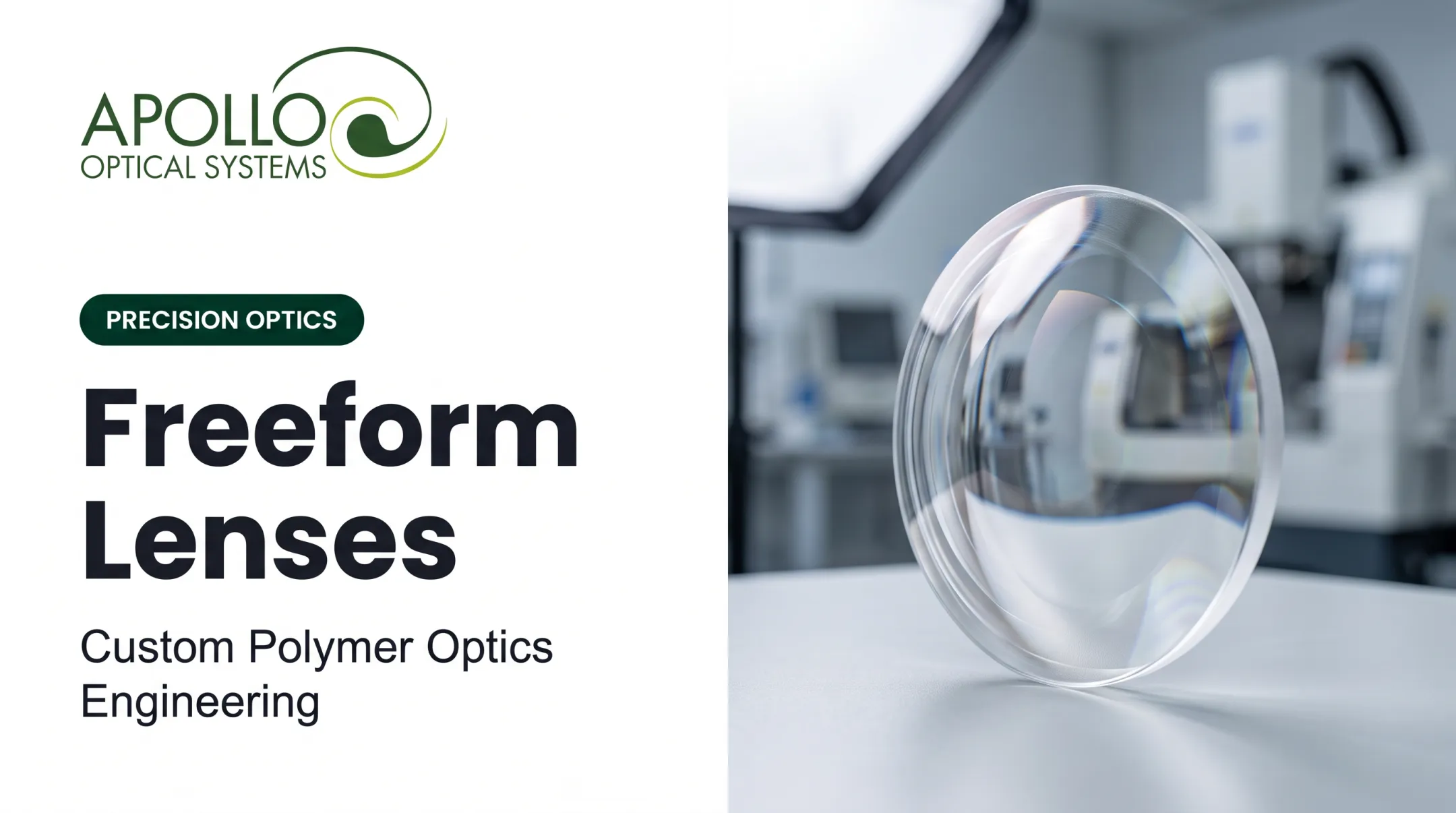
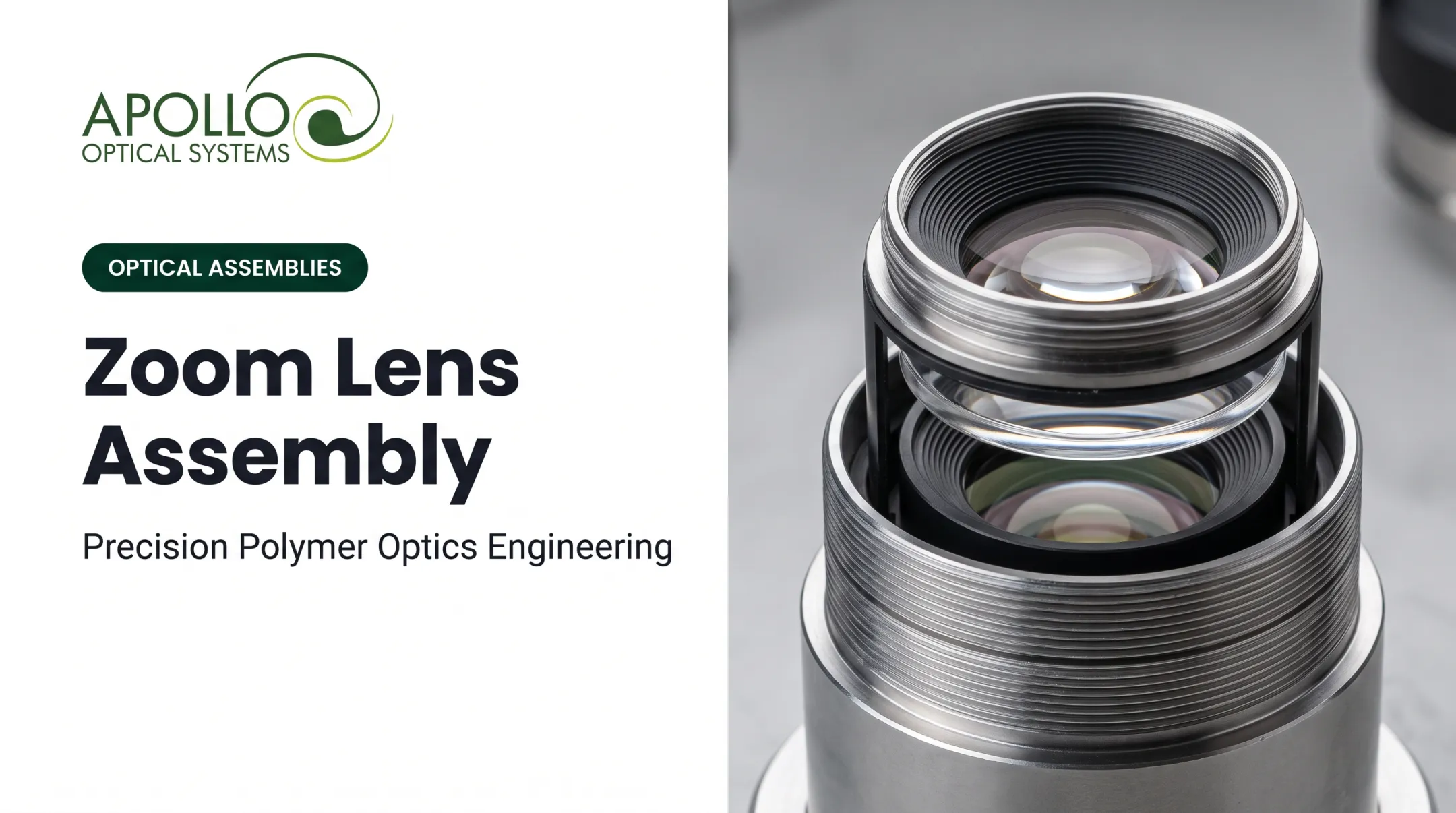
Apollo Optical Systems applies this discipline to precision polymer optics, using materials like PMMA, polycarbonate, cyclic olefin copolymer, and polyetherimide for injection-molded microlens arrays and other optical components. Typical molding tolerances run to ±0.025 mm for center thickness and ±0.05 mm for flange diameter. Those specs come from mold design, scientific molding practices, and in-house metrology working as one process.

The lesson for anyone designing a micro part: set tolerances with your manufacturing partner, not in isolation. A tolerance that looks reasonable on a drawing can be unachievable, or unnecessarily expensive, once tooling and material behavior are factored in.
Applications and Cost Considerations
Micro injection molding is used across many industries:
- Medical devices - catheter components, IVD cartridges, hearing aid housings
- Micro-optics - lens arrays and diffractive elements for endoscopes and imaging
- Electronics - miniature connectors, antennas, sensor housings
- Defense and aerospace - compact optical and avionics components
- Automotive - micro-sensors and connector systems in electronic modules
How much does it cost? Cost depends on tooling complexity, material selection, and production volume. Micro tools are often smaller and can cost less than full-scale tooling. Those savings are frequently offset by:
- Precision machining of the tool
- Specialized presses
- Inspection systems needed to verify micro-scale features
Is it difficult? Yes, more so than standard molding. Tight process windows, specialized equipment, and microCT or optical metrology to verify parts make the work demanding. Choose a partner with proven micro-scale process control and metrology, not only standard molding experience.
Why Partner Expertise Matters
Success in micro injection molding comes down to combining three things under one roof: tooling precision, materials science, and metrology. Split those across multiple vendors, and tolerances stack up in ways nobody can fully control.
Apollo Optical Systems houses these capabilities in its 21,000 sq. ft. facility in Rochester, New York:
- Diamond turning and precision machining: Optical surfaces at 60-80 Å RMS finish on three single-point diamond turning lathes (Innolite IL300 and two Precitech Nanoform 200s)
- Polymer injection molding: High-precision molding plus specialized bonding for polymer doublets and triplets
- In-house metrology: Zeiss Contura G2 CMM, Zygo NewView interferometer, and Olympus Nomarski microscope to 1000X

For regulated industries, supply chain reliability matters as much as manufacturing precision. Apollo operates under ISO 13485:2016 certification and FDA/GMP protocols for medical work, with a dedicated program manager assigned to every product.
That structure supports programs from one-off prototypes to hundreds of thousands of assemblies per month, including complex builds like 34-element endoscopes.
Frequently Asked Questions
What is micro injection molding?
Micro injection molding is a precision process for producing extremely small plastic parts—often under one gram—with features and tolerances measured in microns. It needs dedicated equipment and tooling beyond standard molding capability.
What are the steps of the micro injection molding process?
Steps include micro tool design, material drying and conditioning, precision injection, controlled cooling, and demolding. Parts then go through micron-level inspection (microCT or SEM), with secondary assembly or coating often following.
How much does a micro injection mold cost?
Cost depends on tooling complexity, resin choice, and production volume. Micro tools are often smaller and cheaper than full-scale tooling, but specialized presses and micron-level inspection raise total project cost.
Is micro injection molding difficult?
Yes. Tight process windows, specialized presses, and micron-level metrology make it harder than standard injection molding. Experienced partners are essential.
What materials work best for micro injection molding?
PEEK, LCP, and PPSU are common choices for their thermal stability, thin-wall flow, and chemical resistance. Biocompatible polymers are required for medical applications involving tissue contact.
What industries benefit most from micro injection molding?
Medical devices, micro-optics, electronics, and defense/aerospace rely most heavily on this process, along with growing use in automotive sensor and connector systems.